
TECHNOCRAT MAGAZINE | www.ytcventures.com | 18 Sept 2026
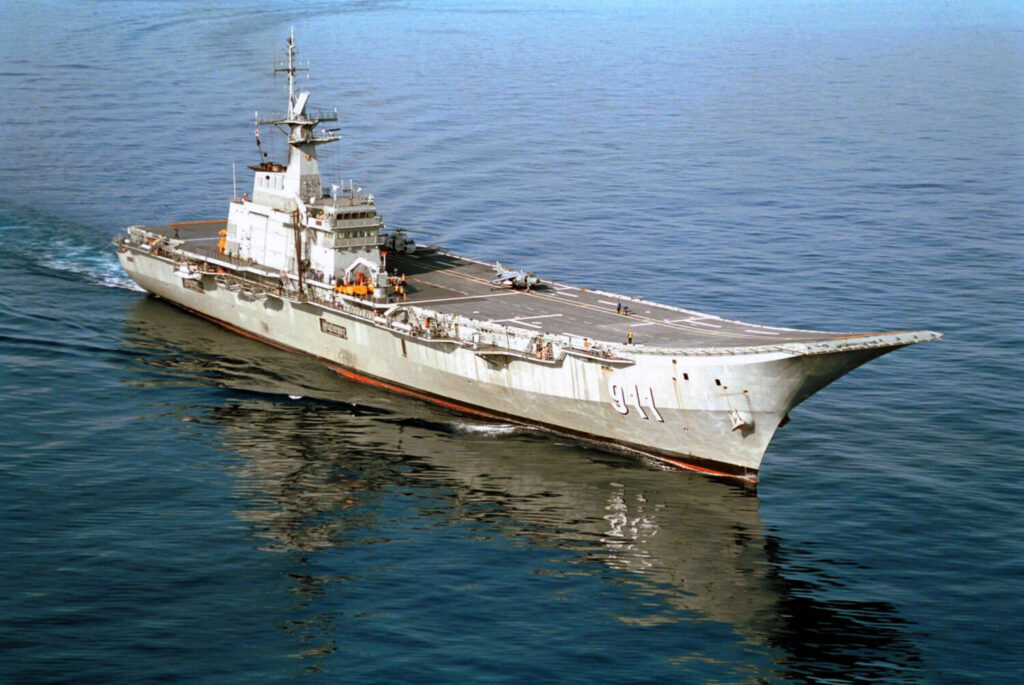
A naval encounter in the North Arabian Sea has opened a fresh diplomatic fault line between India and Pakistan after a Pakistani Navy vessel collided with an Indian Navy warship in international waters on September 15.
The following day, India’s Ministry of External Affairs (MEA) summoned Pakistan’s Chargé d’Affaires in New Delhi and lodged what it described as a strong protest over the conduct of Pakistani naval units. India characterized the conduct as “unacceptable and unprofessional.”
The incident is significant not simply because two military vessels made contact at sea. It comes against the backdrop of already strained India–Pakistan relations and demonstrates how quickly an encounter between naval units can move from a tactical event at sea to a diplomatic confrontation in national capitals.
The Collision
According to Indian government-linked accounts reported by multiple outlets, the incident occurred on the evening of September 15 in the North Arabian Sea, roughly 120 nautical miles from the Gulf of Oman.
India says the Pakistani Navy vessel PNS Hunain approached a frontline Indian naval warship at high speed and manoeuvred in a manner that led to a minor collision. The Indian side has said the incident occurred in international waters and that there was no major damage to the Indian vessel.
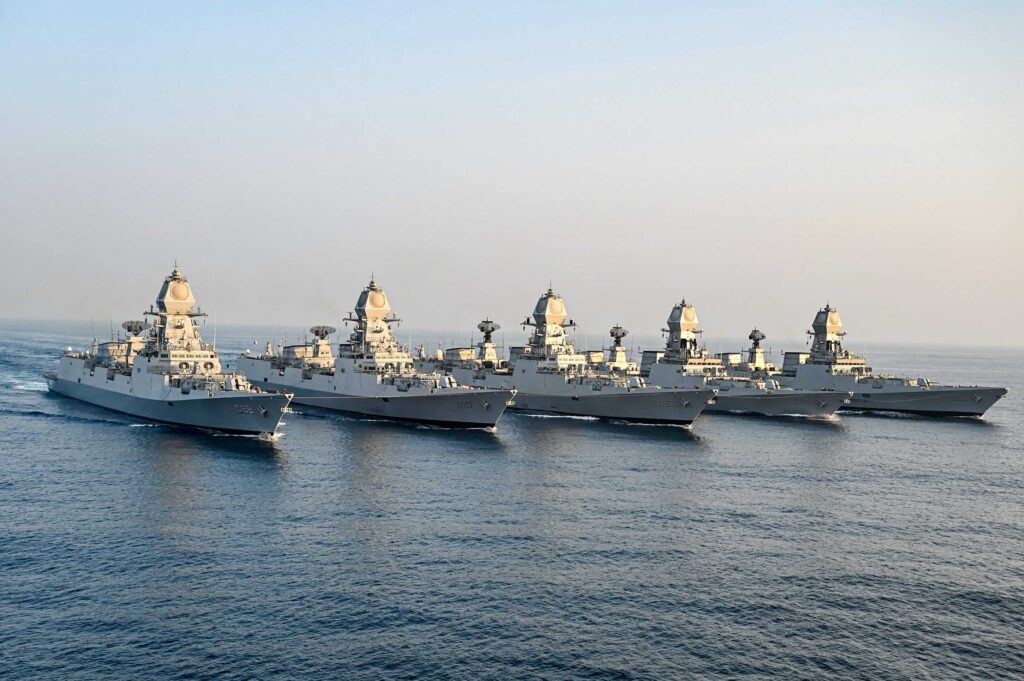
Reports subsequently identified the Pakistani vessel as PNS Hunain, a Yarmook-class offshore patrol vessel. Some Indian reports identified the Indian ship as INS Kolkata, although reporting has not been entirely consistent on the vessel’s identity, making caution appropriate until the governments release a definitive technical account.
The Pakistani vessel was reported to have suffered damage and returned toward harbour.
The important point is that the physical collision appears to have been limited, but its diplomatic consequences are considerably larger.
Why New Delhi Summoned Pakistan’s Diplomat
The MEA’s response centred on maritime conduct and an existing India–Pakistan military confidence-building agreement.
New Delhi said the incident represented a contravention of Article 10 of the April 1991 Agreement between India and Pakistan on Advance Notice on Military Exercises, Manoeuvres and Troops Movements. India has argued that the agreement establishes safeguards intended to prevent dangerous proximity between the two countries’ military forces.
The MEA said Pakistan’s Chargé d’Affaires was advised to convey to the Pakistani authorities the importance of military units exercising due care and respecting relevant bilateral agreements to prevent a recurrence.
India also instructed its own Chargé d’Affaires in Islamabad to lodge a corresponding protest with Pakistan’s Foreign Ministry.
That detail matters.
This was therefore not merely a naval incident being handled through operational channels. Both governments moved the issue into the diplomatic arena.
Islamabad’s Account Is Fundamentally Different
Pakistan has presented a sharply different version of events.
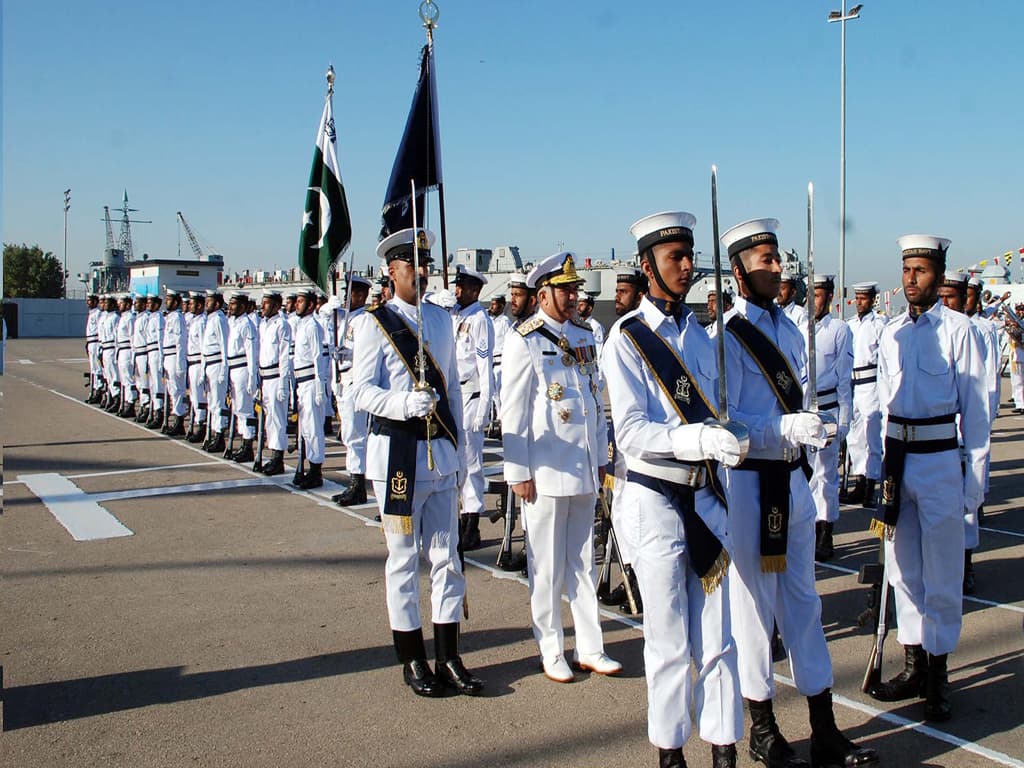
According to Pakistani reporting, Islamabad summoned India’s Chargé d’Affaires and protested what it called provocative manoeuvres by an Indian naval vessel inside Pakistan’s Exclusive Economic Zone during the SEASPARK-26 naval exercise.
Pakistan has accused the Indian vessel of aggressive manoeuvring and argued that the incident involved its maritime jurisdiction.
Al Jazeera likewise reported that Pakistan says the Indian warship entered its EEZ, while India maintains that the collision occurred in international waters.
That disagreement is at the heart of the emerging diplomatic dispute.
India’s account: unsafe manoeuvring by the Pakistani vessel in international waters.
Pakistan’s account: provocative Indian activity within Pakistan’s EEZ during a naval exercise.
The two narratives therefore differ not only over responsibility for the collision but also over the maritime circumstances in which the encounter occurred.
The 1991 Agreement Is Now Back in Focus
The diplomatic importance of the episode lies partly in the fact that both countries possess mechanisms designed to reduce the possibility of military encounters escalating.
The 1991 agreement was created to provide advance notification and establish safeguards surrounding military exercises, manoeuvres and troop movements.
Indian officials have specifically invoked Article 10 in connection with the latest incident. Reporting on the provision says it requires Indian and Pakistani naval vessels and submarines operating in international waters to maintain a specified separation distance.
The significance goes beyond this single collision.
At sea, distance is a form of diplomacy.
A warship approaching another warship is not equivalent to two commercial vessels meeting on a shipping route. Every manoeuvre can be interpreted through a military lens. Every warning, course alteration and radar contact can acquire strategic significance.
That is precisely why maritime confidence-building measures exist.
Why the Arabian Sea Matters
The location adds another layer of complexity.
The North Arabian Sea is a strategically important maritime corridor linking the Middle East, South Asia and the wider Indian Ocean. Energy shipments, commercial shipping and military deployments all intersect across the region.
India has maintained naval deployments in the Arabian Sea amid heightened regional security concerns, while Pakistan has continued maritime exercises and naval operations.
A collision in such an environment can create uncertainty even when neither side intends escalation.
The immediate danger is not necessarily that a collision automatically leads to military action.
The greater danger is miscalculation.
A vessel approaches too closely. Another commander interprets the movement as hostile. Warnings are exchanged. A manoeuvre is misunderstood. A collision occurs.
Once national security institutions become involved, the incident can acquire a political meaning far greater than the original tactical event.
A Familiar Pattern
The latest incident also recalls a previous India–Pakistan naval confrontation.
In 2011, Pakistan’s PNS Babur and India’s INS Godavari were involved in a maritime encounter in the Gulf of Aden. The episode generated diplomatic tension despite being far smaller than an armed confrontation.
The 2026 collision therefore has a historical precedent: naval encounters between India and Pakistan have previously demonstrated how operational incidents can spill into diplomacy.
But today’s strategic environment is different.
India and Pakistan emerged from their 2025 military confrontation with an already elevated level of strategic sensitivity. The latest maritime episode is consequently being examined through that broader context.
What We Know — And What We Don’t
The facts currently supported by multiple reports are relatively clear:
- The collision occurred on September 15, 2026.
- It occurred in the North Arabian Sea.
- India says it occurred in international waters.
- A Pakistani naval vessel, PNS Hunain, was involved.
- India summoned Pakistan’s Chargé d’Affaires on September 16.
- India described the Pakistani naval conduct as unacceptable and unprofessional.
- India invoked the 1991 bilateral agreement.
- Pakistan subsequently protested India’s alleged actions and disputed India’s characterization of the encounter.
- The Pakistani vessel was reported to have sustained damage and returned toward harbour.
But several questions remain unresolved.
Who exactly crossed whose intended operating track?
What were the precise manoeuvres immediately before impact?
What warnings were transmitted between the vessels?
What were the exact coordinates of the encounter?
How significant was the damage to each ship?
And most importantly:
Was the collision purely accidental, the result of a navigational error, or connected to a deliberate operational manoeuvre?
At present, the publicly available accounts do not establish those questions conclusively.
The Bigger Story: Escalation Management
The headline may be about two ships colliding.
The strategic story is about how two nuclear-armed neighbours manage military contact when trust is already low.
Neither side has publicly described the collision as an act of war. Instead, both have used diplomatic mechanisms to register their respective objections.
That distinction is important.
A diplomatic summons is a formal expression of protest. It is not, by itself, evidence that either government has decided to escalate militarily.
Indeed, the fact that both sides have channelled their immediate response through diplomats and bilateral mechanisms underscores the continuing relevance of crisis-management arrangements.
The next stage will therefore be closely watched for evidence of de-escalation—or additional military and diplomatic signalling.
Techocrat Analysis: The New Battlefield May Be the Space Between Two Ships
Modern naval confrontation increasingly happens in the grey area between peace and war.
A vessel does not have to fire a missile to create a strategic crisis.
It can approach.
It can shadow.
It can intercept.
It can manoeuvre.
It can test another vessel’s reaction.
And when two military platforms operate in close proximity, intent becomes almost as important as capability.
That makes professional navigation, communication protocols and confidence-building agreements critical components of national security.
The September 15 collision demonstrates an uncomfortable reality of contemporary geopolitics:
Strategic crises do not always begin with a decision to attack. Sometimes they begin with two ships getting too close.
What Happens Next?
The immediate diplomatic priority will be preventing the incident from becoming a wider military confrontation.
That means establishing a credible account of what happened, preserving communication between the two governments and reinforcing existing maritime protocols.
For New Delhi, the focus is likely to remain on adherence to bilateral commitments and what it describes as safe and professional naval conduct.
For Islamabad, the focus is likely to remain on its claim concerning Indian naval activity in its EEZ and the conduct of the Indian vessel during SEASPARK-26.
For the wider region, the central question is simpler:
Can a collision at sea remain a collision at sea?
That will depend less on the damage to the hulls than on what India and Pakistan do with the incident in the days ahead.
Techocrat Magazine | Above the Fold
September 16, 2026
India and Pakistan have moved rapidly from a maritime collision to mutual diplomatic protests. The ships may now be returning to port, but the more consequential contest is unfolding across diplomatic channels—and in the interpretation of what happened in the North Arabian Sea.
Sources: Reuters, Associated Press, Indian Express, The Diplomat, Al Jazeera and other contemporaneous reporting.

Comments