
Investments

Noida Employee Revolt 2026: 40,000 Workers Spark Massive Protest – Full Analysis, Factories Involved, Buildings Stone-Pelted & India’s Employment OutlookNoida Workers Protest 2026 | Noida Factory Revolt | Noida Wage Hike Demand | Noida Stone Pelting | Noida Labour Unrest

In a major development, nearly 40,000 to 45,000 factory workers in Noida staged a massive protest on April 13-14, 2026, demanding higher wages and better working conditions, which turned violent with stone-pelting at multiple factories including Motherson and Guru Amardass International. The unrest spread across key industrial sectors like Phase-2, Sector 60, 63, 80, and 84, prompting a swift 21% interim wage hike by the Uttar Pradesh government. This article provides complete analysis, list of affected factories and stone-pelted buildings, current employment statistics in India, and future job outlook amid rising labour unrest.Analysis of the Noida Employee Revolt DevelopmentThis revolt highlights deep-rooted frustrations among Noida’s blue-collar workforce. Workers, many earning just ₹13,000–₹20,000 per month for 8–12 hour shifts, cited soaring living costs. The Uttar Pradesh government announced a 21% interim wage revision. Police have arrested around 400 people. The scale shows coordinated mobilisation but also exposed vulnerabilities in industrial relations in the NCR.

No Comments Read More
Artificia Intelligence INDIA Investments South Korea Switzerland U.K U.S.A

Hospital M&A in India 2026: Strategic Analysis & Lucrative Opportunities to Buy Hospitals in Bangalore, Hyderabad, Delhi-NCR, Mumbai & Chennai

India’s hospital M&A market is booming in 2026, driven by massive bed shortages, 11-12% CAGR growth, and strong consolidation by PE funds and hospital chains. Top metros — Bangalore, Hyderabad, Delhi-NCR, Mumbai, and Chennai — offer the best opportunities for high ARPOB and occupancy assets. YTC Ventures, a leading Bengaluru-based investment platform, is actively looking to acquire NABH-accredited hospitals with minimum 200+ beds each in these five key cities, providing promoters a fast and strategic exit while building scalable healthcare platforms through technology-driven integration and operational synergies.

No Comments Read More
Investments

RCB vs RR IPL 2026: Rajasthan Royals’ Code-Crushing Victory in Guwahati – Decoding the Tech-Powered ₹1.6 Lakh Crore IPL Business Ecosystem

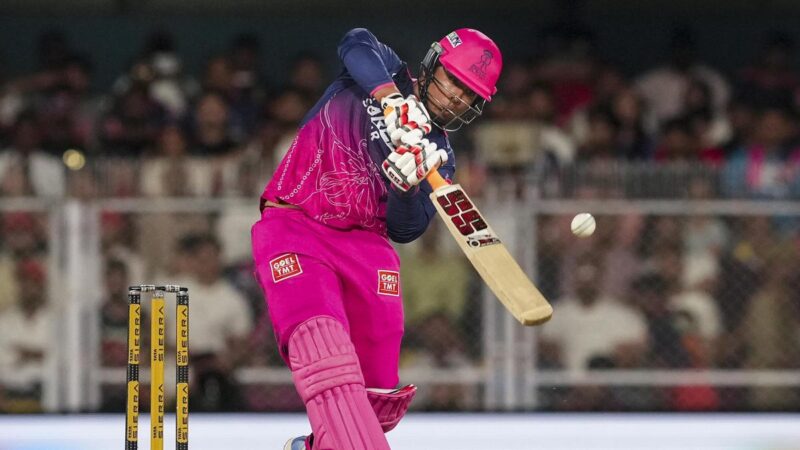
Rajasthan Royals thrashed Royal Challengers Bengaluru by 6 wickets in a high-scoring IPL 2026 thriller at Guwahati’s ACA Stadium, chasing down 202 with ease led by Vaibhav Sooryavanshi’s explosive 78 and Dhruv Jurel’s unbeaten 81, strengthening their unbeaten run at the top of the points table while RCB slipped to third; this match highlighted the tech-driven business model of the ₹1.6 lakh crore IPL ecosystem, blending AI analytics, data-powered strategies, media rights revenue, sponsorships, and fan engagement that turns every boundary into massive commercial value.

No Comments Read More
INDIA Investments

Earthquake Tremors Send Waves of Panic Across North India: Afghanistan’s Hindu Kush Region Shakes Once Again

YTC Ventures | www.ytcventures.com | TECHNOCRAT MAGAZINE April 4 2026 New Delhi, April 4, 2026 — In a sudden and unsettling reminder of nature’s unpredictable power, strong earthquake tremors rippled through several parts of North India late on Friday evening, April 3, 2026. Residents in bustling cities and quiet towns alike felt the ground subtly […]

No Comments Read More
Design Franchise INDIA Investments

Gold Spot in the 1990s: How India’s Iconic “Zing Thing” Orange Soda Conquered the Aerated Drink Market

In the vibrant pre-globalization India of the 1990s, the aerated drink market was dominated by local Indian brands before Coca-Cola and Pepsi fully returned post-1991 liberalization. Parle Products’ iconic portfolio including Thums Up, Limca, and especially Gold Spot — the bright orange “Zing Thing” soda — captured approximately 65% of the total carbonated soft drink market, with Thums Up holding ~42%, Limca ~8%, Gold Spot ~7%, Maaza ~5%, Citra ~4%, and Bisleri Club ~2%. Gold Spot, launched in 1952 and aggressively marketed in the 1970s-90s with catchy slogans like “Livva Little Hot, Sippa Gold Spot!”, became a cultural icon among Indian youth for its refreshing sweet-tangy orange flavor and strong street-level distribution, carving its unique spot in the orange segment until its acquisition by Coca-Cola in 1993 led to its eventual phase-out in favor of Fanta. The market was driven by urban youth aspiration, affordable pricing, and nostalgic TV/print advertising, but faced intense competition as multinational giants entered with deep pockets. Today, entrepreneurs inspired by this 90s success can set up their own aerated drink company with ₹30 lakhs to ₹1 crore investment by securing FSSAI and factory licenses, installing automated bottling lines, and following a simple business plan focused on nostalgia branding like “Zing Revival” to target the growing ₹20,000+ crore Indian soft drink market, with professional support available from consultants like YTC Ventures in Bengaluru for end-to-end setup, compliance, and investor connections.

No Comments Read More
INDIA Investments IRAN WAR

Gold Rates Crash Over 2% in India Today (24 March 2026) Despite Escalating Iran War – Why the Traditional Safe-Haven Metal is Falling Sharply and What the Full Year 2026 Holds for Gold and Silver Markets

Gold rates in India crashed over 2% today on 24 March 2026, with 24K gold trading at approximately ₹14,035 per gram (down ₹294) and 22K at ₹12,865 per gram (down ₹270), even as the ongoing US-Israel-Iran war continues to create geopolitical uncertainty and oil price volatility, prompting many investors to question whether this sharp decline in the traditional safe-haven metal presents a lucrative buying opportunity or a signal of further weakness ahead in the precious metals market.

No Comments Read More
Investments

Trump Unveils Massive $300 Billion Refinery Deal with India’s Reliance: A Game-Changer for U.S. Energy?

President Trump announces America’s first new oil refinery in 50 years in Brownsville, Texas, backed by a massive $300 billion deal with India’s Reliance Industries. Featuring a landmark 20-year offtake agreement, the project will process 1.2 billion barrels of U.S. shale oil, produce $175 billion in refined products, create jobs, and strengthen energy independence amid rising global oil prices and Middle East tensions.

No Comments Read More
Education Employment Investments Trending News

From 1930s Technate to Silicon Valley Oligarchy: A Historical Parallel

The striking historical parallel between the 1930s Technate vision and today’s Silicon Valley oligarchy reveals a recurring pattern: profound distrust in traditional political and economic systems fueling the rise of expert-led rule, first proposed by Howard Scott as a continental superstate governed by engineers through energy-based scientific planning, and now manifesting in the concentrated power of tech billionaires who deploy AI, data monopolies, and algorithmic platforms to shape global policy, infrastructure, and societal behavior with minimal democratic oversight. While the original Technocracy movement sought egalitarian abundance by abolishing the wasteful “price system” and replacing politicians with impartial technical experts, the modern iteration has morphed into a privatized techno-oligarchy where optimization serves shareholder value, elite innovation agendas, and proprietary control rather than universal prosperity—evident in the influence of Silicon Valley leaders over information flows, regulatory capture, digital sovereignty debates, and even speculative territorial ambitions echoing the Technate’s borderless North American blueprint. This evolution from idealistic, anti-capitalist blueprint to capitalist, top-down dominance underscores the persistent risk: when technical expertise escapes accountability, it can transition from utopian promise to sophisticated mechanism of unaccountable power, raising urgent questions in 2026 about whether AI-augmented governance will augment democracy or quietly supplant it in favor of a new form of digital aristocracy.

No Comments Read More
Investments

AI Governance as the New Infrastructure for Physical Systems

In March 2026, AI governance has quietly emerged as the foundational infrastructure powering the physical world, transforming from a regulatory afterthought into the runtime operating system that controls embodied AI, multi-agent swarms, autonomous robotics, smart cities, logistics networks, and critical cyber-physical systems at unprecedented scale. As physical AI deployment surges—with millions of humanoid robots, autonomous vehicles, warehouse agents, and industrial swarms executing complex tasks in real time—governance layers now dictate safety boundaries, value alignment, objective hierarchies, runtime containment, provenance tracking, red-teaming resilience, and human veto mechanisms, making them as essential as power grids or SCADA protocols. This convergence of agentic AI, zero-latency cyber-physical loops, and massive orchestration platforms elevates AI governance to strategic high ground: whoever designs, standardizes, secures, and verifies these layers will effectively determine how the physical economy, urban environments, and defense systems behave at digital speed. Forward-thinking deployments in Singapore’s Smart Nation 2.0, global fulfillment networks, autonomous ports, and defense command platforms already demonstrate governance functioning as live infrastructure—ensuring minimize-loss-of-life priorities, preventing emergent failures, and enabling forensic accountability—while highlighting the existential risks of misalignment, capture, or adversarial sabotage. In the age of physical AI convergence, code is physics, and robust, transparent, contestable AI governance infrastructure is the new steel, concrete, and silicon of civilization.

No Comments Read More
Artificia Intelligence Design Education Employment Entrepreneur Investments

Technocracy 2.0: The Return of Expert Rule in the Age of AI

In March 2026, YTC Ventures is quietly positioning itself at the forefront of frontier investment opportunities by blending high-conviction capital deployment with thought leadership on emerging technocratic trends. Through its specialized Investment Desk, the Bengaluru-based firm facilitates access to rare, high-value assets—most notably three 2025-built Arc7 ice-class LNG tankers (299 m, ~172,600 cbm capacity, advanced pod propulsion)—offering serious buyers a strategic entry into the scarce Arctic-capable shipping segment amid Northern Sea Route expansion and geopolitical realignments. Simultaneously, YTC Ventures drives the narrative around Technocracy 2.0 via its online publication Technocrat Magazine, delivering in-depth analysis of AI governance, agentic systems, physical AI convergence, quantum breakthroughs, and the societal implications of expert-led rule in the AI era. By combining curated off-market deals in energy infrastructure with forward-looking commentary on how technology reshapes power and capital allocation, YTC Ventures serves as a bridge for courageous investors seeking exposure to both tangible premium assets and the intellectual currents defining the next decade of global transformation—serious inquiries welcomed at investments@ytcventures.com.

No Comments Read More

Sign In

Register

Reset Password

Please enter your username or email address, you will receive a link to create a new password via email.