
TECHNOCRAT MAGAZINE | www.ytcventures.com | 7 Sept 2026 | Investment Strategy
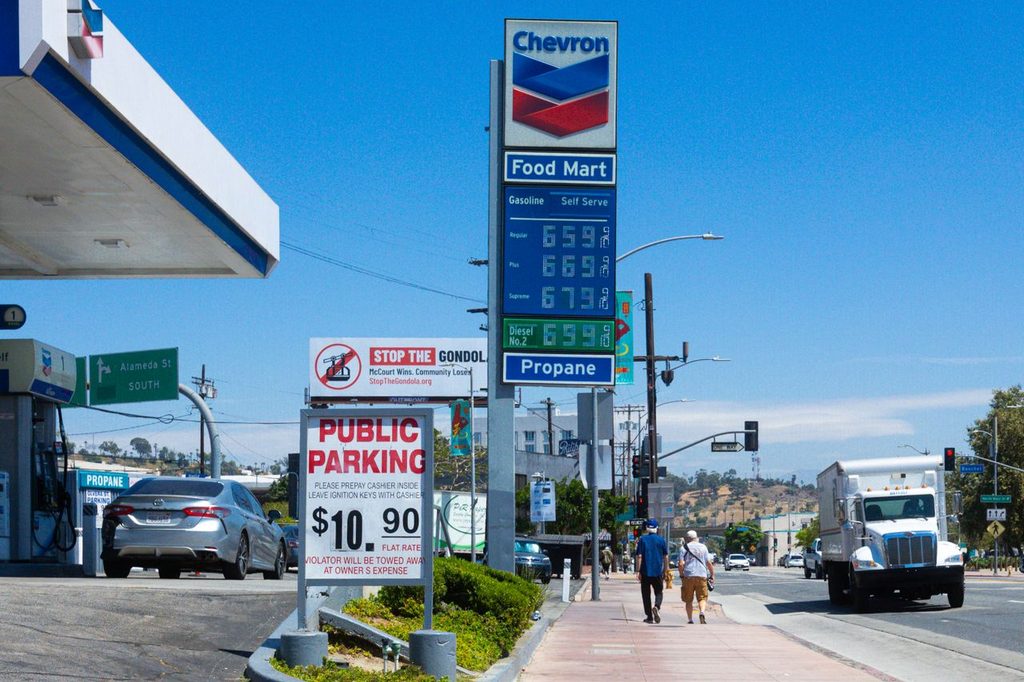
Americans are paying record gasoline prices this Labor Day weekend, with the national average reaching around $4.14 per gallon. But for investors, the bigger story is not the price at the pump — it is what sustained energy inflation could do to the US economy, corporate margins, interest rates and global markets.
The 2026 Labor Day weekend has delivered an uncomfortable milestone for American consumers.
The national average price of regular gasoline has risen above $4 per gallon, reaching roughly $4.14, according to AAA. That is the highest Labor Day gasoline price on record and well above the previous holiday record of about $3.82 set in 2012.
For investors, however, gasoline is only the visible part of the problem.
Behind the pump price is a much larger chain:
Geopolitical risk → crude oil → refining capacity → gasoline and diesel → transportation costs → corporate margins → inflation → Federal Reserve policy → asset prices.
That chain is where the investment opportunity — and risk — begins.

The $4.14 Gasoline Number Investors Cannot Ignore
AAA reported a national gasoline average of approximately $4.14 per gallon heading into Labor Day weekend, compared with around $3.19 a year earlier.
The increase is particularly significant because gasoline prices normally ease around this period as the peak summer driving season ends.
This year, the normal seasonal pattern has been overwhelmed by higher crude-oil costs and supply concerns.
AAA said crude oil has been trading around the $90-per-barrel range, while volatility around the Strait of Hormuz has added further uncertainty to global energy markets.
Labor Day gasoline snapshot
| Indicator | 2026 | Previous/Comparison |
|---|---|---|
| US national gasoline average | ~$4.14/gal | ~$3.19 a year ago |
| Previous Labor Day record | — | ~$3.82 in 2012 |
| WTI crude | ~$91/barrel | Elevated |
| Public EV charging | ~42¢/kWh | Broadly stable |
| US diesel | ~$5.85/gal | Record territory |
The important point for investors is that this is not simply a gasoline story.
Diesel is arguably more economically important.
Diesel at Record Levels Could Be the Bigger Inflation Threat
Diesel prices have climbed to roughly $5.85 per gallon, according to recent reporting.
Why does that matter?
Because diesel powers a substantial part of the real economy.
Trucks.
Agricultural machinery.
Construction equipment.
Mining equipment.
Freight transportation.
Industrial logistics.
When diesel becomes more expensive, the effect can move through the economy even if a consumer does not own a car.
A truck carrying food from a distribution centre to a supermarket burns diesel.
A farmer harvesting crops uses diesel.
A construction company operating heavy machinery uses diesel.
A logistics company moving goods across the country uses diesel.
That means the current energy shock can eventually appear in food prices, industrial costs, transportation charges and corporate operating expenses.
For investors, diesel is therefore an important early-warning indicator for second-round inflation.

Why Are US Gasoline Prices So High?
Several forces are converging.
1. Geopolitical risk
The continuing conflict involving Iran and disruption around the Strait of Hormuz have increased concerns about global oil supply.
The Strait of Hormuz is one of the world’s most important energy chokepoints.
Any prolonged disruption can increase the risk premium embedded in crude-oil prices.
For markets, this creates a dangerous feedback loop:
Geopolitical escalation → higher crude prices → higher fuel prices → higher inflation expectations.
2. Russian refinery disruptions
Attacks on Russian refining infrastructure have also contributed to concerns over global refined-product supplies.
This is particularly relevant for diesel markets.
The result is that investors are not simply watching crude production.
They are increasingly watching refining capacity.
That distinction matters.
The world can have sufficient crude oil while still experiencing tight supplies of gasoline or diesel if refinery capacity becomes constrained.
3. US refinery pressure
US refineries have been operating at extremely high utilization rates, while weather and maintenance risks add another layer of uncertainty.
AAA reported US gasoline production around 9.8 million barrels per day in its latest Labor Day update.
That tells investors something important:
The system is already working hard to meet demand.
If supply is tight and geopolitical disruptions continue, there may be limited room for error.
The Investment Chain: Follow the Fuel
At TECHNOCRAT Magazine, we believe investors should look beyond headlines and follow the economic transmission mechanism.
Here is the chain to watch:
| Energy Shock | Potential Market Impact |
|---|---|
| Higher crude oil | Energy producers may benefit |
| Higher gasoline | Consumer purchasing power weakens |
| Higher diesel | Freight and logistics costs rise |
| Higher transport costs | Corporate margins come under pressure |
| Higher inflation | Rate-cut expectations can weaken |
| Higher interest rates | Growth and technology valuations face pressure |
| Lower discretionary spending | Retail, travel and leisure face risk |
| Higher energy investment | Infrastructure and energy technology can benefit |
This is why the gasoline story is ultimately an asset-allocation story.
What Could Happen to US Inflation?
Energy prices have a unique characteristic.
They can move quickly.
Consumers see gasoline prices almost immediately. Businesses face transportation and energy costs throughout their supply chains.
If crude remains elevated, the inflation impact can broaden.
That creates a problem for the Federal Reserve.
The central bank can influence demand through interest rates, but it cannot directly manufacture more oil or reopen a refinery.
This creates a difficult policy equation:
Oil shock + persistent inflation = fewer easy choices for central banks.
Recent market developments have already increased sensitivity to Federal Reserve policy. Stronger-than-expected US employment data pushed Treasury yields and the dollar higher, while markets reassessed the possibility of a September rate increase.
Investors therefore need to watch energy prices and inflation data together, rather than treating them as separate stories.
The Technology Sector Is Not Immune
At first glance, expensive gasoline appears negative for traditional industries and irrelevant to technology companies.
That assumption is too simplistic.
Technology companies can be affected through:
- Higher employee transportation costs
- Higher data-centre energy costs
- Higher logistics expenses
- Higher consumer financing costs
- Higher interest rates
- Lower discretionary spending
- Higher valuation discount rates
The biggest issue for high-growth technology stocks may not be gasoline itself.
It may be the interest-rate response to persistent inflation.
When Treasury yields rise, the present value of distant future cash flows becomes less attractive.
That can put pressure on richly valued growth companies.
AI Infrastructure: A Different Energy Investment Story
There is another side to the energy equation.
Artificial intelligence is creating enormous demand for electricity and data-centre infrastructure.
That means the long-term investment opportunity may increasingly move from:
Oil alone → Energy + Power Infrastructure + AI Infrastructure
Investors should therefore monitor companies and infrastructure themes associated with:
- Electricity generation
- Natural gas
- Nuclear power
- Grid modernization
- Energy storage
- Data-centre power
- Cooling infrastructure
- Power semiconductors
- Grid software
- Energy efficiency
- AI infrastructure
The energy transition is no longer simply an environmental investment theme.
It is becoming an economic infrastructure theme.
Who Could Benefit From Higher Oil Prices?
Investors should distinguish between companies that produce energy and companies that consume energy.
Potential beneficiaries
Upstream oil & gas producers
Higher crude prices can improve revenue and cash flow for efficient producers, assuming operating costs remain controlled.
Oilfield services
Higher capital spending by producers can benefit selected oilfield-service companies.
Energy infrastructure
Pipelines, storage and other infrastructure can become strategically valuable when energy security becomes a national priority.
Refining
Refiners can potentially benefit from favourable refining margins when refined-product supplies are tight, although results depend heavily on crude costs, regional spreads and operating conditions.
Who Faces Pressure?
Airlines
Jet fuel is a major operating cost.
A prolonged oil rally can therefore compress airline margins unless carriers can pass costs to passengers.
Logistics
Higher diesel prices increase transportation costs.
Retail
Consumers spending more at the gasoline pump have less money available for discretionary purchases.
Manufacturing
Energy-intensive manufacturers can face margin pressure.
Chemicals
Many petrochemical businesses are closely linked to energy and feedstock prices.
Consumer discretionary
Higher fuel and food expenses can reduce household spending on non-essential products.

The Geographic Investment Map Is Changing
The gasoline story is also creating winners and losers across US states.
AAA’s latest data showed California at around $5.78 per gallon, with Washington and Hawaii also above $5.40. At the other end, Indiana was around $3.44, while Texas was around $3.69.
Selected US gasoline prices
| State | Approx. gasoline price |
|---|---|
| California | $5.78 |
| Washington | $5.47 |
| Hawaii | $5.41 |
| Oregon | $4.98 |
| Nevada | $4.91 |
| Arizona | $4.52 |
| Indiana | $3.44 |
| Texas | $3.69 |
| Oklahoma | $3.71 |
| Mississippi | $3.71 |
This creates an important investment insight:
Energy exposure is not evenly distributed across America.
State economies with different refining structures, energy production, taxes, transportation networks and regulations can experience very different economic outcomes.
What Should Investors Do Now?
This is where investors need to move beyond the headline.
The correct response to an energy shock is not necessarily to “buy oil.”
Instead, investors should build a multi-layer energy-inflation framework.
Strategy 1: Watch energy producers
Oil and gas companies with strong balance sheets, low production costs and disciplined capital allocation may be better positioned than highly leveraged producers.
Strategy 2: Look for infrastructure
Energy infrastructure can provide exposure to the physical assets required to move, store and process energy.
Strategy 3: Monitor inflation-sensitive sectors
Investors should identify businesses with pricing power.
Companies able to pass higher input costs to customers can potentially protect margins better than businesses operating in highly competitive markets.
Strategy 4: Reduce valuation risk
If energy inflation pushes interest rates higher, expensive growth stocks may become more vulnerable.
Investors should therefore evaluate:
Price-to-earnings + free cash flow + debt + profitability + valuation.
Not simply revenue growth.
Strategy 5: Build an energy-transition barbell
The long-term opportunity may involve both traditional energy security and next-generation power infrastructure.
That could mean researching:
Oil & gas + natural gas + nuclear + grid infrastructure + storage + AI power infrastructure.
The Bigger Investment Question: Is $4 Gasoline Temporary?
This is the question investors should be asking.
There are arguments for prices to decline.
Demand typically weakens after the summer driving season. Gasoline futures have also indicated expectations for lower prices later in the year. Energy Secretary Chris Wright has pointed to falling gasoline futures and seasonal demand changes as reasons for potential relief.
But there are also significant risks.
A renewed geopolitical escalation could push crude prices higher.
Additional refinery disruptions could tighten refined-product markets.
Further attacks on energy infrastructure could increase the global risk premium.
That makes forecasting a single gasoline price extremely difficult.
The better investment approach is to prepare for multiple scenarios.
TECHNOCRAT Investment Scenario Matrix
| Scenario | Oil | Inflation | Rates | Investment implication |
|---|---|---|---|---|
| Base Case | Moderates | Gradually cools | Stable/lower | Growth assets recover |
| Energy Relief | Falls sharply | Falls faster | Rate cuts become easier | Tech & consumer stocks benefit |
| Persistent Shock | Remains elevated | Sticky | Higher for longer | Energy/value outperform |
| Geopolitical Escalation | Surges | Reaccelerates | Policy becomes difficult | Energy, defence & hard assets gain attention |
| Energy + AI Boom | Mixed | Structural power costs | Higher infrastructure spending | Grid, power & AI infrastructure benefit |
YTC Ventures Investment View
For investors, the most important lesson from the 2026 Labor Day gasoline shock is simple:
Energy is not just a commodity. It is an economic operating system.
When energy prices move, they influence transportation.
Transportation influences logistics.
Logistics influence corporate costs.
Corporate costs influence inflation.
Inflation influences central-bank policy.
Central-bank policy influences valuation.
And valuation influences capital allocation.
That is why an investor looking only at the gasoline pump is missing the larger opportunity.
At YTC Ventures, our investment approach is built around identifying these cross-sector connections — where macroeconomic shifts create opportunities in private businesses, strategic investments, technology, infrastructure and growth companies.
The opportunity is often not in predicting tomorrow’s gasoline price.
It is in identifying which businesses become more valuable because the world around them is changing.

The 2026 Energy Investment Playbook
Investors should monitor five signals over the coming months:
1. Crude oil
Watch Brent and WTI for signs that geopolitical risk is becoming structurally embedded in prices.
2. Diesel
Diesel can provide an earlier warning of broader transportation and logistics inflation.
3. Refining margins
Crude supply alone does not determine pump prices.
Refinery capacity matters.
4. US inflation
If energy prices begin pushing headline and core inflation higher, rate expectations can change rapidly.
5. Treasury yields
For growth investors, the 10-year US Treasury yield may be as important as the oil price.
Final Investment Takeaway
The record Labor Day gasoline price is more than an uncomfortable holiday statistic.
It is a warning about the increasingly interconnected nature of geopolitics, energy security, inflation, monetary policy and investment markets.
At approximately $4.14 per gallon, American gasoline has crossed a psychological threshold that investors cannot ignore. The previous Labor Day record from 2012 has been broken, while diesel has also reached unprecedented levels.
The immediate question is whether fuel prices eventually retreat as demand falls.
The strategic question is much bigger:
What if the global economy has entered a period in which energy security once again becomes one of the dominant investment themes?
If that happens, the winners may not simply be oil companies.
They could include energy infrastructure, power generation, grid technology, logistics optimization, industrial automation, nuclear energy, storage, AI infrastructure and businesses with strong pricing power.
For investors, the message is clear:
Don’t invest in the headline. Invest in the economic chain behind the headline.
TECHNOCRAT Magazine will continue tracking that chain — from global energy markets to private capital, AI infrastructure, strategic investments and the next generation of investable businesses.
YTC Ventures | Strategic Investment • Private Capital • M&A • Growth Opportunities

Comments