
TECHNOCRAT MAGAZINE | www.ytcvenutures.com | 7 Sept 2026
A weekend excursion to the volcanic landscape of Fogo Island has ended in one of Cape Verde’s worst recent tragedies, after a passenger bus plunged into a steep ravine, killing at least 25 people.
FOGO ISLAND, CAPE VERDE — September 7, 2026: A devastating bus crash on the Atlantic island of Fogo has claimed the lives of at least 25 people, many of them children, teenagers and school students, turning what was meant to be a memorable excursion into a national tragedy.
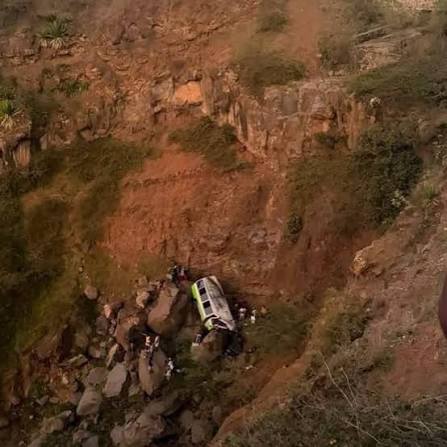
The bus was carrying 32 people when it veered off a mountainous road and plunged approximately 30 metres into a rocky ravine on Saturday evening.
The crash occurred on the Campanas de Cima route, as the vehicle was returning toward São Filipe after an excursion to Chã das Caldeiras, a village located inside the volcanic crater of Pico do Fogo.
Cape Verde’s President José Maria Pereira Neves described the disaster as “a great catastrophe.” The country has declared two days of mourning.
The Tragedy in Numbers
| Detail | What is known |
|---|---|
| Deaths | At least 25 |
| People on bus | 32 |
| Victims | Mostly children, teenagers and students |
| Location | Fogo Island, Cape Verde |
| Road | Campanas de Cima |
| Fall | Approximately 30 metres |
| Destination | São Filipe |
| Excursion site | Chã das Caldeiras / Pico do Fogo |
| Driver | Among those killed |
| Cause | Still under investigation |
| National response | Two days of mourning |
The figures remain subject to official confirmation as authorities continue their investigation.
A Journey That Was Meant to Be a Celebration
The excursion was not an officially organised school trip, according to education officials.
Instead, the journey was an annual private excursion organised by the bus driver, who regularly transported the students to school during the academic year.
The trip was intended to give the young passengers an opportunity to visit one of Cape Verde’s most distinctive natural landscapes — the volcanic area around Pico do Fogo.
The driver was also among those who died.
That detail has added another layer of grief to a community already struggling to comprehend the scale of the loss.
The Road to Disaster
The accident happened late Saturday on the mountainous Campanas de Cima route.
According to officials and local reports:
- The bus was returning to São Filipe.
- There were 32 passengers aboard.
- The vehicle left the road.
- It plunged approximately 30 metres into a steep ravine.
- The wreckage came to rest in a rocky, difficult-to-access valley.
- Emergency teams worked through the night to reach victims.
- Several injured passengers were taken to the São Francisco de Assis Regional Hospital.
- The precise cause of the crash has not yet been established.
The difficult terrain significantly complicated the rescue operation.
Rescue Teams Faced a Race Against Time
The geography of Fogo Island turned the rescue operation into a major logistical challenge.
The wreckage was located in a steep, rocky area that was difficult for emergency personnel to reach.
Rescuers worked through the night to extract people from the wreckage and reach those who were trapped.
The severity of the accident also meant that authorities had to begin handling fatalities while rescue and medical operations were still underway.
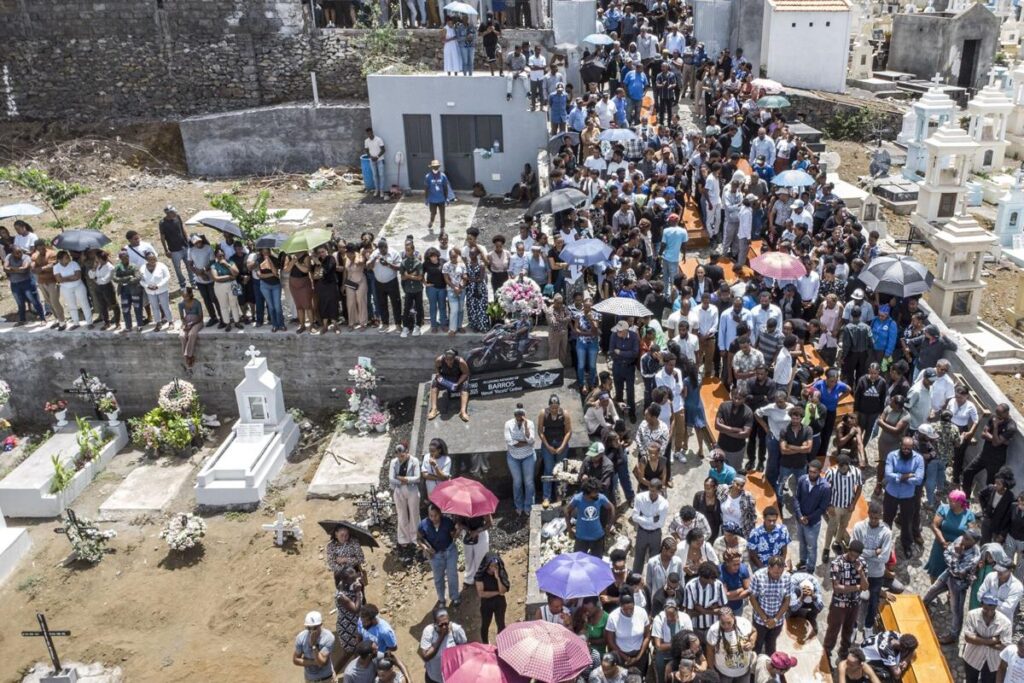
Local reports said seven victims were buried early Sunday, with further funerals expected later.
A Nation in Mourning
The scale of the tragedy has shocked Cape Verde.
President José Maria Pereira Neves called the crash “a great catastrophe” and expressed solidarity with the families affected.
Cape Verde has declared two days of mourning following the disaster.
The tragedy has been particularly painful because of the age of many of the victims.
For families in the communities connected to Curral Grande and Ponta Verde, the loss has touched an entire generation.
Why Fogo Island Matters
Fogo is one of Cape Verde’s volcanic islands and is dominated by the dramatic landscape of Pico do Fogo, the country’s highest peak.
Chã das Caldeiras lies within the volcanic crater and is known for its striking landscape and distinctive communities.
For visitors, the region represents one of Cape Verde’s most remarkable natural attractions.
For local residents, however, the mountain roads are part of everyday life.
The accident has inevitably renewed attention on the challenges of transporting people through mountainous terrain where a single road departure can have devastating consequences.
The Investigation Begins
Authorities have not yet established why the bus left the road.
That means several critical questions remain unanswered:
- What caused the driver to lose control?
- Were road conditions a factor?
- Was visibility affected?
- Was the vehicle mechanically sound?
- What was the condition of the road barriers?
- Was the bus operating within applicable safety requirements?
- Could the steep terrain or road design have contributed?
Authorities are expected to investigate the circumstances surrounding the crash before drawing conclusions.
At this stage, there is no confirmed official explanation for the cause.
A Rare but Devastating Accident
Cape Verde generally does not experience road disasters of this magnitude frequently.
Local authorities have described the crash as an exceptional tragedy.
That makes the incident even more significant from a public-safety perspective.
The tragedy raises broader questions about:
Mountain-road safety.
Passenger transport standards.
Emergency response in remote terrain.
Vehicle safety inspections.
Roadside barriers and protective infrastructure.
Access to emergency medical services on island communities.
These issues will likely become part of the national conversation once the immediate rescue and mourning period ends.
The Human Cost Comes First
There is an understandable tendency after a major accident to focus immediately on numbers.
But behind the number 25 are families, classmates, teachers, neighbours and communities.
Many of the victims were young.
They were travelling on what was supposed to be an ordinary excursion.
They were expected to return home.
Instead, families are now preparing for funerals.
That is the central story of the Fogo Island tragedy.
Not the road.
Not the vehicle.
Not the statistics.
The lives that were lost.
What Happens Next?
Authorities will now face three immediate priorities:
1. Support the survivors
Those injured in the crash require medical treatment and psychological support.
2. Support the families
Families of the victims will need assistance through identification, funerals and the aftermath of the disaster.
3. Establish what happened
The investigation must determine exactly why the bus left the road and whether any preventable factors contributed to the crash.
Only a full investigation can answer those questions.
TECHNOCRAT Magazine — Global View
The Cape Verde tragedy is a reminder that infrastructure is not merely an economic concept.
Roads are infrastructure.
Public transport is infrastructure.
Emergency response is infrastructure.
And when infrastructure fails — or when safety systems are inadequate — the consequences can be measured not in financial losses, but in human lives.
For governments and investors alike, transport infrastructure is ultimately about much more than construction and capital expenditure.
It is about resilience, safety, technology and human outcomes.
The Fogo Island tragedy should therefore prompt a renewed focus on how technology can improve transport safety — from vehicle monitoring and predictive maintenance to road-condition intelligence, emergency communications and real-time fleet management.
But today, before the policy debate begins, there is a more immediate reality:
At least 25 lives have been lost, many of them young people who were simply on an excursion.
Cape Verde is mourning.
And Fogo Island is facing the painful task of remembering them.
DEVELOPING STORY
Authorities continue to investigate the crash. The death toll and details surrounding the victims may change as officials complete identification and medical assessments. TECHNOCRAT Magazine will update this report as verified information becomes available.
Sources: Associated Press, Reuters, Agence France-Presse, Cape Verdean authorities and local reporting.

Comments