
By YTC Ventures for Technocrat Magazine
Published: September 9, 2025
On September 8, 2025, a deadly shooting attack at Ramot Junction in occupied East Jerusalem claimed the lives of at least six people and injured 12 others, marking one of the deadliest attacks in the city in over two years. This tragic event, described by Israeli authorities as a “terrorist attack,” has intensified tensions in an already volatile region, with ripple effects felt across Israel, the occupied West Bank, and Gaza.
As the world grapples with the implications, this article explores the details of the attack, its context, the role of social media in shaping narratives, and the broader geopolitical fallout, while inviting investors to join YTC Ventures to explore opportunities in tech-driven solutions for global challenges.
The Attack: A Morning of Chaos at Ramot Junction
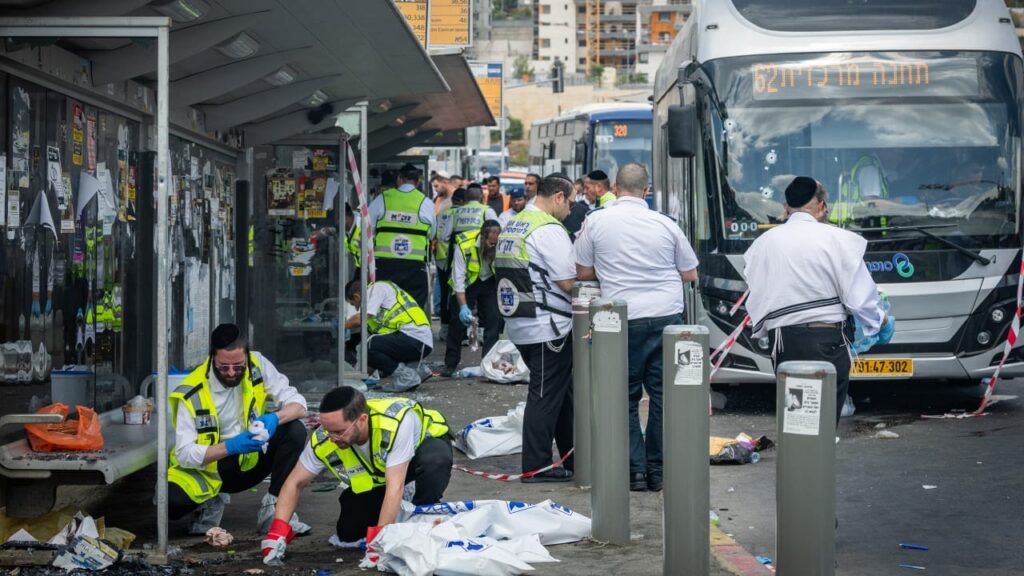
At approximately 10:15 AM local time (08:15 BST) on September 8, 2025, two Palestinian gunmen, identified as Mohammad Taha (21) and Muthanna Amro (20) from the West Bank villages of Qatanna and al-Qubeiba, opened fire at a crowded bus stop near Ramot Junction, a major intersection on the northern outskirts of Jerusalem. The attackers, armed with improvised “Carlo” submachine guns, ammunition, and a knife, targeted commuters during the morning rush hour. Israeli media reported that one gunman, possibly disguised as a ticket inspector, boarded a bus and began shooting, while the other fired at people waiting at the stop.
The victims included a diverse group: a 79-year-old former cardiologist, a 43-year-old rabbi, a 25-year-old Spanish immigrant, a 60-year-old woman, and two others in their 30s and 50s, including rabbis from the Orthodox Jewish community in Ramot. Among the 12 injured, six were in serious condition with gunshot wounds, and others sustained minor injuries from shattered glass. A pregnant woman was also among the wounded, adding to the tragedy’s toll.
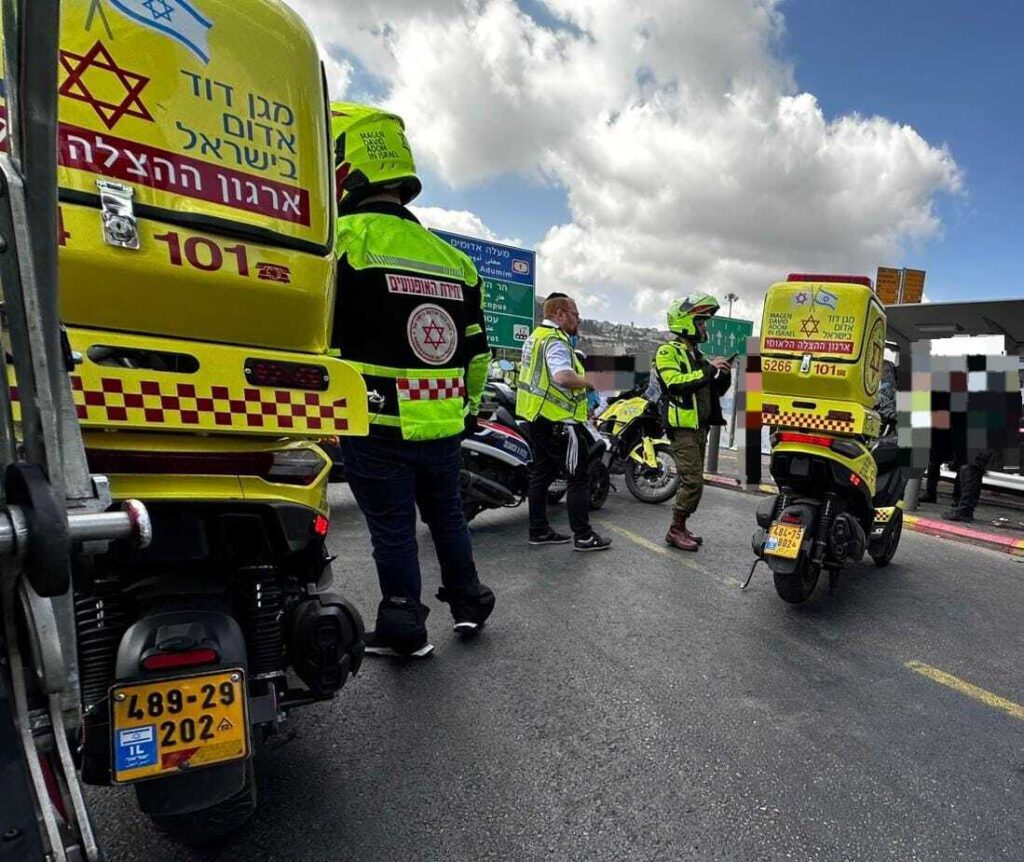
An off-duty Israeli soldier and an armed civilian quickly neutralized the attackers, killing them at the scene. A third suspect, a resident of East Jerusalem, was later arrested for allegedly smuggling the gunmen into the city. Dashcam footage captured the chaos, showing commuters fleeing as gunfire shattered bus windows, leaving bloodstained pavements and scattered belongings.
Context: A Region in Turmoil
The Ramot Junction attack occurred against a backdrop of escalating violence in Israel, the occupied West Bank, and Gaza. The shooting took place near the Green Line, the internationally recognized boundary separating Israel from the occupied West Bank, in an area Israel annexed in 1967—a move deemed illegal by the United Nations and most countries. Ramot, home to many Orthodox Jews, is considered an illegal settlement under international law, a point of contention that fuels Palestinian grievances.
The attack follows a pattern of violence linked to the ongoing Israel-Hamas war, sparked by Hamas’s October 7, 2023, attack that killed 1,200 Israelis and took 251 hostages. Israel’s retaliatory offensive in Gaza has resulted in over 64,522 Palestinian deaths, mostly civilians, according to Gaza’s health ministry.
In the West Bank, at least 968 Palestinians have been killed by Israeli forces and settlers since the war began, compared to 49 Israelis killed by Palestinians in Israel and the West Bank through July 2025.
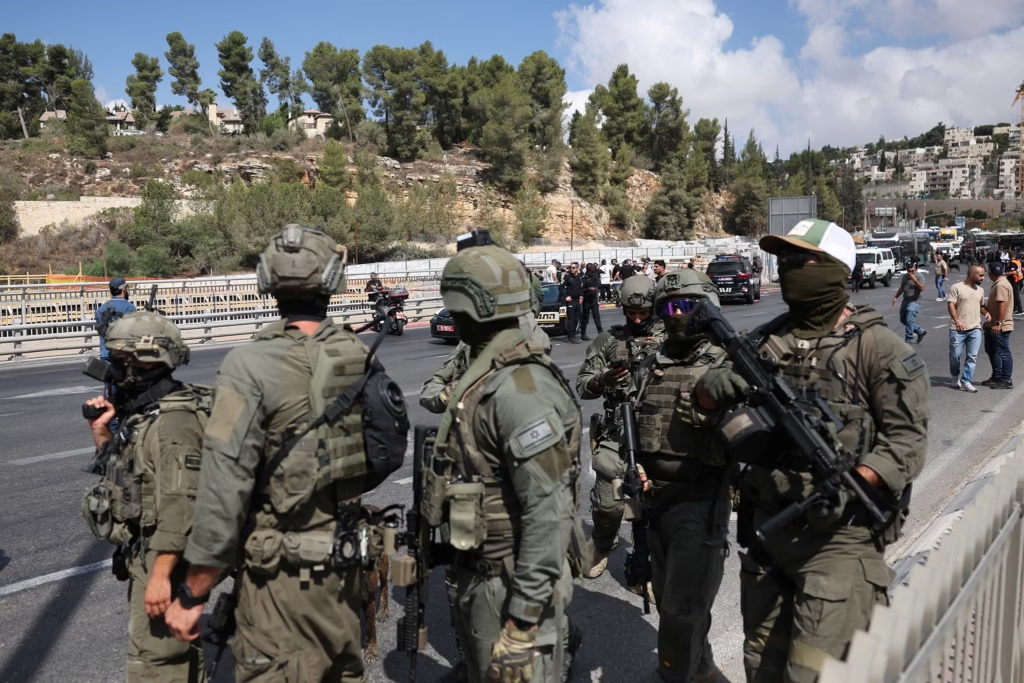
Hours after the Jerusalem attack, Israeli forces raided Jenin’s refugee camp, killing a 14-year-old Palestinian boy, Islam Abdel Aziz Noah Majarmah, and injuring two others. Prime Minister Benjamin Netanyahu, who visited the attack site with far-right National Security Minister Itamar Ben-Gvir, vowed to “encircle” the attackers’ villages and pursue accomplices, signaling a broader crackdown. Netanyahu also warned Gaza City residents to evacuate ahead of a planned Israeli ground operation, escalating fears of further violence.
Social Media’s Role: Amplifying Narratives and Tensions
Social media platforms, including X, played a significant role in shaping the narrative around the attack, with posts reflecting polarized sentiments:
- Immediate Coverage: Posts on X from outlets like @Jerusalem_Post and @AP provided real-time updates, reporting the initial death toll of four, which later rose to six. These posts, shared within hours of the attack, included footage of the chaotic scene, amplifying its global visibility.
- Hamas’s Response: Hamas praised the attack as a “heroic and exceptional operation” and a “natural response” to Israel’s actions in Gaza and the West Bank, though it did not claim responsibility. The al-Quds Brigades, the armed wing of Palestinian Islamic Jihad, echoed this sentiment, calling the shooting a “legitimate response” to Israeli “crimes.” These statements, circulated on X and Telegram, fueled outrage among Israeli officials and supporters.
- Israeli Leadership’s Reaction: Israeli President Isaac Herzog’s X post described the attack as “absolute evil,” urging the world to recognize the threat. Netanyahu’s rhetoric, shared via X, emphasized a multi-front “war against terrorism,” while Ben-Gvir called for arming more civilians, a controversial stance that trended online.
- Global Condemnation: Leaders from France, the UK, the US, and Spain condemned the attack on X and other platforms. Spain’s Foreign Ministry confirmed a Spanish national among the victims, reiterating its commitment to peace. Australian Foreign Minister Penny Wong and the EU also expressed condolences, with posts calling for an end to violence.
However, the reliance on social media for real-time information also amplified misinformation risks. Posts on X, such as those speculating about the attackers’ motives or affiliations, were inconclusive without official confirmation. The polarized nature of these discussions underscored the challenge of navigating narratives in a conflict zone.
Geopolitical Fallout: A Region on the Brink
The Jerusalem attack has heightened tensions at a critical juncture:
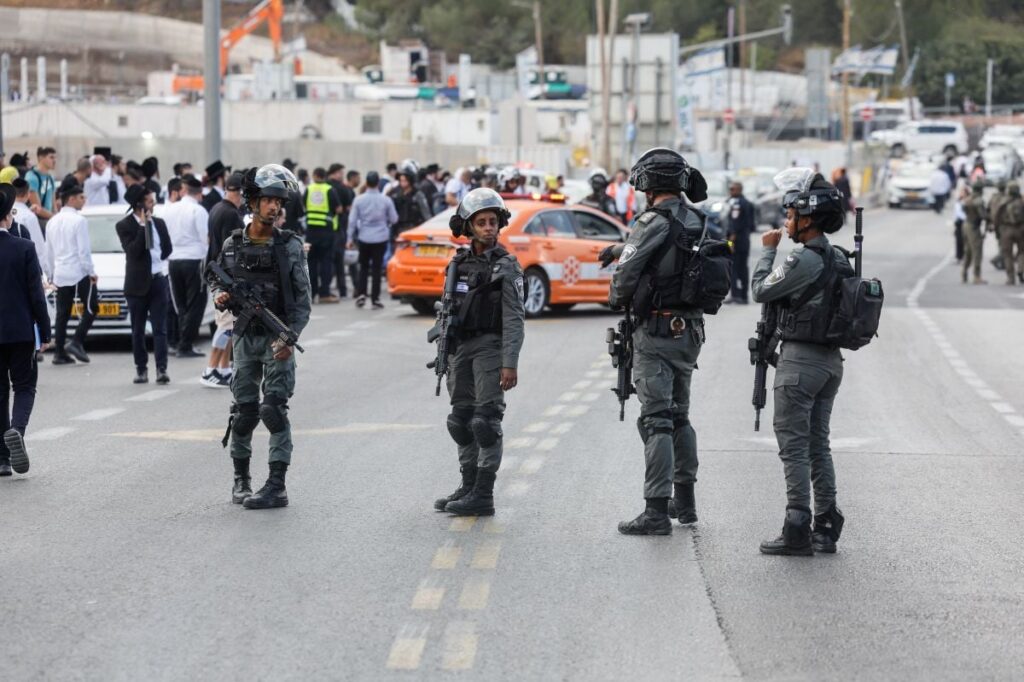
- Israeli Response: Netanyahu’s pledge to pursue accomplices and encircle Palestinian villages signals intensified military operations in the West Bank. The IDF deployed soldiers to Ramallah, raising fears of further raids and civilian casualties. Far-right minister Bezalel Smotrich’s recent proposal to annex four-fifths of the West Bank, delayed last week, may gain traction post-attack, risking regional escalation.
- Palestinian Authority’s Stance: The Palestinian Authority, led by Mahmoud Abbas, condemned the attack, denouncing all violence against civilians. However, its weakened authority in the West Bank, coupled with Israeli annexation threats, complicates its role in maintaining stability.
- International Reactions: The attack drew global condemnation, with the US, UK, France, and Spain calling for peace. However, Western recognition of a Palestinian state and Israel’s annexation plans could trigger further violence, as warned by an Israeli security official.
- Ceasefire Talks: The attack coincides with US-proposed ceasefire talks between Israel and Hamas, with President Donald Trump’s administration warning Hamas of a “last chance” for a deal. The shooting may complicate negotiations, as Hamas’s praise for the attackers could harden Israel’s stance.
Conclusion: A Call for Reflection and Action
The Ramot Junction shooting is a stark reminder of the deep-seated tensions fueling the Israel-Palestine conflict. As Jerusalem reels from the loss of six lives and the region braces for potential escalation, the role of social media in amplifying narratives—both unifying and divisive—cannot be overstated. For investors, this moment highlights the urgency of supporting tech-driven solutions that address global challenges. YTC Ventures invites you to join its mission to back startups driving positive change, from conflict zones to emerging markets. As the world watches Jerusalem, let’s invest in a future where technology fosters peace and prosperity.For more insights into global events and tech-driven solutions, subscribe to Technocrat Magazine.
Jerusalem Shooting 2025, Ramot Junction Attack, Israel-Palestine Conflict, Social Media Impact, YTC Ventures Investment, Hamas Response, Netanyahu Jerusalem, Palestinian Gunmen, Global Condemnation, Tech for Peace
Sources: Al Jazeera, The New York Times, The Guardian, CNN, BBC, Reuters, The Times of Israel, The Washington Post, NPR, CBC News, Euronews, ABC News, Saudi Gazette, The Hindu, X posts

Comments