
As of September 9, 2025, Nepal is engulfed in a profound political and social crisis, driven by youth-led protests that have spiraled into violence, arson, and the collapse of the government.
The resignation of Prime Minister K.P. Sharma Oli, the death of former Prime Minister Jhalanath Khanal’s wife in a protest-related fire, and widespread unrest have left the Himalayan nation in a state of uncertainty.
This article compiles the latest developments based on available information, providing a comprehensive overview of Nepal’s current status.
The Catalyst: Social Media Ban and Gen Z Outrage
The unrest began on September 4, 2025, when the Nepalese government, led by Prime Minister K.P. Sharma Oli, imposed a ban on 26 social media platforms, including Facebook, Instagram, WhatsApp, YouTube, and X. The ban was justified as a measure to curb misuse, enforce tax compliance, and ensure registration under the Directives for Managing the Use of Social Networks, 2023.
However, it was widely perceived as an attempt to suppress dissent, particularly among Nepal’s youth, who use these platforms for activism, communication, and economic activities.
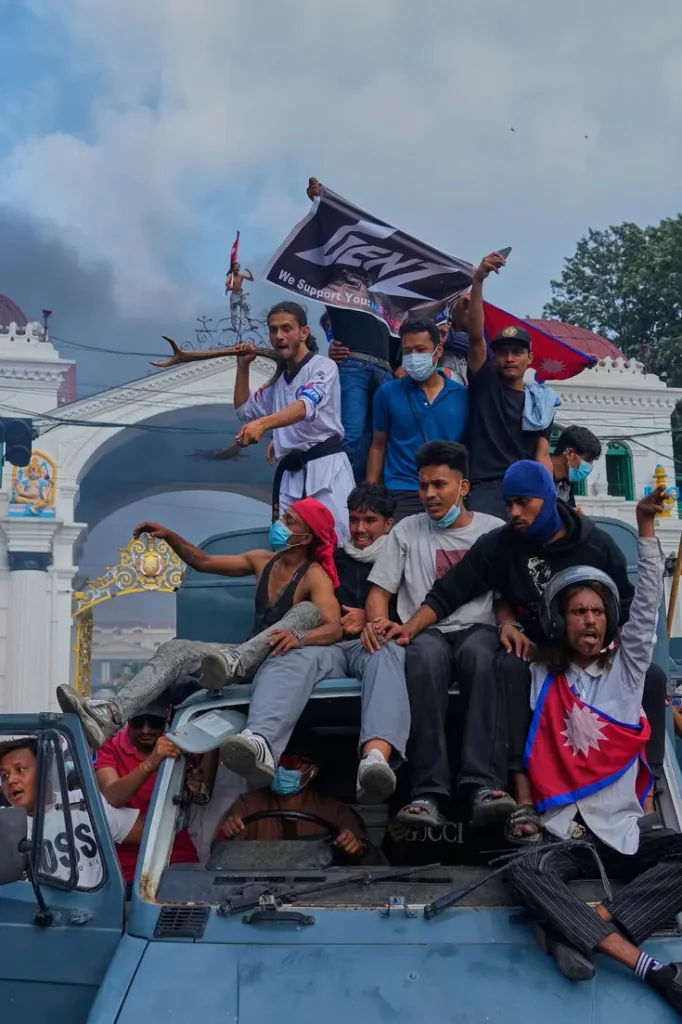
The decision ignited a firestorm of protests, led by Generation Z, who labeled the ban as censorship and a violation of free speech.
The protests were further fueled by a viral social media campaign using hashtags like #NepoKid and #NepoBabies, which exposed the lavish lifestyles of politicians’ children amid widespread poverty and unemployment. Nepal’s per capita income stands at $1,300, with youth unemployment at 19.2% for ages 15–29, and many young Nepalis are forced to seek work abroad, often in perilous conditions. The stark contrast between the struggles of ordinary citizens and the privilege of the political elite amplified public anger.
The Protests: Violence and Escalation
On September 8, 2025, thousands of young protesters, many in school or college uniforms, gathered at Kathmandu’s Maitighar Mandala, organized by groups like Hami Nepal. The demonstrations, dubbed the “Gen Z Revolution,” quickly escalated as protesters breached police barricades and marched toward the Federal Parliament building, chanting slogans like “Shut down corruption, not social media.”
Police responded with water cannons, tear gas, rubber bullets, and live ammunition, resulting in at least 19 deaths and over 250 injuries on the first day. An ambulance was set on fire, and property damage was widespread.
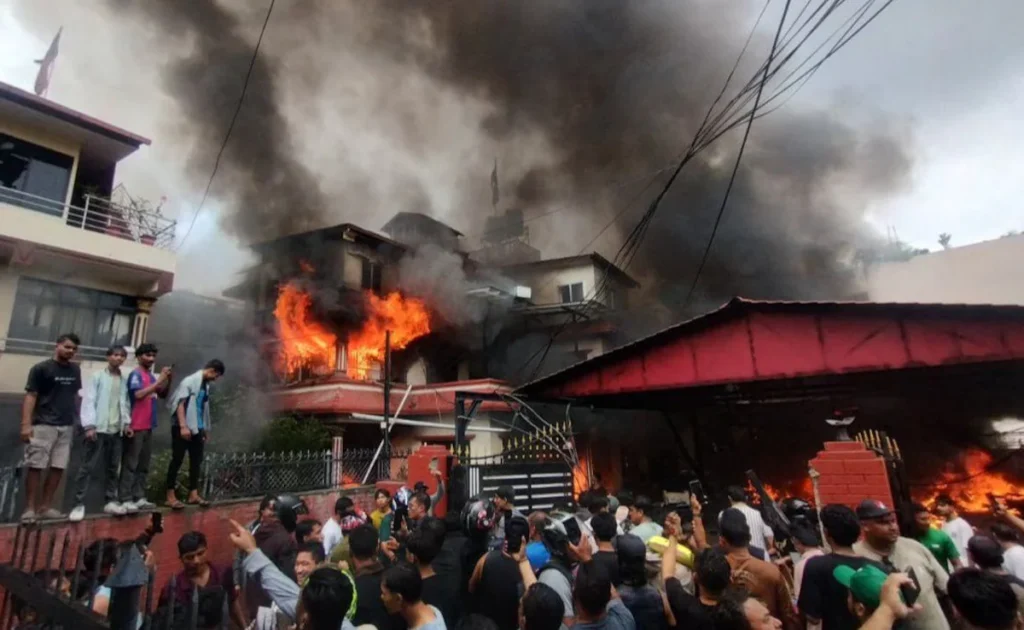
The government lifted the social media ban late on September 8, but the move failed to quell the protests. On September 9, demonstrators defied curfews in Kathmandu, Lalitpur, and other cities, targeting symbols of the political establishment. Protesters set fire to the Singha Durbar office complex, which houses the prime minister’s office and ministries, as well as the parliament building. Private residences of top leaders, including Oli, President Ram Chandra Poudel, former Prime Minister Pushpa Kamal Dahal (Prachanda), and former Prime Minister Sher Bahadur Deuba, were also torched.
Tragic Loss: Death of Former Prime Minister’s Wife
In a particularly harrowing incident, Rajyalaxmi Chitrakar, the wife of former Prime Minister Jhalanath Khanal, died on September 9, 2025, after protesters set their home in Kathmandu’s Dallu area on fire. Chitrakar was trapped inside, suffered severe burns, and was rushed to Kirtipur Burn Hospital, where she succumbed to her injuries. The incident has drawn widespread condemnation and highlighted the escalating violence of the protests.
Political Collapse: Oli’s Resignation and Leadership Vacuum
The protests reached a climax on September 9, when hundreds of demonstrators stormed Oli’s office and private residence in Bhaktapur, setting the latter ablaze. Facing mounting pressure, Prime Minister K.P. Sharma Oli, a leader of the Communist Party of Nepal (Unified Marxist-Leninist), resigned on the same day. Reports suggest he was airlifted to safety by military helicopters, with some unconfirmed claims indicating he may be planning to flee the country, drawing parallels to the ousting of Bangladesh’s Sheikh Hasina in 2024 and Sri Lanka’s Gotabaya Rajapaksa in 2022.
Home Minister Ramesh Lekhak and Finance Minister Bishnu Prasad Paudel also resigned, citing moral responsibility for the deaths and violence. Paudel was reportedly chased and assaulted by protesters in Kathmandu. The resignations have left Nepal without a clear leadership structure, with no immediate replacement for Oli announced. The Nepalese Army has deployed troops to maintain order and issued a joint statement with security chiefs urging restraint and a peaceful resolution.
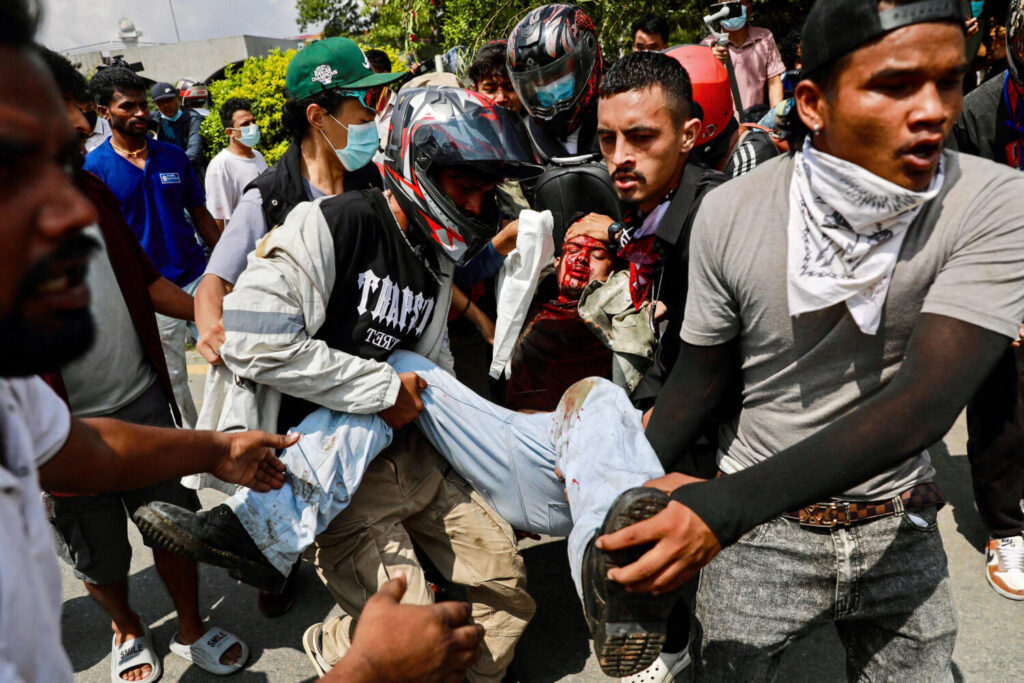
Contrary to some reports, President Ram Chandra Poudel has not resigned, as clarified by the Nepalese Army. However, his residence, Sheetal Niwas, was attacked and set on fire, and both he and Foreign Minister Arzu Rana Deuba, wife of former Prime Minister Sher Bahadur Deuba, were reportedly assaulted during the attack on their home.
Broader Context: Corruption and Systemic Issues
The protests reflect deep-seated frustrations with systemic corruption and inequality. High-profile scandals have eroded public trust, including a 2017 Airbus deal that cost Nepal Airlines $10.4 million, embezzlement of NPR 14 billion during the Pokhara International Airport construction, and allegations against Foreign Minister Arzu Rana Deuba for misrepresenting Nepali citizens as Bhutanese refugees.
The #NepoKids campaign has spotlighted nepotism, with protesters accusing political elites of securing advantages for their families while ordinary Nepalis struggle.
Economic challenges, including high youth unemployment and reliance on foreign remittances, have compounded public discontent. The protests echo recent anti-corruption movements in Bangladesh and Sri Lanka, where youth-led uprisings toppled governments. In Nepal, the movement has also sparked speculation about a potential return to monarchy, abolished in 2008, though this remains a fringe demand.
Current Status: A Nation in Limbo
As of September 9, 2025, Nepal is in a state of chaos. Curfews remain in place in Kathmandu and other cities, schools are closed, and Tribhuvan International Airport in Kathmandu has been shut down due to nearby fires, stranding passengers, including Indian travelers. India has issued a travel advisory urging its citizens to defer travel to Nepal and avoid public spaces, while airlines like Air India, IndiGo, and Nepal Airlines have canceled flights.
The Nepalese Army has appealed for calm, and the National Human Rights Commission, along with international bodies like the United Nations and Amnesty International, has called for independent investigations into the deaths and excessive use of force by security personnel. Protesters continue to demand accountability, punishment for those responsible for the deaths, and systemic reforms to address corruption and nepotism.
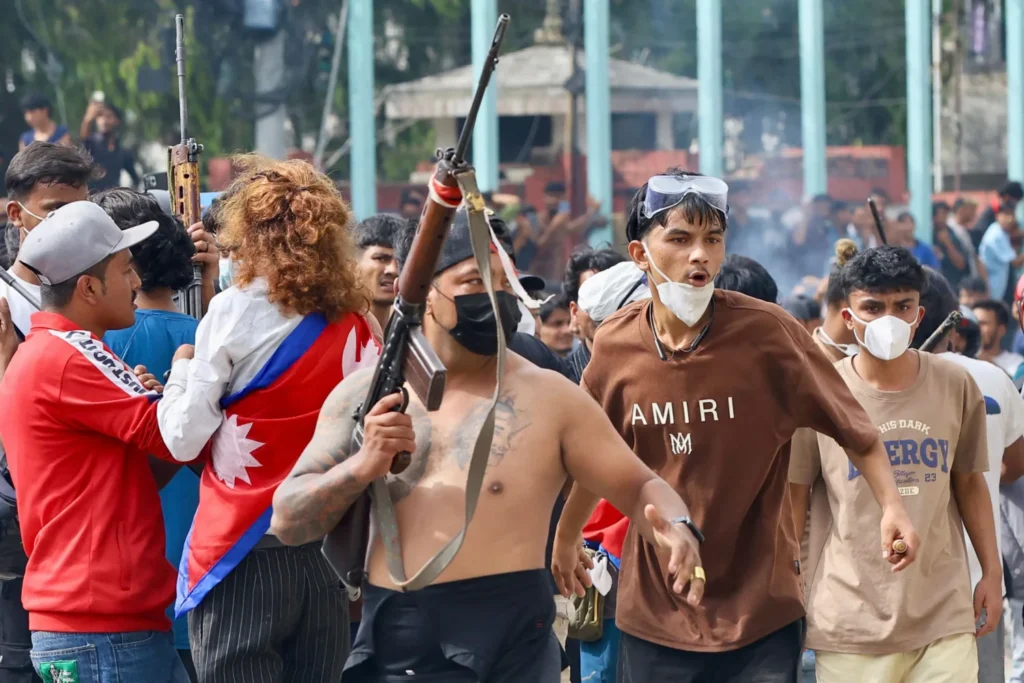
Kathmandu Mayor Balendra Shah, a former rapper known as Balen, has emerged as a potential leader for the movement. At 35, he has distanced himself from the protests due to his age but expressed support for the Gen Z cause, with online campaigns urging him to assume a national leadership role.
Regional and International Implications
The unrest has regional ramifications, with India heightening security along the Nepal border and suspending cross-border transport. Kolkata’s Shyama Prasad Mookerjee Port, a key trade hub for Nepal, is monitoring the situation to ensure cargo movement continuity.
The protests have drawn comparisons to recent uprisings in South Asia, raising concerns about stability in the region.
Conclusion
Nepal’s Gen Z Revolution has exposed deep fractures in the country’s political and social fabric. The death of Rajyalaxmi Chitrakar, the resignation of Prime Minister Oli, and the targeting of political elites underscore the intensity of public anger.
While the social media ban has been lifted, the movement has evolved into a broader demand for systemic change, with no clear path to resolution.
As Nepal navigates this crisis, the world watches closely, with the youth-led uprising signaling a potential turning point for the nation’s future.

Comments