
By YTC Ventures for Technocrat Magazine
Published: September 9, 2025
As India’s startup ecosystem matures, Urban Company, the country’s leading tech-enabled home services platform, is set to make waves with its Initial Public Offering (IPO) opening on September 10, 2025. Valued at ₹15,000 crore, the IPO is poised to deliver substantial returns for early investors, with firms like Accel (29X), Elevation Capital (19X), and Bessemer Venture Partners (14X) already reaping significant multiples.
For investors seeking to capitalize on India’s booming digital economy, Urban Company’s IPO presents a golden opportunity. This article dives into Urban Company’s business model, its founders, capital raised, assets, and business strengths, while highlighting why joining YTC Ventures can unlock access to high-growth deals like this.

Urban Company’s IPO: A Snapshot
Urban Company’s IPO, running from September 10 to 12, 2025, aims to raise ₹1,900 crore through a mix of fresh issuance (4.58 crore shares worth ₹472 crore) and an offer-for-sale (13.86 crore shares worth ₹1,428 crore). With a price band of ₹98–₹103 per share and a minimum lot size of 145 shares (₹14,935 investment), the IPO is accessible to retail investors.
The company has appointed Kotak Mahindra Bank, Goldman Sachs, and Morgan Stanley as lead managers, signaling strong institutional backing. Shares are set to list on BSE and NSE by September 17, 2025, with early investors like Accel, Elevation, and Bessemer poised for massive returns.
For investors looking to tap into similar high-potential opportunities, YTC Ventures offers a gateway to pre-IPO and growth-stage investments in tech-driven startups.
By joining YTC Ventures, you can access curated deals in India’s thriving startup ecosystem, including companies like Urban Company that are reshaping industries.
Visit ytcventures.com to explore investment opportunities and join the next wave of wealth creation.
Urban Company’s Business Model: A Full-Stack Revolution
Urban Company, originally launched as UrbanClap in 2014, operates a two-sided marketplace that connects customers with vetted service professionals across 150+ categories, including beauty, wellness, home repairs, and maintenance. Its full-stack business model sets it apart from traditional marketplaces, ensuring end-to-end control over service quality and customer experience.

Key Pillars of the Business Model:
- Two-Sided Marketplace: Urban Company bridges urban households (especially young professionals and families) with verified professionals like beauticians, plumbers, and electricians. Bookings and payments are seamlessly handled via its app and website, leveraging AI and ML algorithms to match customers with professionals based on skills, ratings, and location.
- Full-Stack Approach: Unlike lean marketplaces, Urban Company invests heavily in onboarding, training, and certifying service providers. It provides micro-financing for tools, branded products, and safety kits, ensuring consistent quality. This model eliminates intermediaries, boosting efficiency and customer satisfaction.
- Revenue Streams:
- Commission-Based: Charges professionals a percentage of each booking (typically 20-25%).
- Subscriptions: Offers premium listings for professionals seeking better visibility.
- Direct Product Sales: Recently ventured into D2C beauty and wellness products under its Native brand, including RO water purifiers and electronic door locks.
- Advertising: Service providers pay for promotional visibility on the platform.
- Technology-Driven Operations: AI-driven matching, real-time tracking, and standardized SOPs enhance user experience and operational efficiency. The company’s focus on flat design and digital-first solutions aligns with modern consumer preferences.
This full-stack model has disrupted India’s $50 billion home services market, with projections to reach $75 billion in five years. By prioritizing quality and scalability, Urban Company has built a robust platform that empowers both customers and gig workers.

The Founders: Visionaries Behind the Unicorn
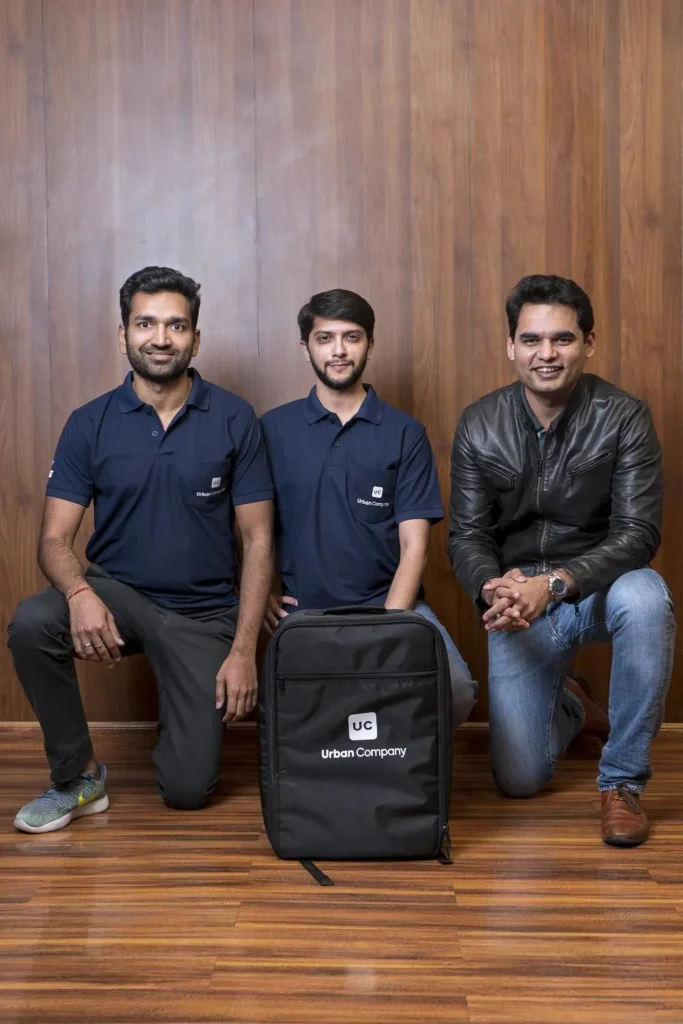
Urban Company was founded in November 2014 by three IIT and IIM graduates: Abhiraj Singh Bhal (CEO), Varun Khaitan, and Raghav Chandra. Their shared vision was to formalize India’s fragmented home services sector, addressing pain points like unreliable providers and inconsistent quality.
- Abhiraj Singh Bhal: An IIT Kanpur alumnus with a background at The Boston Consulting Group, Bhal is the driving force behind Urban Company’s strategic growth. He’s also an angel investor in five startups and serves on the board of one company.
- Varun Khaitan: Another IIT Kanpur graduate, Khaitan brought engineering expertise from Qualcomm and consulting experience from BCG. His focus on tech infrastructure has been pivotal to the platform’s scalability.
- Raghav Chandra: A UC Berkeley computer science graduate, Chandra previously worked at Twitter and founded an auto-rickshaw aggregator, Buggy.in. His tech-driven mindset shaped Urban Company’s early product development.
The trio’s complementary skills—strategy, technology, and operations—enabled Urban Company to evolve from a modest INR 10 lakh startup to a unicorn valued at $2.8 billion in 2021. Their ability to pivot from a lead-generation model to a full-stack approach reflects their adaptability and customer-centric vision.
Capital Raised: A Journey to $508.9 Million
Urban Company has raised a staggering $508.9 million across 13 funding rounds, attracting top-tier investors like Accel, Elevation Capital, Tiger Global, and Prosus. Here’s a breakdown of key rounds:
- Seed (2015): $1.6M from Accel, SAIF Partners, and angel investors like Kunal Bahl and Rohit Bansal.
- Series A (2015): $10M from SAIF and Accel.
- Series B (2016): $25M led by Bessemer Venture Partners.
- Series C (2017): $21M led by Vy Capital.
- Series D (2018): $50M led by Steadview Capital.
- Series E (2019): $75M led by Tiger Global.
- Series F (2021): $255M led by Prosus Ventures, valuing the company at $2.1 billion.
- Secondary Market (2024): $50M from Dharana Capital, with shares purchased from employees and early investors.
The company’s latest valuation was ₹20,000 crore (approximately $2.8 billion) in 2022, with founders holding 26.7% and funds owning 68.85%. This capital has fueled geographic expansion (60+ cities in India, UAE, Singapore, Australia, Saudi Arabia, and the US) and investments in AI, training, and product development.
For investors eager to back similar high-growth startups, YTC Ventures provides access to exclusive pre-IPO and growth-stage deals.
By joining YTC Ventures, you can invest in companies like Urban Company before they go public, maximizing returns in India’s dynamic tech landscape. Learn more at ytcventures.com.
Urban Company’s Assets: Building a Global Ecosystem
Urban Company’s assets are a blend of tangible and intangible resources that drive its market dominance:
- Technology Infrastructure: The company’s website and mobile app (available on iOS and Android) are core assets, enabling seamless bookings, payments, and AI-driven professional matching.
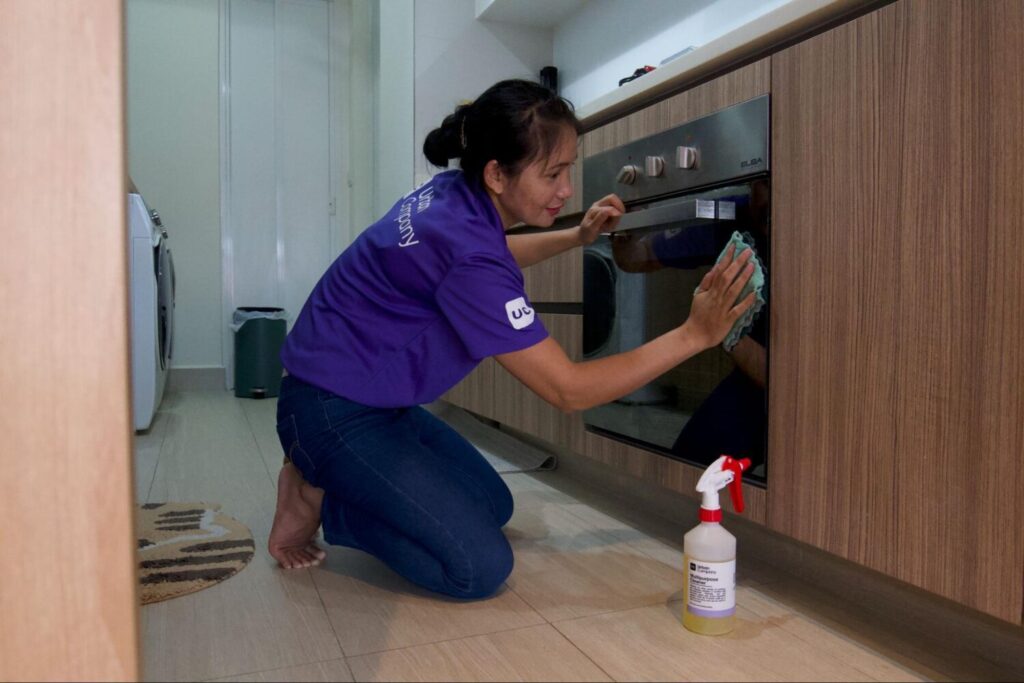
- Service Partner Network: Over 55,000 verified professionals globally, including 40,000 in India, form a scalable workforce trained through Urban Company’s 250 crore+ investment in upskilling programs.
- Brand and Customer Trust: With a 95% customer satisfaction rate and awards like the Economic Times’ Most Promising Brand, Urban Company’s reputation is a key asset.
- Acquisitions: Strategic acquisitions like Glamazon (beauty services), GoodService (concierge app), and HandyHome (appliance repair) have expanded its service portfolio.
- D2C Product Line: The Native brand, offering RO water purifiers, electronic door locks, and beauty products, diversifies revenue and strengthens market presence.
- Global Footprint: Operations in 60+ cities across India, UAE, Singapore, Australia, Saudi Arabia, and the US (New York, Dallas, Austin) position Urban Company as a global player.
These assets, combined with a focus on sustainability and partner empowerment (e.g., Project Nidar for domestic violence support), enhance Urban Company’s long-term value.

Business Strengths: Why Urban Company Stands Out
Urban Company’s strengths lie in its ability to disrupt a fragmented market while maintaining operational excellence:
- Full-Stack Control: By managing training, quality assurance, and supply chains, Urban Company ensures consistent service delivery, setting it apart from competitors like Thumbtack and HomeTriangle.
- Scalable Technology: AI and ML algorithms optimize matching and operations, reducing costs and improving customer experience. The company’s focus on flat design enhances digital accessibility.
- Partner Empowerment: Investments in training, micro-financing, insurance, and stock options (500 partners received stocks in FY23, 30% women) create a loyal workforce, reducing churn and enhancing service quality.
- Financial Resilience: FY24 revenue grew 30% to ₹827 crore, with losses reduced from ₹312 crore to ₹93 crore. The India business achieved breakeven in Q1 FY24, signaling a path to profitability
- Global Ambition: Expansion into international markets and new offerings like Insta Help (on-demand domestic help) demonstrate scalability and adaptability.
- Strong Investor Backing: Support from marquee investors like Prosus, Tiger Global, and Accel provides capital and strategic guidance for sustained growth.
Despite challenges like high operational costs and competition, Urban Company’s focus on profitability, technology, and partner enablement positions it as a leader in the global home services market.
Why Invest with YTC Ventures?
Urban Company’s IPO underscores the immense potential of tech-driven startups in India’s $50 billion home services market. For investors, this is a chance to back a company with proven revenue growth, a scalable model, and global ambitions.
YTC Ventures offers accredited investors access to similar high-growth opportunities through pre-IPO and growth-stage deals.
By joining YTC Ventures, you can:
- Invest Early: Gain exposure to startups like Urban Company before they hit public markets, maximizing returns.
- Curated Portfolio: Access vetted deals in India’s thriving tech ecosystem, from fintech to home services.
- Expert Guidance: Leverage YTC’s expertise to navigate high-potential investments.
Don’t miss out on the next unicorn. Visit ytcventures.com to join YTC Ventures and invest in transformative companies shaping the future.
Urban Company ID Blocking and Protests: Impact on Jobs and Gig Workers
Since 2021, Urban Company (formerly UrbanClap) has faced multiple protests from its service partners, primarily women in the beauty and salon verticals, over its controversial ID blocking policies and stringent operational requirements. These policies have led to significant job losses, sparking widespread unrest among gig workers and drawing scrutiny from labor unions and media. Below is an in-depth look at the ID blocking issue, the protests, and the resulting job losses, with a focus on their implications for Urban Company’s workforce.
ID Blocking: The Core Issue
Urban Company’s platform operates by assigning jobs to service partners (referred to as “partners” rather than employees) through its app. However, the company’s policies, including high customer rating requirements (4.7–4.9 out of 5), strict job acceptance rates (70–80%), and limited cancellation allowances (five per month), have led to frequent ID blockings. When a partner’s ID is blocked, they lose access to the platform, effectively terminating their livelihood without formal recourse. Key grievances include:
- Unrealistic Rating Requirements: Partners must maintain a customer rating of 4.7 or higher, increased from 4.5 in recent years. Even a single low rating (e.g., 4 stars) can lead to temporary or permanent ID blocks.
- High Acceptance Rates: Partners are required to accept 70–80% of job leads, regardless of personal circumstances or job feasibility (e.g., distance or scheduling conflicts). Failure to comply results in penalties or ID blocks.
- Limited Cancellations: Only five cancellations are allowed per month, even for valid reasons like illness or emergencies, leading to permanent blocks for non-compliance.
- Subscription Plans (MG Plan): The Minimum Guarantee (MG) Plan, introduced in 2021, requires partners to pay subscription fees (₹2,000–₹3,000 monthly) for job leads, with a minimum target of 30–40 jobs per month. Failure to meet targets results in forfeited fees and reduced job allocations, pushing many into the low-priority “Flexi” category.
- Alleged Retaliation: Workers who participated in protests or associated with protest leaders reported “shadow-blocking” (accounts remain active but receive no jobs) or permanent deactivation, particularly after 2021 protests.
These policies have been criticized as exploitative by the All India Gig Workers Union (AIGWU) and the Centre of Indian Trade Unions (CITU), who argue they undermine the promised flexibility of gig work and disproportionately affect women, many of whom are single mothers or sole breadwinners
Protests: A Growing Movement
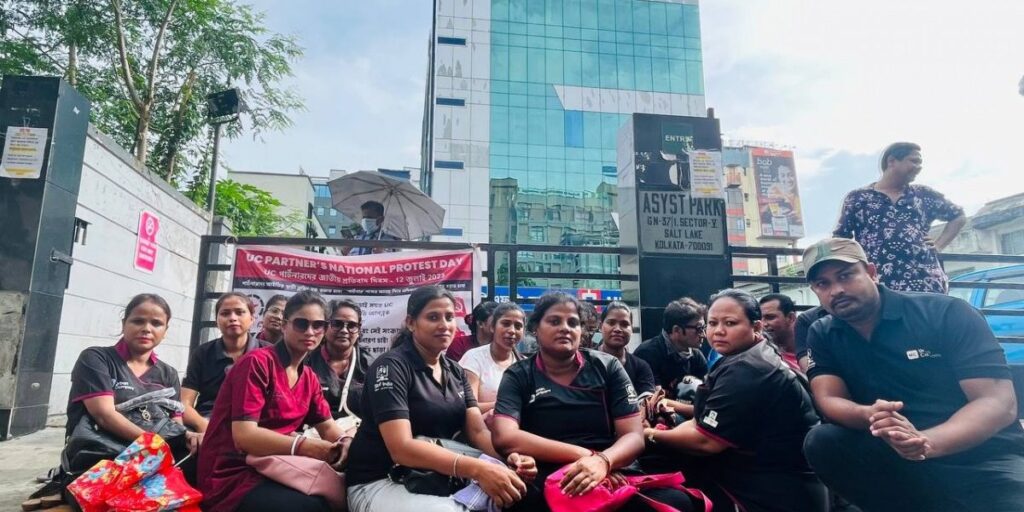
Urban Company’s partners have staged multiple protests across India, particularly in Delhi-NCR, Mumbai, Bengaluru, Kolkata, and Hyderabad, to demand fair treatment and policy changes. Key protest events include:
- October–December 2021: Over 100 women beauticians protested in Gurugram against the MG Plan, high commissions (up to 30%), and unsafe working conditions. The company responded by filing a lawsuit to disperse protesters, alleging “illegal” actions, though the Gurugram court dismissed the suit as “devoid of merits.” Protesters demanded reduced commissions (capped at 20%), transparent rating systems, and social security benefits.
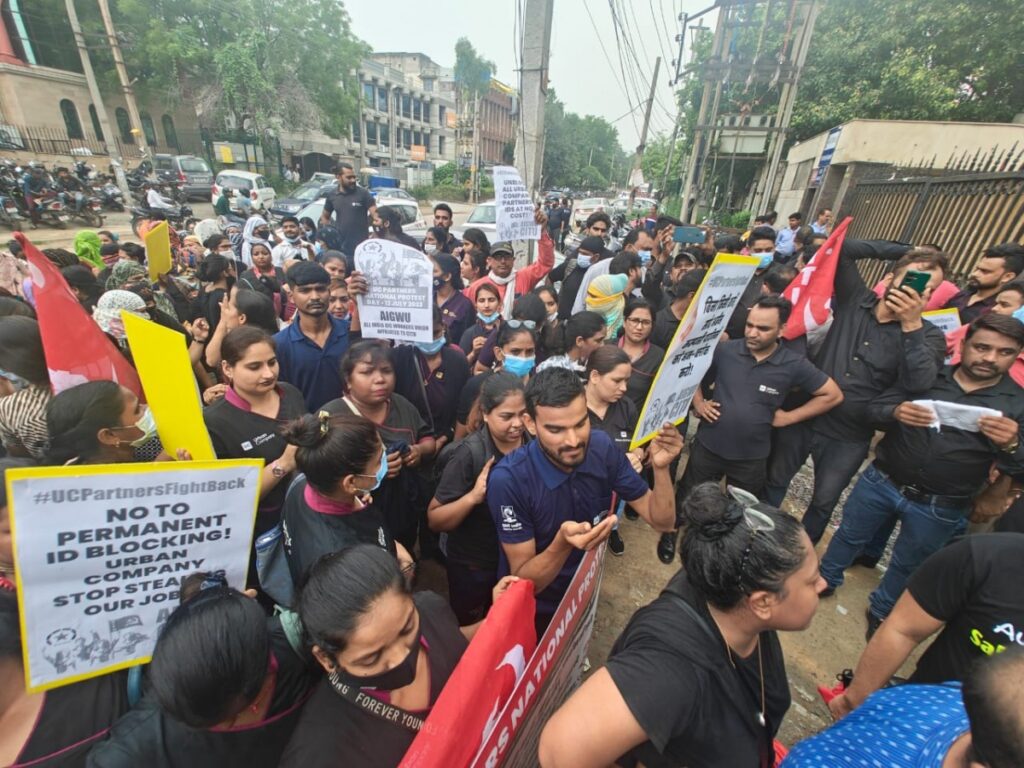
- June–July 2023: Over 200 partners protested nationwide, supported by AIGWU and CITU, against arbitrary ID blockings, unrealistic rating requirements, and forced product purchases. Protests occurred outside Urban Company’s Gurugram headquarters and offices in 11 other cities, with workers demanding the cessation of permanent ID blocking and better grievance redressal.
- October 2023: Approximately 50 workers protested at Jantar Mantar, Delhi, highlighting repeated ID blockings and the financial burden of rejoining the platform (e.g., repurchasing equipment).
- June 2024: Bengaluru-based beauty segment workers, supported by the Gig and Platform Services Workers Union (GIPSWU), protested against “auto-assigning” job features and ID blockings, likening the system to “slavery” due to its lack of flexibility.
Protesters, many of whom are women, have reported severe financial distress, with some unable to afford basic necessities like milk for their children or school fees. The AIGWU filed complaints with state labor departments, seeking recognition of partners as employees under Indian labor laws to secure rights like collective bargaining
Job Losses: Estimating the Impact
Precise data on job losses due to ID blockings is limited, as Urban Company does not publicly disclose the number of affected partners. However, reports from protests and media investigations provide estimates:
- Scale of ID Blockings: AIGWU reported that “hundreds” of partners faced ID blockings in 2023 alone, with older workers disproportionately affected. In 2022, 50–60 women who protested in 2021 reported shadow-blocking or deactivation, impacting their earnings.
- Financial Impact on Workers: Partners like Sonal, a Delhi-based beautician, lost their primary income source after ID blocking, with no alternative employment. Another worker reported earnings dropping from ₹75,000–₹80,000 per month to ₹25,000 due to reduced job leads and high commissions.
- Demographic Impact: Approximately one-third of Urban Company’s 52,000+ partners are women, many single mothers or sole breadwinners. The loss of their IDs has led to significant financial hardship, with some resorting to debt or withdrawing children from school.
- Protest Fallout: Workers who protested, particularly in 2021, faced targeted retaliation, with at least 50–60 women reporting no job leads post-protest. One worker, Seema, reported her last job was in March 2022, despite a 4.6 rating, and was told her account was blocked for protest participation.
While exact figures are unavailable, the AIGWU estimates that thousands of partners have been affected by ID blockings since 2021, with job losses concentrated in the beauty and salon segment, which accounts for 55% of Urban Company’s FY20 revenue. The company’s response—unblocking some IDs and promising a 12-step program in 2021—has been deemed inadequate by workers, as protests continued into 2024.
Urban Company’s Response and Ongoing Challenges
Urban Company has defended its policies, stating that ID blockings are necessary to maintain “marketplace standards” and that affected partners receive prior notices and retraining opportunities. In a 2023 statement, the company emphasized its commitment to dialogue and claimed to have unblocked several IDs post-protests. However, workers argue that:
- Notifications of ID blockings often come without explanation or appeal mechanisms.
- The company’s claim of partners earning ₹280–₹300 per hour (net of commissions and costs) is misleading, as commissions (25%), travel (8%), and product purchases (17%) significantly reduce take-home pay.
- The lack of employee status leaves partners without labor protections, a point raised in AIGWU’s 2023 complaint to the labor department.
Urban Company’s refusal to recognize partners as employees, citing their “independent contractor” status, has drawn comparisons to global gig economy debates, such as the 2021 UK Supreme Court ruling granting Uber drivers worker rights.
Implications for Urban Company’s IPO
The ongoing protests and job losses pose risks to Urban Company’s reputation as it launches its ₹1,900 crore IPO in September 2025. Investors may view the labor disputes as a red flag, potentially impacting the company’s valuation and long-term sustainability. However, Urban Company’s focus on quality control and its full-stack model remain attractive to investors, as evidenced by its $508.9 million in funding and 30% revenue growth in FY24.
For investors seeking to navigate such high-growth opportunities while mitigating risks, YTC Ventures offers curated access to pre-IPO and growth-stage startups. By joining YTC Ventures, you can invest in companies like Urban Company with expert guidance to assess risks and rewards. Visit ytcventures.com to explore investment opportunities.
YTC Ventures Investment Disclaimer
Investing in startups, pre-IPO companies, and growth-stage ventures through YTC Ventures involves significant risks and is suitable only for accredited investors who can bear the potential loss of their entire investment. Past performance of companies like Urban Company or other investments referenced is not indicative of future results.
YTC Ventures does not guarantee returns, and investments are subject to market volatility, economic uncertainties, and operational risks inherent to early-stage businesses. All information provided, including valuations, revenue projections, or market potential, is based on publicly available data and estimates as of September 9, 2025, and may change without notice.
Investors are strongly advised to conduct their own due diligence, consult with financial advisors, and review all offering documents before investing. YTC Ventures is not responsible for any losses incurred. For full terms and conditions, visit ytcventures.com.

Comments