
By YTC Ventures for Technocrat Magazine
Published: September 9, 2025
In September 2025, Nepal witnessed an unprecedented youth-led uprising, dubbed the “Gen Z Revolution,” sparked by a government-imposed ban on 26 major social media platforms, including Facebook, Instagram, WhatsApp, YouTube, and X.
This movement, fueled by deep-seated frustrations over corruption, nepotism, and restricted digital freedoms, has reshaped Nepal’s socio-political landscape. This article explores the reasons behind the revolution, the role of social media in mobilizing Nepal’s youth, the top stories that amplified the protests, the economic impact on businesses and social media companies, and the government’s rationale for the ban.
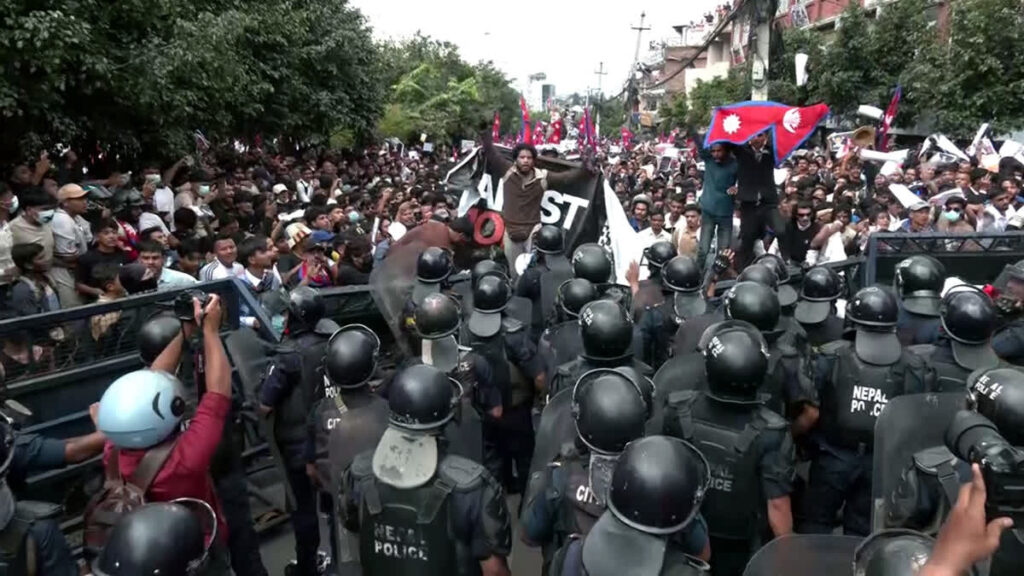
The Gen Z Revolution: What Sparked the Uprising?
On September 4, 2025, Nepal’s government, led by Prime Minister KP Sharma Oli, banned 26 social media platforms for failing to comply with a Supreme Court-mandated registration requirement. The decision, enforced on September 5, was the tipping point for a generation already frustrated by systemic issues:
- Corruption and Nepotism: Nepal’s youth, particularly Gen Z, expressed outrage over entrenched corruption and nepotism within the political elite. High-profile scandals, such as the 2017 Airbus deal that cost the nation $10.4 million due to corrupt practices, fueled distrust in governance.
- Economic Inequality: With a per capita income of just $1,300, many young Nepalis struggle while political elites and their families flaunt luxurious lifestyles. Viral TikTok videos contrasting ordinary Nepalis’ hardships with politicians’ wealth amplified this anger.
- Authoritarian Overreach: The social media ban was perceived as an attempt to silence dissent and curb freedom of expression, echoing a 2023 TikTok ban that was lifted only after compliance with registration. Critics argued the ban was less about regulation and more about controlling narratives critical of the government.
- Inspiration from Regional Protests: Recent youth-led movements in Bangladesh (2024) and Sri Lanka (2022), which toppled governments, inspired Nepal’s Gen Z to take to the streets, believing they could drive change.
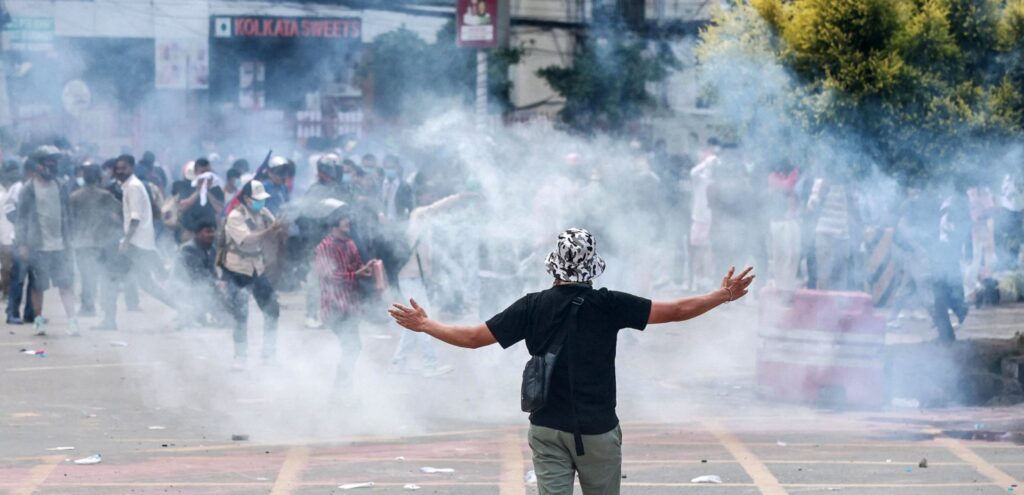
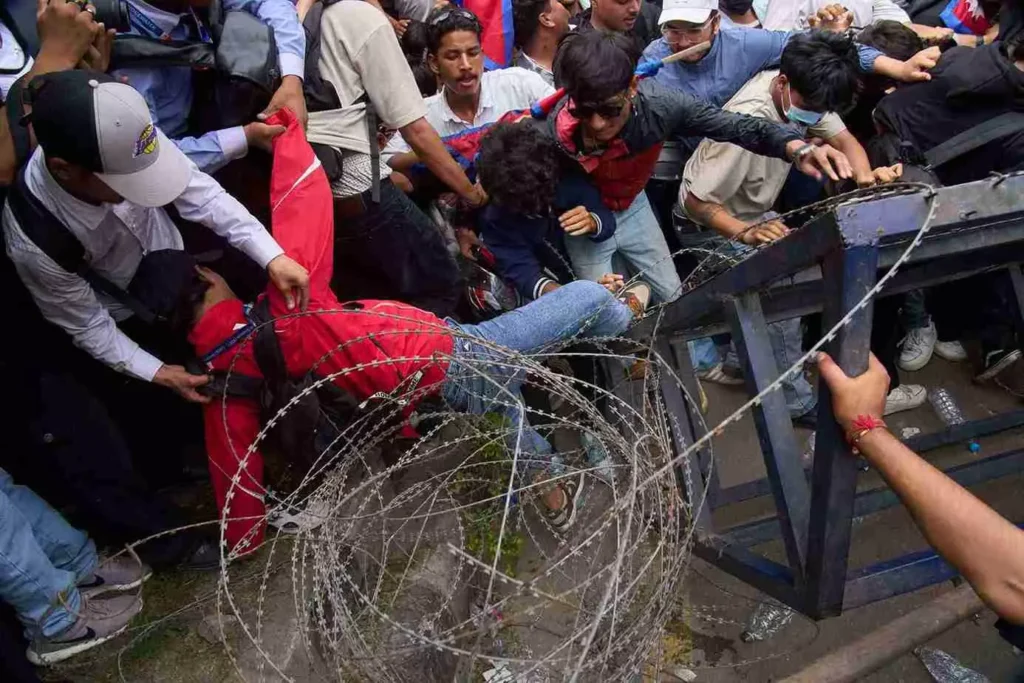
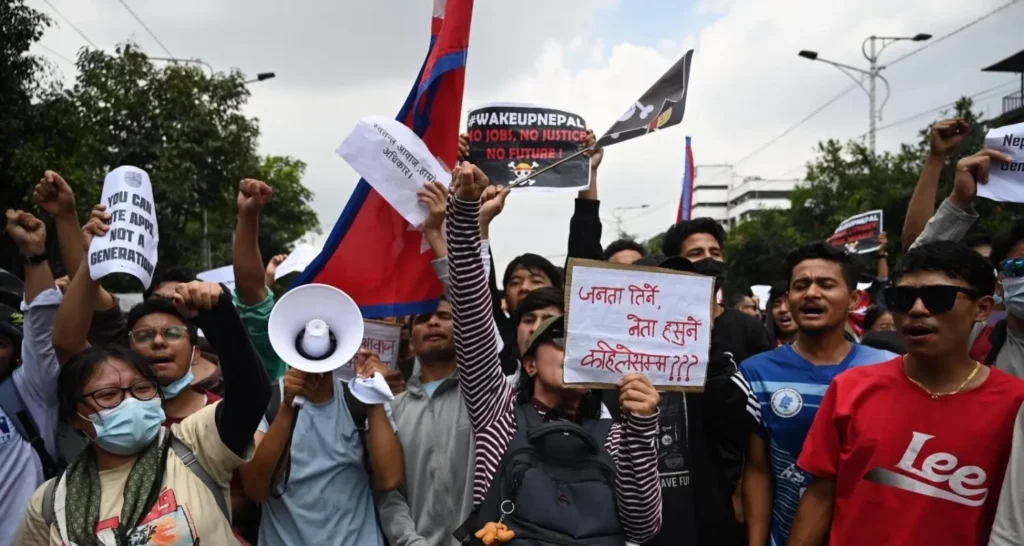
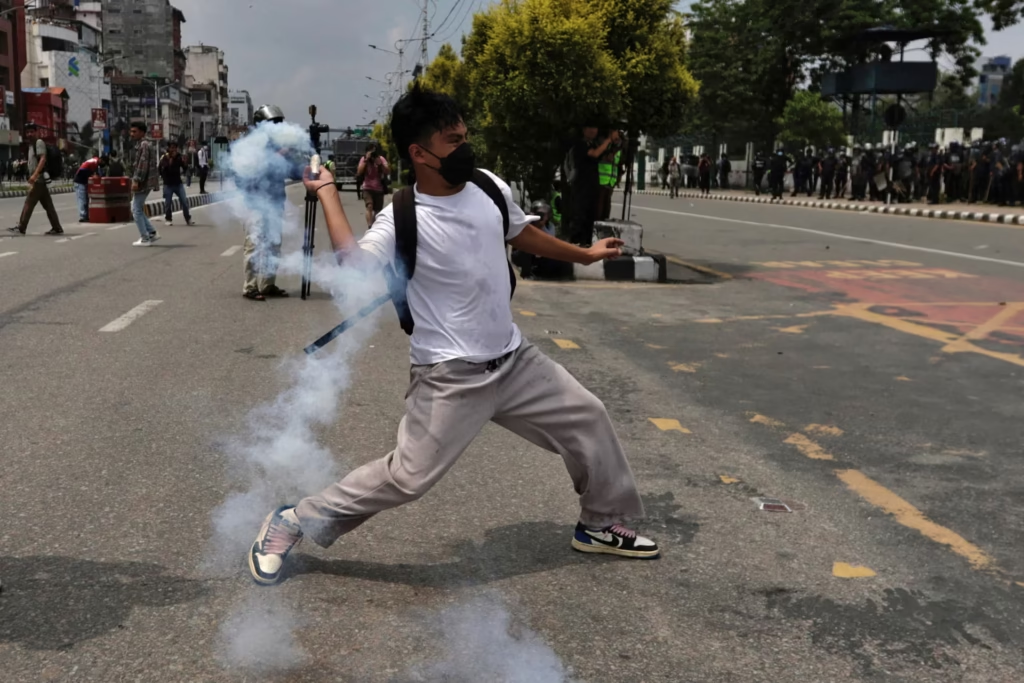
The protests, which began in Kathmandu and spread to cities like Pokhara, Butwal, and Itahari, saw thousands of young people, many in school uniforms, chanting slogans like “Shut down corruption, not social media” and “Unban social media.” The violent response from security forces, resulting in at least 19 deaths and over 300 injuries, intensified the unrest, leading to the resignation of Home Minister Ramesh Lekhak on moral grounds.
Social Media’s Role in Mobilizing Nepal’s Youth
Social media has been the lifeblood of Nepal’s Gen Z, serving as a platform for expression, economic opportunity, and mobilization. Despite the ban, platforms like TikTok, which remained accessible due to prior registration, became rallying points for organizing protests.
- Digital Activism: Gen Z circumvented internet restrictions using VPNs and platforms like TikTok and Reddit to coordinate protests. Hashtags like #NepoBabies and #NepoKids trended, highlighting nepotism and inequality.
- Amplifying Grievances: Social media gave voice to frustrations over corruption and governance. Viral content, such as videos of politicians’ children flaunting wealth, fueled public anger and mobilized youth to protest offline.
- Economic Reliance: Approximately 13.5 million Nepalis use Facebook, 3.6 million use Instagram, and 90% of the population is online, relying on social media for news, entertainment, and business. The ban threatened livelihoods, particularly for content creators and small businesses.
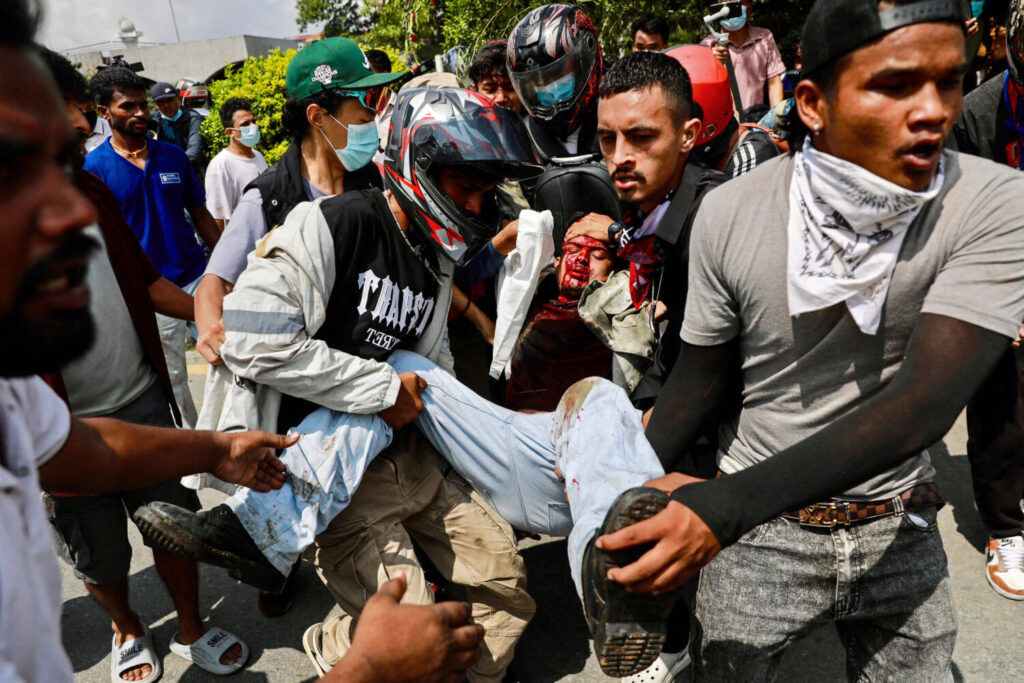
The ban forced many to resort to VPNs, increasing international bandwidth demand and risking user data security. This digital resilience underscored Gen Z’s determination to maintain their voice despite restrictions.
Top Stories That Fueled the Social Media Ban Outrage
Several high-profile stories amplified the protests and highlighted the ban’s implications:
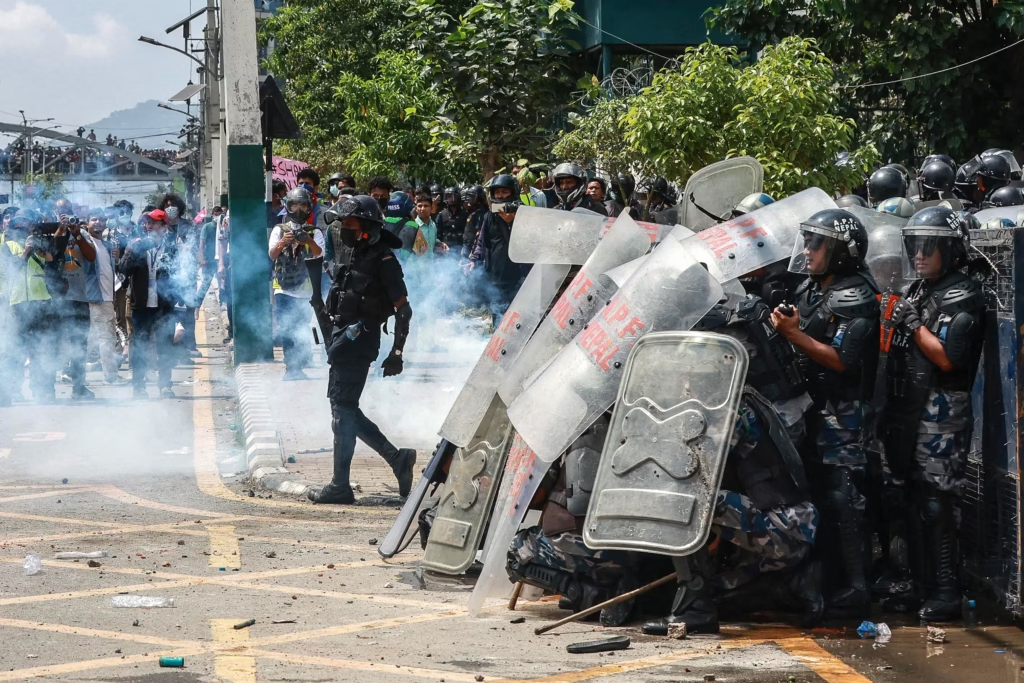
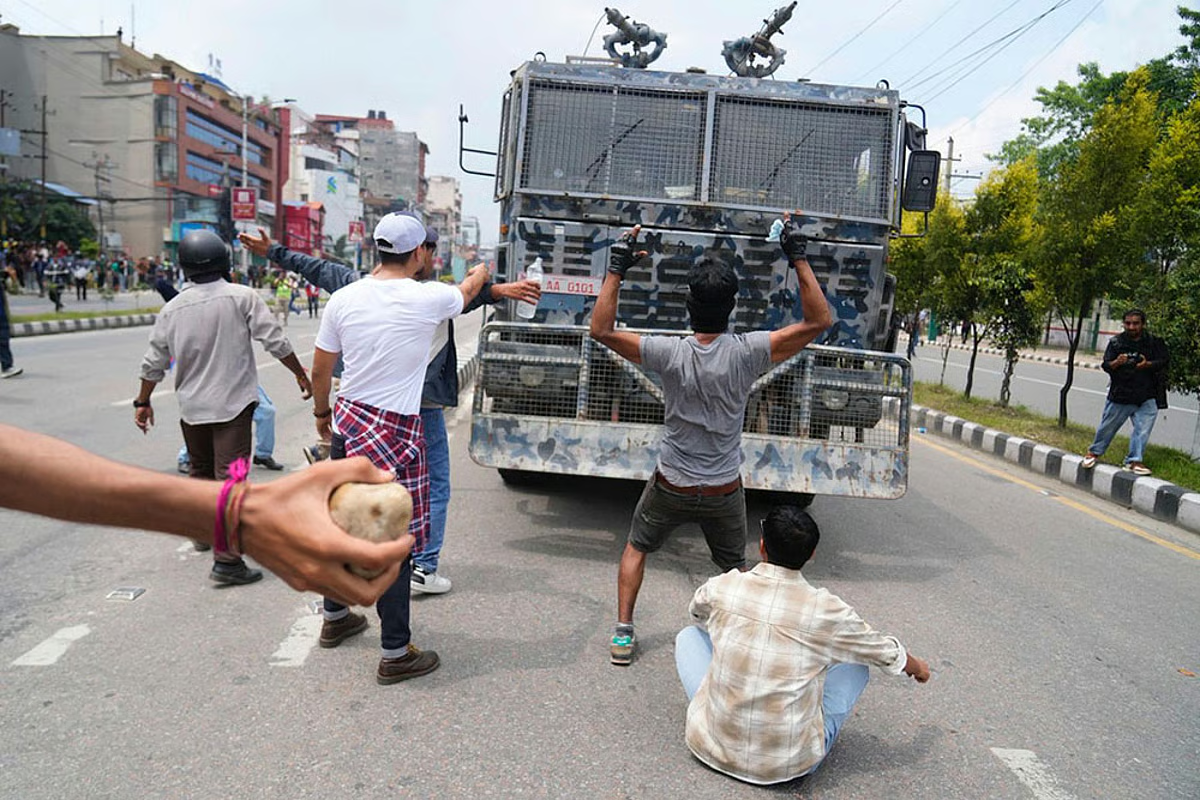
- Violent Crackdown on Protesters: On September 8, 2025, police used tear gas, rubber bullets, and live ammunition to disperse protesters attempting to storm Parliament, killing 19 and injuring over 300. Reports of indiscriminate firing, including bullets hitting protesters in the head and chest, sparked global condemnation from the UN and Amnesty International.
- Home Minister’s Resignation: Ramesh Lekhak resigned on September 8, citing moral responsibility for the deaths, marking a significant political fallout.
- Viral #NepoKids Trend: Social media posts exposing the lavish lifestyles of politicians’ children under hashtags like #NepoKids and #NepoBabies went viral, galvanizing public support for the protests.
- Global Outcry: International organizations, including the Committee to Protect Journalists and Access Now, condemned the ban as a threat to press freedom and digital rights, likening Nepal to countries like China and North Korea.
- Former King’s Statement: Former King Gyanendra’s rare public address emboldened calls for a return to monarchy and a Hindu Rashtra, adding a new dimension to the protests.
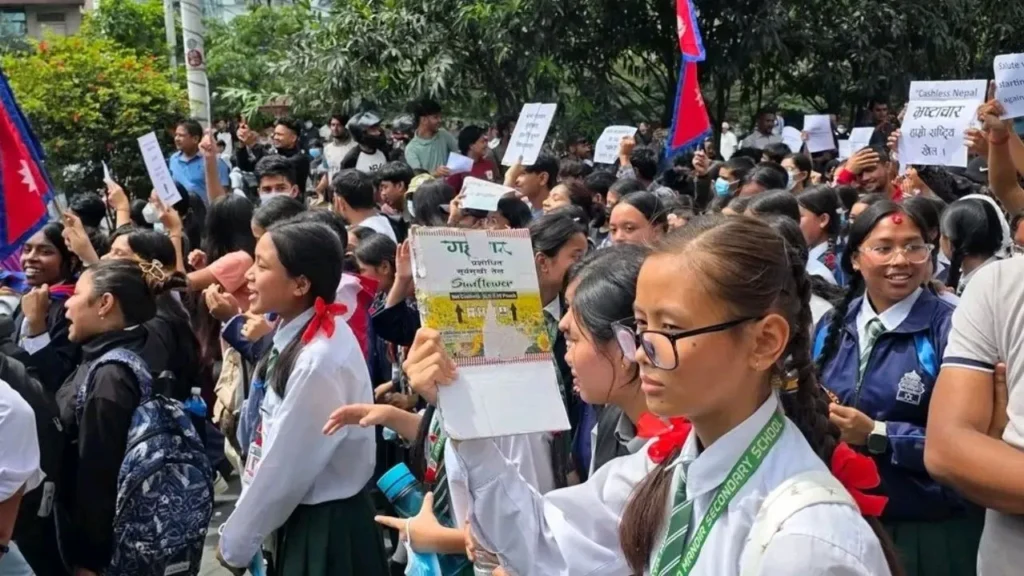
These stories, amplified by remaining platforms like TikTok, kept the momentum alive despite the blackout.
Business Losses Due to the Social Media Ban
The ban disrupted Nepal’s digital economy, affecting small businesses, content creators, and the tourism sector. Below is a table summarizing estimated losses based on available data and projections:
| Sector | Estimated Loss | Details |
|---|---|---|
| Small & Medium Enterprises (SMEs) | ~$10-15M/week | SMEs reliant on Facebook and Instagram for marketing lost customer engagement and sales, especially ahead of the festive season. |
| Content Creators | ~$2-3M/week | Facebook’s monetization program, recently launched in Nepal, was halted, impacting creators’ earnings from reels and posts. |
| Tourism Industry | ~$5M/week | Tour operators lost access to social media for promotions, affecting bookings. |
| Internet Service Providers | ~$1M/month | Increased VPN usage raised international bandwidth costs, reducing ISP revenues. Ncell reportedly lost $600,000 monthly during the 2023 TikTok ban. |
Note: These figures are estimates based on reported impacts and may vary as more data emerges.The ban’s economic ripple effects were significant, with businesses like Urban Girl and UG Cakes pivoting to platforms like TikTok and Viber to maintain operations
Profits of Social Media Companies in Nepal
While exact profit figures for social media companies in Nepal are not publicly disclosed, estimates suggest significant revenue generation due to the country’s high internet penetration (90%) and large user base. Below is a table with projected annual revenues based on user engagement and advertising:
| Platform | Estimated Annual Revenue in Nepal | Details |
|---|---|---|
| ~$20-30M | 13.5M users, primarily ad-driven revenue. | |
| ~$5-8M | 3.6M users, monetized through ads and creator programs. | |
| YouTube | ~$10-15M | Ad revenue from Nepal’s 2.97M internet subscribers. |
| X | ~$1-2M | 466,100 users, lower ad revenue due to smaller user base. |
These figures are speculative, as companies like Meta and Google do not disclose country-specific revenues. However, the ban likely reduced short-term profits due to restricted access, though VPN usage mitigated some losses.
Nepal Youth User Data and Distribution Across Social Media
Nepal’s youth (aged 15-34) form a significant portion of the country’s 30 million population, with high engagement on social media. Below is a table showing the estimated distribution of Nepal’s youth across major platforms:
| Platform | Youth Users (Approx.) | Percentage of Youth Population | Details |
|---|---|---|---|
| 8M | 53% | Dominant platform for news, business, and social interaction. | |
| 2.5M | 17% | Popular for visual content and influencer marketing. | |
| TikTok | 2M | 13% | Key for protest mobilization; remained accessible post-ban. |
| YouTube | 1.8M | 12% | Used for entertainment and education. |
| X | 300,000 | 2% | Niche platform for urban youth and activism. |
| Others | 400,000 | 3% | Includes LinkedIn, Reddit, Snapchat, etc. |
Note: Nepal’s youth population is estimated at ~15 million (50% of the total population). Percentages are approximate, as users often engage with multiple platforms.
Nepal Government’s Rationale for the Ban
The Nepal government justified the ban on the following grounds:
- Legal Compliance: A Supreme Court ruling on August 17, 2025, mandated that all online platforms register with the Ministry of Communication and Information Technology to operate legally in Nepal. The 26 banned platforms failed to meet the seven-day deadline issued on August 28.
- Regulation of Misinformation and Cybercrime: The government cited the need to curb hate speech, fake news, and online fraud, arguing that unregistered platforms were difficult to regulate.
- National Sovereignty: Prime Minister Oli emphasized that non-compliance with registration undermined Nepal’s sovereignty and constitutional authority. He stated, “The independence of the nation is greater than the loss of jobs of a handful of individuals.”
- Taxation and Accountability: The government aimed to tax revenues generated by social media companies in Nepal and ensure they appoint local representatives to address grievances.
Critics, including digital rights advocates, argued the ban was a pretext to control dissent, as the proposed social media bill could impose fines and jail terms for content deemed “against national interest.”
The Aftermath and Reversal
Facing mounting pressure, the government lifted the ban on September 8, 2025, after a cabinet meeting, with Minister Prithvi Subba Gurung announcing the restoration of access to address Gen Z’s demands. However, the protests have evolved into a broader civil rights movement, with calls for systemic reforms to address corruption and governance failures.
Conclusion: A Defining Moment for Nepal
The Gen Z Revolution marks a pivotal moment in Nepal’s history, driven by a digitally savvy generation unwilling to tolerate corruption and authoritarianism. The social media ban, intended to regulate platforms, instead ignited a nationwide movement, exposing deep-rooted grievances and the power of youth activism. While the ban’s reversal is a victory for protesters, the economic and social scars remain, with businesses recovering from losses and youth demanding lasting change.
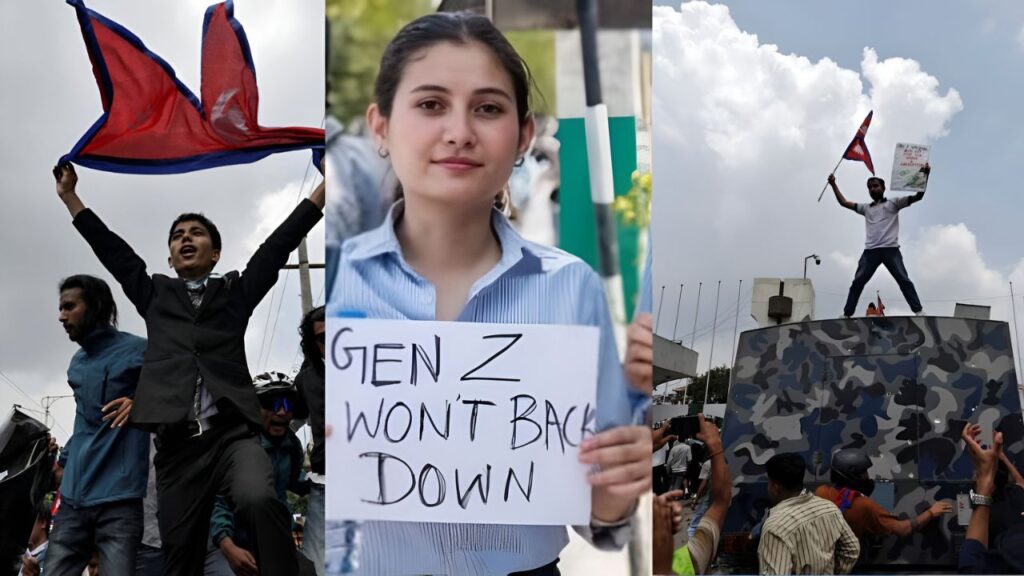
As Nepal navigates its digital and political future, the world watches to see if this revolution will reshape the nation’s governance and restore trust in its institutions.
For more insights into global tech trends and their socio-economic impacts, subscribe to Technocrat Magazine.
Sources: The New York Times, The Guardian, Al Jazeera, India Today, BBC, The Hindu, Reuters, Kathmandu Post, Hindustan Times, Nepalitelecom.com

Comments