
YTC Ventures | TECHNOCRAT MAGAZINE | 9 Sept 2026
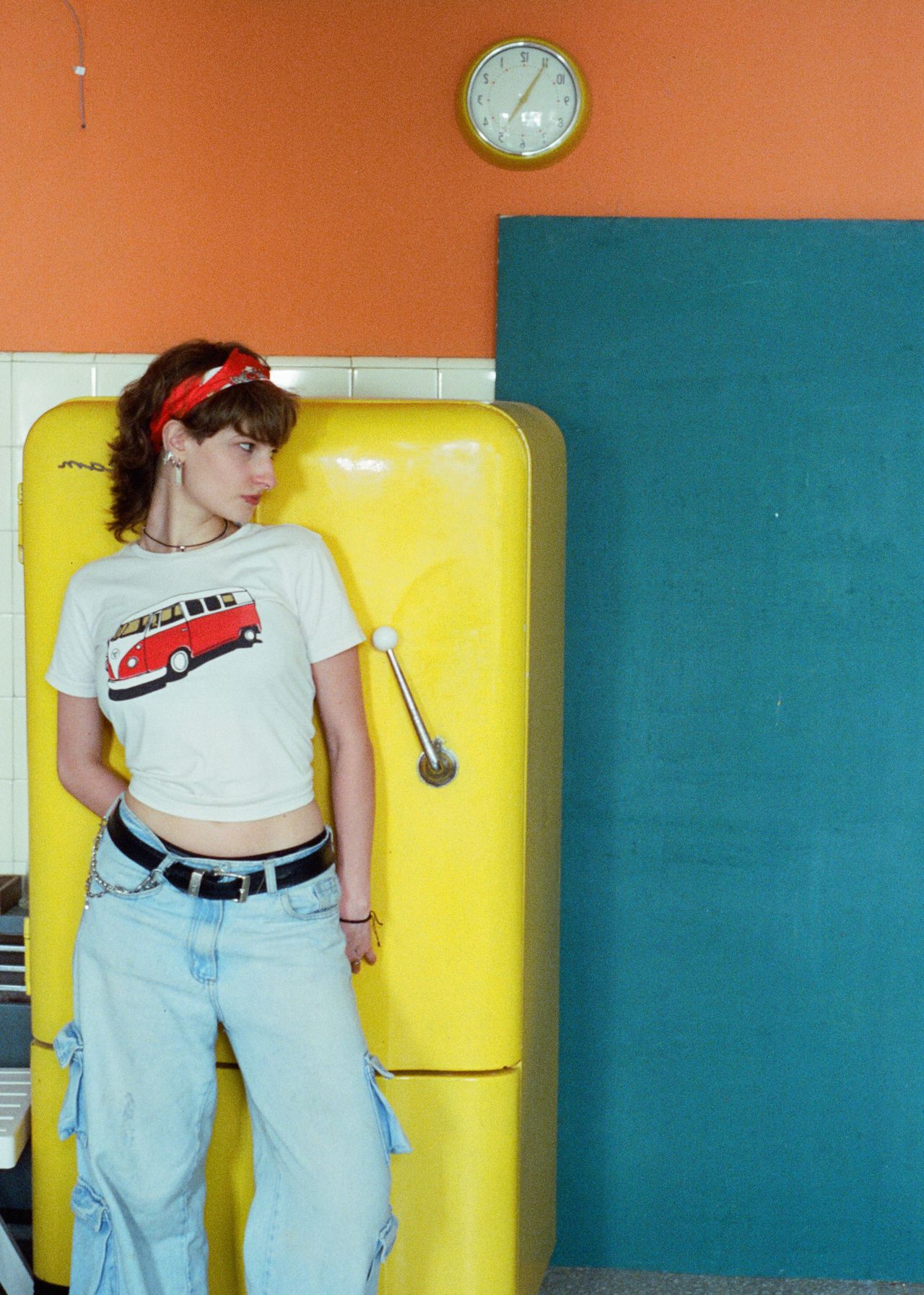
From cassette tapes and CRT televisions to synthwave, retro gaming and oversized fashion, the decade has returned with remarkable force. But this isn’t simply nostalgia. It is a reaction to the digital world we built.
By Technocrat Magazine | Culture × Technology
There is a peculiar contradiction at the heart of modern life.
We have never had more technology.
We have never had more information.
We have never been more connected.
And yet, increasingly, we seem to want the world to feel a little less connected.
We are buying film cameras in the age of computational photography. We are collecting vinyl when an almost infinite music library fits inside a smartphone. We are playing retro games on machines more powerful than anything the original developers could have imagined.
And everywhere we look, the 1980s are back.
Neon. Synthesizers. Arcade machines. Cassette tapes. Analog photography. Retro computers. Oversized silhouettes. Vintage sneakers. CRT screens. The unmistakable sound of an electronic drum machine.
The decade has become a visual and emotional language for a generation living through an entirely different technological revolution.
But why?
The answer goes much deeper than fashion.
THIS ISN’T REALLY ABOUT THE ’80s
The first mistake is to assume that today’s fascination with the 1980s is simply nostalgia.
For people who lived through the decade, perhaps it is.
For everyone else, particularly younger consumers, it is something more interesting:
nostalgia for a world they never experienced.
Gen Z did not grow up waiting for a cassette to rewind.
They didn’t spend Saturday afternoons searching video-store shelves.
They weren’t teenagers when arcade machines dominated shopping malls.
Yet many of them are fascinated by precisely those things.
That tells us something important.
The modern fascination with the 1980s isn’t necessarily a longing for the actual decade.
It is a longing for the idea of the decade.
A world that appears slower.
More tangible.
More human.
And, perhaps most importantly, less relentlessly connected.
WHEN TECHNOLOGY WAS STILL MAGIC
The 1980s occupy a unique place in technological history.
Personal computers were entering homes.
Video games were becoming mainstream.
Cable television was expanding.
The Walkman had transformed portable music.
Mobile communication was beginning to emerge.
The personal computer was no longer exclusively the domain of laboratories and corporations.
Technology was becoming personal.
But it had not yet become omnipresent.
That distinction matters.
A computer was something you sat down to use.
A telephone was something attached to a place.
A television occupied a room.
Music existed on an object.
Photography produced physical photographs.
Technology had boundaries.
Today, those boundaries have largely disappeared.
THE GREAT DIFFERENCE: TECHNOLOGY DIDN’T FOLLOW YOU
Consider the smartphone.
It wakes us up.
It receives our messages.
It tracks our location.
It delivers our news.
It recommends our entertainment.
It monitors our activity.
It connects us to work.
It reminds us of appointments.
It records our memories.
It can even anticipate what we might want next.
The device is extraordinarily useful.
But it is also extraordinarily persistent.
There is almost nowhere left to hide from the digital world.
The 1980s offer the fantasy of an alternative.
You could leave the house without a phone.
You could watch a film without receiving notifications.
You could listen to an album without an algorithm immediately suggesting another one.
You could be unreachable.
For today’s permanently connected generation, being unreachable can sound almost revolutionary.
THE RETURN OF PHYSICAL OBJECTS
One of the most fascinating aspects of the retro revival is the return of physical media.
Vinyl records.
Film cameras.
Printed photographs.
Cassette tapes.
Mechanical watches.
Books.
Arcade cabinets.
Collectibles.
Why would consumers voluntarily choose something less convenient?
Because convenience isn’t the only thing people value.
There is a psychological difference between accessing something and owning something.
A streaming subscription gives you access to music.
A record gives you an object.
A cloud photo exists somewhere on a server.
A printed photograph can sit on a desk for decades.
A digital game can be downloaded instantly.
An arcade machine occupies physical space and demands interaction.
In an increasingly intangible economy, physicality has acquired a new kind of luxury.
THE STRANGE POWER OF IMPERFECTION
Modern technology has spent decades eliminating imperfections.
Digital cameras remove noise.
Displays become sharper.
Audio becomes cleaner.
Video becomes higher resolution.
Processors become faster.
Interfaces become smoother.
And then something strange happened.
People began paying for imperfection.
Film grain became desirable.
VHS distortion became an aesthetic.
Cassette hiss became part of the sound.
CRT scanlines became visually interesting.
Lo-fi photography became fashionable.
Why?
Because imperfections signal authenticity.
They tell us that something was made by a machine—or a person—with limitations.
And limitations create character.
The modern digital world is optimized for perfection.
The retro world is attractive precisely because it isn’t.
STRANGER THINGS AND THE REINVENTION OF THE DECADE
Few cultural phenomena have demonstrated the commercial power of 1980s nostalgia more clearly than Stranger Things.
The series did more than tell a story set in the decade.
It recreated the emotional architecture of the era.
Bicycles.
Arcades.
Suburban neighbourhoods.
Dungeons & Dragons.
Synthesizer-heavy music.
Teen friendships.
Physical communication.
Analog technology.
For audiences who never lived through the 1980s, the decade became something almost mythical.
Not history.
A mood.
And that distinction explains much of the current revival.
WHY GEN Z IS BUYING INTO IT
Younger consumers have grown up inside an environment of extraordinary digital acceleration.
Their childhoods have been documented, quantified and shared.
Their entertainment is personalized.
Their social lives are mediated through screens.
Their attention is continuously competed for.
The 1980s aesthetic offers something radically different.
It has edges.
It has limitations.
It has mystery.
A photograph isn’t instantly perfect.
A song doesn’t arrive with an algorithmically generated playlist.
A computer doesn’t fit inside your pocket.
The limitations become part of the experience.
That makes the decade feel strangely exotic.
THE AI PARADOX
And here is where the story becomes particularly interesting for Technocrat Magazine.
The retro revival is happening at precisely the moment artificial intelligence is accelerating the digital world to another level.
AI can generate photographs.
AI can compose music.
AI can write text.
AI can create video.
AI can imitate voices.
AI can design products.
AI can increasingly predict what humans want before humans articulate it.
And simultaneously, people are reaching backward toward technologies that cannot do these things.
That isn’t necessarily anti-technology.
It may actually represent a more sophisticated relationship with technology.
The question is no longer:
“What can technology do?”
The question is:
“What should technology do?”
THE NEW LUXURY: FRICTION
For decades, Silicon Valley pursued frictionless experiences.
One-click purchasing.
Instant messaging.
Instant payments.
Instant streaming.
Instant search.
Instant delivery.
Instant content generation.
But perhaps we have reached a point where some friction feels valuable.
Waiting for a photograph.
Searching for a record.
Flipping a physical page.
Calling someone instead of sending a message.
Playing a game without an infinite update cycle.
Writing something without autocorrect.
The inconvenience becomes part of the experience.
Friction slows us down enough to make us notice what we are doing.
THE 1980s WERE NEVER REALLY ABOUT THE PAST
This is perhaps the biggest misconception.
The 1980s were obsessed with the future.
Science fiction imagined intelligent machines, space travel, robotics and digital worlds.
Computers represented possibility.
Video games represented new forms of entertainment.
Electronic music sounded futuristic.
The decade wasn’t looking backward.
It was looking forward.
That makes today’s fascination with it particularly appropriate.
We are living through another technological revolution.
And once again, society is trying to imagine what the future means.
Perhaps we are returning to the 1980s because they represent the last era when the future still felt mysterious.
FROM RETRO TO “RE-TRO”
Something else has changed.
Technology can now recreate almost any historical aesthetic.
Digital cameras can simulate film.
Software can reproduce tape distortion.
Artificial intelligence can generate vintage photographs.
Modern displays can imitate CRTs.
Streaming platforms can reproduce VHS-era interfaces.
The future has become capable of manufacturing the past.
That creates a fascinating cultural loop:
The technology of tomorrow is being used to recreate the experience of yesterday.
And consumers love it.
WHAT WE REALLY MISS
Perhaps the deepest explanation for the 1980s revival has very little to do with cassette tapes or neon lights.
What people miss is attention.
There was a time when entertainment occupied a particular moment.
You watched television.
You listened to an album.
You played a game.
You read a book.
You went outside.
The activity had a beginning and an end.
Today, almost everything is infinite.
Infinite feeds.
Infinite recommendations.
Infinite entertainment.
Infinite notifications.
The retro revival may therefore be a quiet rebellion against infinite everything.
THE FUTURE WILL NOT BE ANALOG
Let’s be clear.
Nobody seriously expects society to abandon smartphones, cloud computing or artificial intelligence.
The future is digital.
And it will become even more digital.
But humans are unlikely to become entirely digital with it.
We will continue to seek physical objects.
We will continue to value human imperfection.
We will continue to romanticize older forms of communication.
And we will continue to create boundaries around technology.
The future may therefore be neither digital nor analog.
It will be hybrid.
AI-generated music played on vinyl.
Digital photographs printed on paper.
Smartphones designed with minimalist interfaces.
Virtual experiences combined with physical ones.
Artificial intelligence helping humans rediscover activities that require no intelligence from machines at all.
THE FINAL FRAME
Perhaps the reason the 1980s keep returning is simple.
We don’t actually want to live in the 1980s.
We want to live in today—with some of the things we believe the 1980s had.
More privacy.
More presence.
More physicality.
More discovery.
More mystery.
More time.
The irony is almost perfect.
At the very moment humanity is building machines capable of doing more than ever before, we are becoming fascinated by objects that did almost nothing.
A cassette tape couldn’t recommend another song.
A film camera couldn’t edit your photograph.
A CRT television couldn’t track your attention.
A telephone couldn’t follow you around the world.
And perhaps that was precisely their charm.
The 1980s are back not because we want the past.
They are back because the future has arrived—and we are deciding which parts of it we actually want.
Technocrat Magazine — Technology, Culture & The Future

Comments