
YTC Ventures | TECHNOCRAT MAGAZINE | www.ytcventures.com
25 Jan 2026
Bengaluru’s Traffic Crisis: Gridlock in the Silicon Valley – Why Residents Are Fleeing and What It CostsBengaluru, India’s booming tech hub, is choking under its own success. Once hailed as the “Garden City,” it’s now infamous for its paralyzing traffic jams that turn short commutes into hours-long ordeals.
According to the latest TomTom Traffic Index, Bengaluru ranks as the world’s second most congested city, with a staggering congestion level that sees drivers lose an average of 168 hours annually stuck in traffic. A mere 10 km journey can take up to 36 minutes during peak hours, with peak speeds often crawling below 14 kmph.The city’s population fuels this chaos. Bengaluru’s metro area population is estimated at around 14.4 million in 2025, projected to reach about 14.8 million by 2026, making it one of India’s fastest-growing urban centers. This rapid influx—driven by job opportunities—has outpaced infrastructure, leading to widespread gridlock.
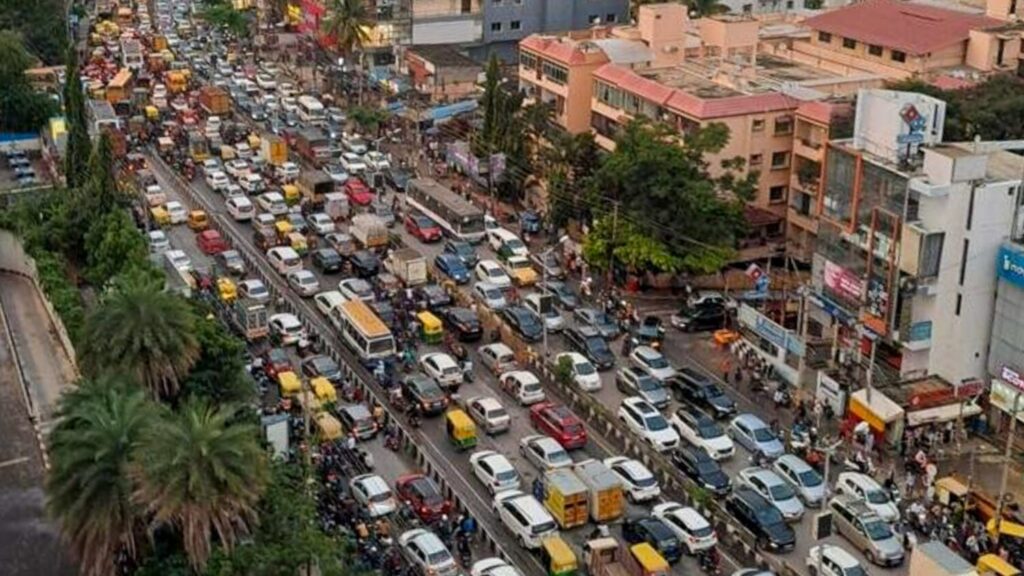
Population Breakdown by Class and Profession
Bengaluru’s demographic mix reflects its status as a migration magnet. While precise recent class-wise data is limited, estimates suggest a significant middle-class presence, particularly in urban areas. The middle class (often defined by annual household incomes roughly ₹5–30 lakh or monthly personal earnings above ₹25,000–30,000) forms a substantial portion, especially among professionals. Many residents fall into lower-middle to middle-income brackets, with higher concentrations in IT and related sectors.
Profession-wise, the workforce is heavily skewed toward technology:
- IT and tech sector: Over 1 million professionals employed directly in tech roles, making Bengaluru Asia-Pacific’s top city for IT employment. This includes software engineers, developers, data scientists, and support staff in global capability centers (GCCs), startups, and major firms. Tech jobs dominate, with the sector adding significant employment annually.
- Other professions: The remaining workforce spans manufacturing, services, retail, hospitality, education, healthcare, government jobs, and traditional sectors like textiles or small businesses. A large informal workforce supports the economy through domestic help, construction, transportation, and street vending.
The high proportion of working-age residents (around 75% in prime employable groups) underscores Bengaluru’s appeal as a job hub, but it also intensifies pressure on roads, housing, and resources.
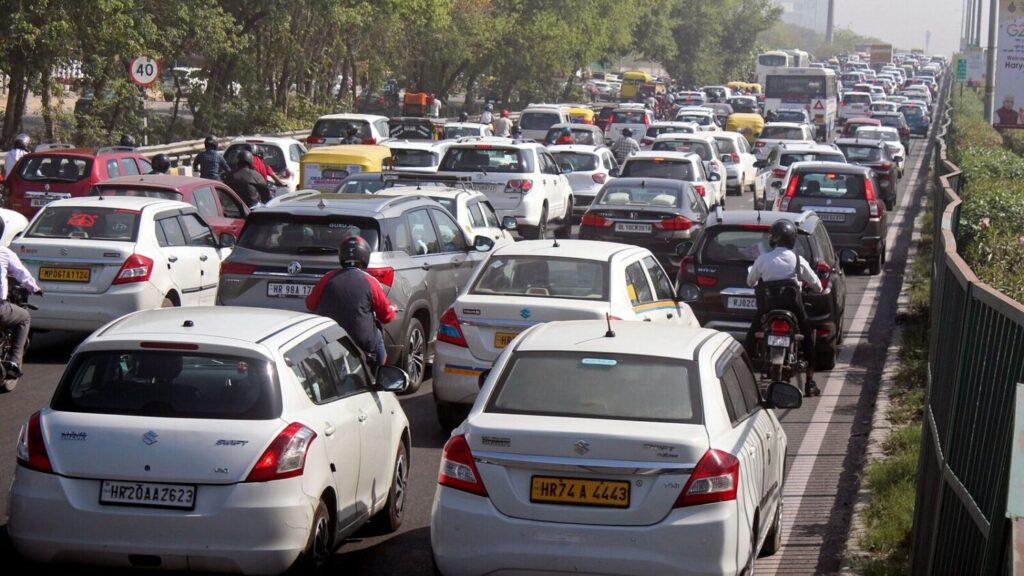
The World’s Second Most Congested City: A Dubious Honor
Bengaluru’s congestion worsened in recent years, solidifying its position as a global traffic hotspot. Average speeds dip to around 16-17 kmph citywide, with motorists spending extra hours in gridlock that could otherwise be productive.
Potholes, erratic roadworks, and a lack of efficient public transport exacerbate the issue. North Bengaluru remains a hotspot for violations at signals and intersections, while residential zones are clogged with illegally parked vehicles, turning quiet neighborhoods into parking lots. The irony persists: some view this congestion as a “sign of growth,” but residents experience daily frustration.
The Staggering Cost of Congestion
Traffic isn’t just an annoyance—it’s an economic black hole. Annual losses are estimated in the range of thousands of crores, factoring in wasted time, fuel, and productivity. Broader impacts include health costs from pollution, lost work hours, and environmental damage, eroding a notable portion of the city’s economic output.
Commuters could save significant amounts yearly by switching to better public transport, but last-mile connectivity gaps keep many reliant on personal vehicles. Businesses suffer too, with poor roads prompting some firms to consider relocation.
Commute Times: A Daily Reality Check
Bengaluru’s notorious traffic makes commuting a major pain point. Typical daily commutes for IT professionals (20–30 km round trip) take 1.5–3 hours total (45–90 minutes one way), depending on distance and route.
Many report 2+ hours daily in peak traffic. Rush-hour speeds hover at 13–14 kmph in many areas, worsened by rain, roadworks, and accidents. Public transport (buses, metro) can help on some routes but still faces delays. Many middle-class families opt for two-wheelers or cars despite the stress, or choose homes closer to workplaces to cut time.
Cost of Living for a Middle-Class Family
For a typical middle-class family of four (couple + two children), monthly expenses in Bengaluru range from ₹60,000 to ₹1,20,000, depending on lifestyle, location, and choices like schooling or transport.
Bengaluru remains more affordable than Mumbai or Delhi for similar lifestyles, but housing and education consume the largest shares.
Breakdown of Monthly Expenses
(Approximate for Middle-Class Family of 4)
| Category | Estimated Monthly Cost (₹) | Notes/Details |
|---|---|---|
| Rent (2-3 BHK) | 25,000 – 50,000 | 2 BHK in suburbs/outer ring: ₹25k–35k; Closer to IT hubs (Whitefield, Sarjapur, Bellandur): ₹35k–50k+. Maintenance extra. |
| Groceries & Household | 8,000 – 15,000 | Home-cooked meals, milk, veggies, staples from local markets/supermarkets. Higher if organic/premium brands. |
| Utilities (Electricity, Water, Internet, Gas) | 4,000 – 8,000 | Electricity varies with AC usage; high-speed internet ~₹800–1,500; cooking gas ~₹1,000. |
| Education (School Fees + Transport/Activities) | 10,000 – 40,000 | Mid-tier private schools: ₹8k–20k per child; International schools push higher. Includes books/uniforms/extras. |
| Transport (Fuel/Cabs/Public) | 5,000 – 12,000 | Two-wheeler + fuel: lower; Car + fuel/maintenance: ₹8k–12k; Frequent Ola/Uber or metro/BMTC adds up. |
| Healthcare/Medicines | 2,000 – 6,000 | Insurance premiums + out-of-pocket; family check-ups, minor illnesses. |
| Domestic Help/Cook | 5,000 – 10,000 | Part-time/full-time maid/cook common for middle-class families. |
| Dining Out/Entertainment | 5,000 – 10,000 | Occasional restaurants, movies, weekends; streaming subscriptions. |
| Miscellaneous (Clothing, Personal Care, etc.) | 5,000 – 10,000 | Variable; includes phone bills, kids’ activities. |
| Total (excluding rent) | 40,000 – 80,000+ | Core non-housing expenses. |
| Grand Total (with rent) | 60,000 – 1,20,000+ | Comfortable middle-class range; many aim for ₹80k–1 lakh to live reasonably well. |
Why People Are Leaving Bengaluru
The gridlock, combined with soaring property prices, water shortages, air quality issues, and stress, is pushing residents away. Many lifelong locals and professionals plan to relocate to quieter Tier-2 cities like Mysuru, where real estate has surged due to this migration.
Companies cite poor roads and waterlogging as reasons for eyeing smaller locations. Overcrowding from temporary settlers and erratic governance add to the disillusionment. Bengaluru’s challenges in surveys highlight this growing exodus, with many losing hope amid unrelenting issues.
Solutions on the Horizon: Spotlight on YTC Ventures and Beyond
Amid the gloom, initiatives offer hope. The government is implementing AI-based traffic management at signals, using drones and machine learning. Key projects include the ₹450 crore Silk Board–KR Puram Elevated Corridor (17 km) for bottleneck relief, and a ₹4,100-crore suburban rail link to the airport by 2030.YTC Ventures, a Bengaluru-based firm, highlights the Karnataka government’s Bengaluru Business Corridor—a 117-km Peripheral Ring Road designed to slash traffic by 40% within two years by rerouting commercial flow and decongesting core areas.
Experts push for last-mile solutions: better feeder buses, safe footpaths, and integrated public transport to boost ridership. Cities with organized feeders have seen higher usage, and Bengaluru could benefit from prioritizing accessible, sustainable mobility over mega-projects alone.As congestion mounts and the population grows, the question remains: Can these solutions turn the tide before more talent and families flee? Bengaluru’s future hinges on balancing its tech-driven growth with livable infrastructure.

Comments