
YTC Ventures | TECHNOCRAT MAGAZINE | www.ytcventures.com
As of January 18, 2026, HDFC Bank’s Q3 FY26 earnings have ignited widespread discussion across financial forums and social media, with analysts praising the bank’s consistent growth trajectory in a volatile economic environment.
The 11.5% YoY net profit jump to ₹18,654 crore, coupled with resilient asset quality (GNPA at 1.24%), has positioned HDFC as a top performer among Indian banks. Trending topics include the bank’s deposit mobilization strategies, digital banking prowess, and potential for further NIM expansion, as shares edged higher in early trading.
This performance aligns with broader sector trends, where peers like ICICI and Axis also reported steady gains, but HDFC’s diversified model stands out for its balance between retail and wholesale segments.
HDFC Bank Q3 FY26 Net Profit Jumps 11.5% to ₹18,654 Crore; Asset Quality Unchanged QoQ
HDFC Bank, India’s premier private sector lender, delivered a robust standalone performance for the third quarter of FY26 (October–December 2025), announced on January 17, 2026. The bank posted a net profit of ₹18,654 crore, reflecting an 11.5% year-on-year (YoY) increase from ₹16,736 crore in Q3 FY25. This growth, in line with market expectations, was bolstered by steady net interest income (NII) expansion and controlled provisions, even as the sector navigates margin pressures from rising deposit costs and regulatory changes.

Net interest income, the cornerstone of the bank’s earnings, climbed 6.4% YoY to ₹32,620 crore, driven by a 9.0% YoY advance growth to ₹28.64 lakh crore under management. Deposits exhibited strong momentum, with average deposits rising 12.2% YoY to ₹27.52 lakh crore and end-of-period (EOP) deposits up 11.6% to ₹28.60 lakh crore. The current and savings account (CASA) ratio held firm at 33.6%, with CASA deposits growing 10.1% YoY to ₹9.61 lakh crore, underscoring HDFC’s robust liability franchise.Asset quality metrics remained stable quarter-on-quarter (QoQ), with gross non-performing assets (GNPA) at 1.24% and net NPAs at 0.42%. Provisions dropped to ₹2,838 crore, benefiting from releases tied to a large borrower resolution. The balance sheet expanded to ₹40.89 lakh crore, supported by a healthy capital adequacy ratio (CAR) of 19.9% under Basel III, providing a solid buffer for sustained expansion.
Consolidated net profit, incorporating subsidiaries like HDFC Life, HDFC AMC, and HDB Financial Services, advanced 12.2% YoY to ₹19,807 crore.Operating expenses factored in an ₹800 crore provision for new Labour Code-related employee benefits, yet the core cost-to-income ratio stayed efficient at 39.2%. The bank also noted the upcoming retirement of Executive Director Bhavesh Zaveri on April 18, 2026, as part of its leadership succession planning.
Key Financial Highlights – Q3 FY26 at a Glance
| Metric | Q3 FY26 (Dec 2025) | YoY Change | QoQ Change | Notes |
|---|---|---|---|---|
| Standalone Net Profit | ₹18,654 crore | +11.5% | Flat | In line with estimates |
| Net Interest Income (NII) | ₹32,620 crore | +6.4% | – | Core earnings driver |
| Total Advances (under mgmt) | ₹28.64 lakh crore | +9.0% | +2.5% | Balanced across segments |
| Total Deposits (EOP) | ₹28.60 lakh crore | +11.6% | +2.1% | Strong liability franchise |
| CASA Deposits | ₹9.61 lakh crore | +10.1% | – | 33.6% of total deposits |
| Gross NPA Ratio | 1.24% | Stable/Improved | Unchanged QoQ | Resilient asset quality |
| Net NPA Ratio | 0.42% | Stable | Unchanged | Strong provisioning coverage |
| Capital Adequacy Ratio (CAR) | 19.9% | – | – | Well above regulatory requirements |
These results affirm HDFC Bank’s position as a resilient, high-quality institution, with analysts eyeing continued momentum in digital initiatives and branch expansions for FY26’s remainder.
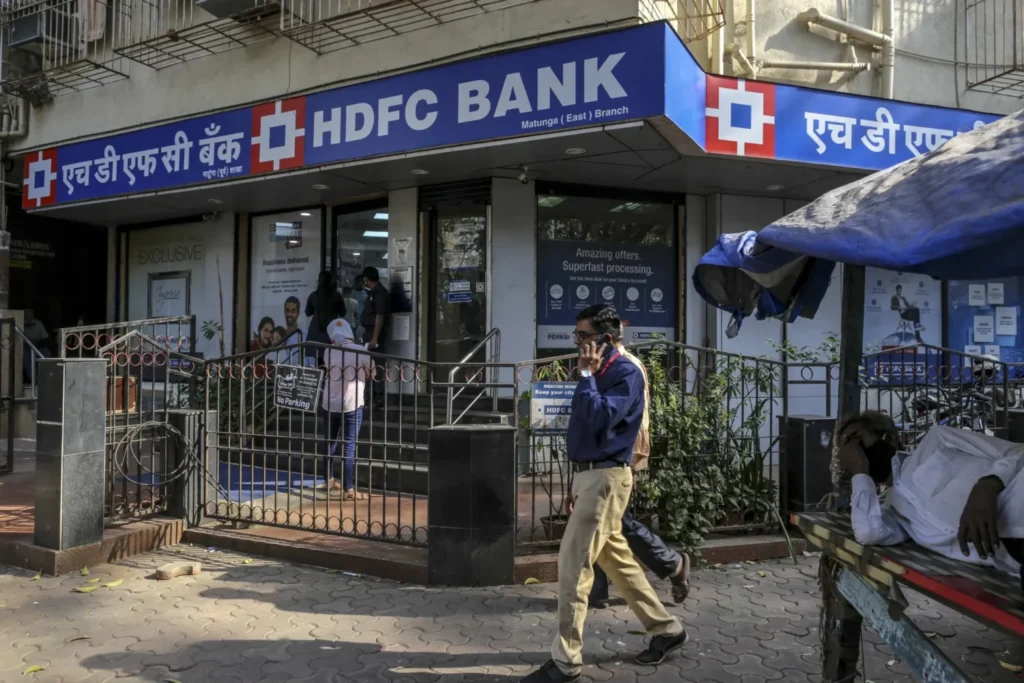
HDFC Bank’s Business Model: A Blend of Innovation and Diversification
HDFC Bank’s business model is a well-orchestrated fusion of retail banking, wholesale banking, treasury operations, and digital innovation, emphasizing customer-centricity, operational excellence, product leadership, sustainability, and people-oriented services. As India’s largest private sector bank by assets, it operates as a universal bank, leveraging technology to deliver seamless, accessible financial solutions while maintaining a balanced portfolio across segments.
The model focuses on low-cost funding through a strong CASA base, prudent risk management, and cross-selling opportunities via its ecosystem of subsidiaries in insurance, asset management, and consumer finance. In FY26, this approach has driven consistent returns, with a emphasis on digital transformation—including AI-driven personalization and blockchain for remittances—to enhance efficiency and customer satisfaction. Core values like sustainability are integrated through green financing and ESG-linked products, positioning the bank for long-term growth in a competitive landscape.
Key Products and Services
HDFC Bank offers a comprehensive suite of products tailored to individuals, businesses, and institutions. Here’s an overview categorized by segment:
| Segment | Key Products and Services |
|---|---|
| Personal Banking | Savings and Current Accounts (e.g., regular, premium, salary); Fixed and Recurring Deposits; Loans (home, personal, auto, education, gold); Credit and Debit Cards (rewards, cashback, co-branded); Investments (mutual funds, SIPs, stocks via demat); Insurance (life, health, motor, travel); Digital Services (netbanking, mobile app, UPI, PayZapp wallet); Forex and Remittances. |
| Business Banking | SME Loans and Working Capital Finance; Trade Finance (letters of credit, guarantees); Cash Management Services; Business Credit Cards; Merchant Services (POS terminals, payment gateways); Corporate Salary Accounts; Supply Chain Finance; Treasury Solutions (forex hedging, derivatives). |
| Wholesale Banking | Corporate Loans (term, project finance); Debt Capital Markets; Syndicated Loans; Advisory Services (M&A, IPOs); Institutional Banking for government and PSUs. |
| Treasury | Foreign Exchange Trading; Money Market Instruments; Government Securities; Interest Rate Swaps; Liquidity Management. |
| Other Services | Digital Lending Platforms; Wealth Management; Custodial Services; Bancassurance; Asset Management via subsidiaries. |
This diversified portfolio ensures revenue stability, with retail contributing significantly to advances (around 60%), while wholesale and treasury provide high-margin opportunities.
Specialized Services for NRIs, HNIs, and UHNIs
HDFC Bank caters to niche client segments with tailored, premium offerings, leveraging its global presence and expertise.
- NRI Services (Non-Resident Indians): Designed for seamless cross-border banking, these include NRE/NRO Savings and Current Accounts (with repatriation benefits, high interest rates, and mandate options for family operation); RFC (Resident Foreign Currency) Accounts for multi-currency holdings; Fixed Deposits in INR or foreign currencies (tax-exempt, protected from forex risks); Recurring Deposits with quarterly compounding; Offshore Accounts in Bahrain and Hong Kong (fixed/floating rates, currency switches). Remittances feature free overseas transfers and outward from NRO accounts. Investments encompass Equities/Derivatives trading, Mutual Funds (SIP/SWP), Portfolio Investment Scheme (PIS) for stock exchanges, Offshore Investments (bonds, funds), and Depository Services (zero opening charges). Loans include Loan Against Securities/FDs (up to 90% value) and Home Loans for NRIs/PIOs/OCIs. Premium perks: Dedicated Personal Banker, Digital Banking for account management (e.g., FD additions, nominee updates), NRI Mailbox, and specialized Insurance Plans (e.g., HDFC Life Sampoorn Samridhi, Tata AIA Diamond Savings).
- HNI/UHNI Services (High Net Worth and Ultra High Net Worth Individuals): Through its Wealth Management and Private Banking arm, HDFC offers bespoke solutions for affluent clients. These include Personalized Investment Advisory (portfolio optimization, asset allocation); Portfolio Management Services (PMS) with equity, debt, and alternative investments; Estate Planning and Succession Advisory; Family Office Services (multi-generational wealth preservation); Structured Products and Alternative Investments (private equity, real estate funds); Tax Advisory and Compliance; Philanthropy Consulting; Exclusive Credit Facilities (high-limit cards, customized loans); Global Custody and Banking (multi-currency accounts, international remittances). UHNIs benefit from Imperia/Preferred Banking programs with priority access, dedicated relationship managers, concierge services, and invitations to exclusive events. Digital tools like the Wealth App provide real-time portfolio tracking and AI-driven insights, ensuring holistic wealth growth and protection.
This client-focused segmentation enhances loyalty and cross-sell ratios, contributing to HDFC’s superior return on assets.As HDFC Bank navigates FY26, its adaptive business model—rooted in digital agility and customer trust—positions it well for sustained outperformance. Investors will watch upcoming quarters for insights on NIM recovery and expansion strategies.
Published by TECHNOCRAT MAGAZINE, YTC Ventures – Delivering in-depth insights into finance, innovation, and market trends in a borderless world.

Comments