
YTC Ventures | TECHOCRAT MAGAZINE | www.ytcventures.com
In the icy vastness of the Arctic, Greenland stands as a geopolitical hotspot. As of January 2026, U.S. President Donald Trump’s persistent push to acquire the island from Denmark has escalated tensions within NATO, drawing in discussions of military deployments, strategic resources, and alliance unity. With climate change exposing mineral wealth and opening new shipping routes, Greenland’s value extends beyond its size.
This comprehensive article synthesizes historical context, military analyses, leadership perspectives, and economic prospects, drawing from global sources including news outlets like Reuters, CNBC, Al Jazeera, and specialized reports from CSIS, USGS, and mining databases.
Trump’s Greenland Ambitions: A Renewed Push
Trump’s interest in Greenland reignited in 2026, building on his 2019 proposal to purchase it as a “large real estate deal.” Rejected then by Denmark and Greenland, the idea resurfaced amid U.S. national security concerns over Russian and Chinese influence in the Arctic.
Trump has stated, “One way or the other, we’re going to have Greenland,” without ruling out force, prompting Danish Prime Minister Mette Frederiksen to warn it could end NATO. Historical U.S. attempts include offers in 1867, 1910, and 1946 under Truman for $100 million during the Cold War.
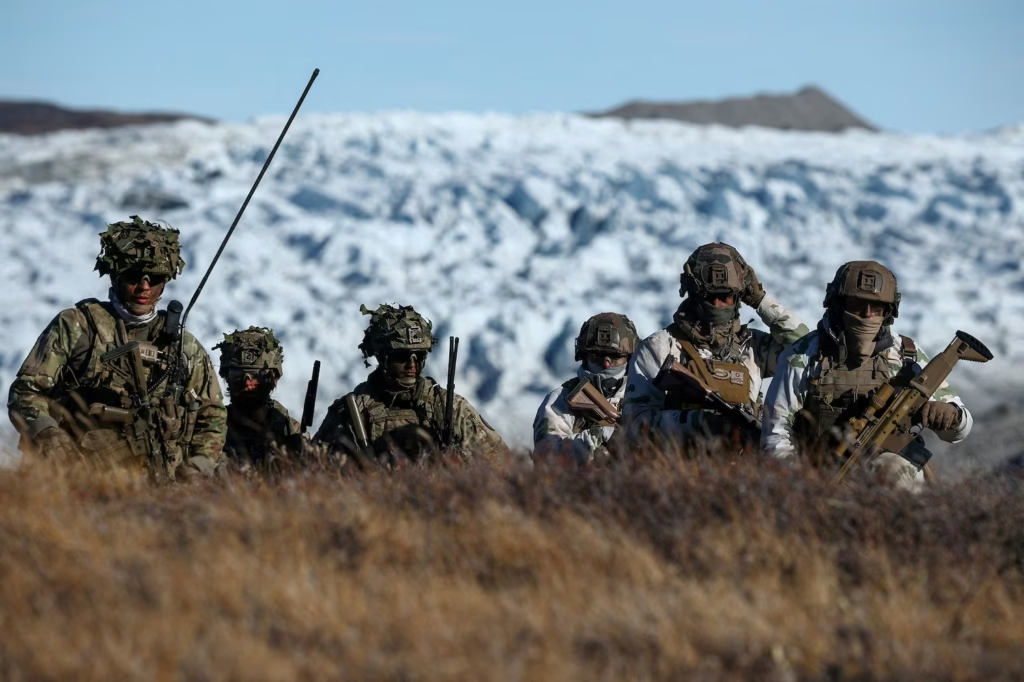
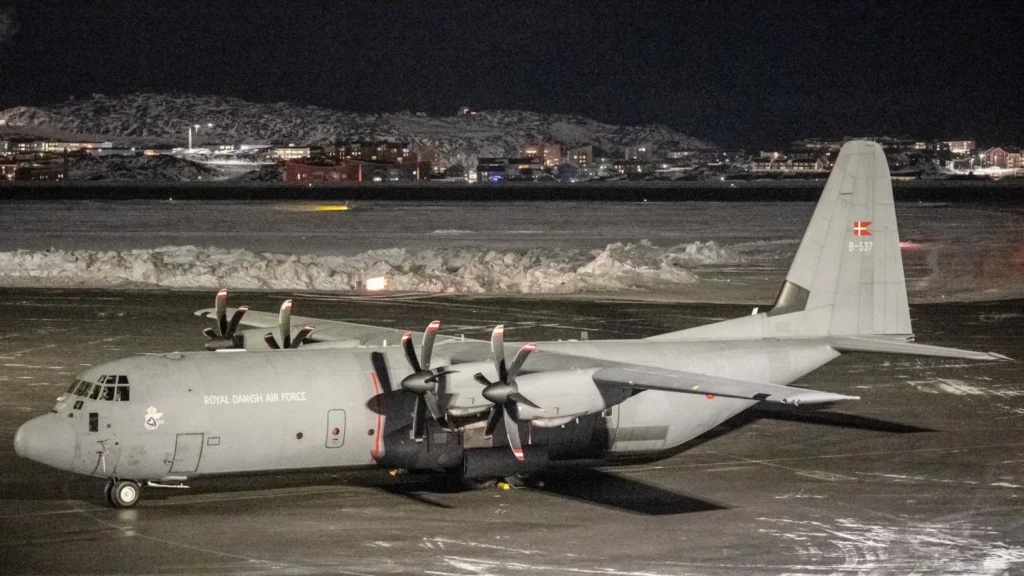
European allies have responded with troop deployments to Greenland in solidarity with Denmark, highlighting NATO fractures. The U.S. maintains Pituffik Space Base (formerly Thule Air Base), crucial for missile defense and monitoring the GIUK Gap—a strategic chokepoint for Atlantic access.
The History of NATO: From Cold War Origins to Arctic Challenges
Founded on April 4, 1949, in Washington, D.C., by 12 nations, NATO aimed to counter Soviet expansion, deter European militarism, and foster integration. Article 5—treating an attack on one as an attack on all—forms its backbone.
Key evolutions include West Germany’s 1955 entry (sparking the Warsaw Pact), early exercises like Grand Slam (1952), and post-1991 shifts to cooperative security. Now with 32 members, NATO’s Brussels headquarters oversee operations amid Arctic tensions, where Greenland’s status tests alliance cohesion.
Military Assets and Defending Forces in Greenland
Greenland’s defense falls under Denmark, with limited local forces: a small Sirius Dog Sled Patrol (about 12 personnel) for sovereignty patrols in harsh terrain.
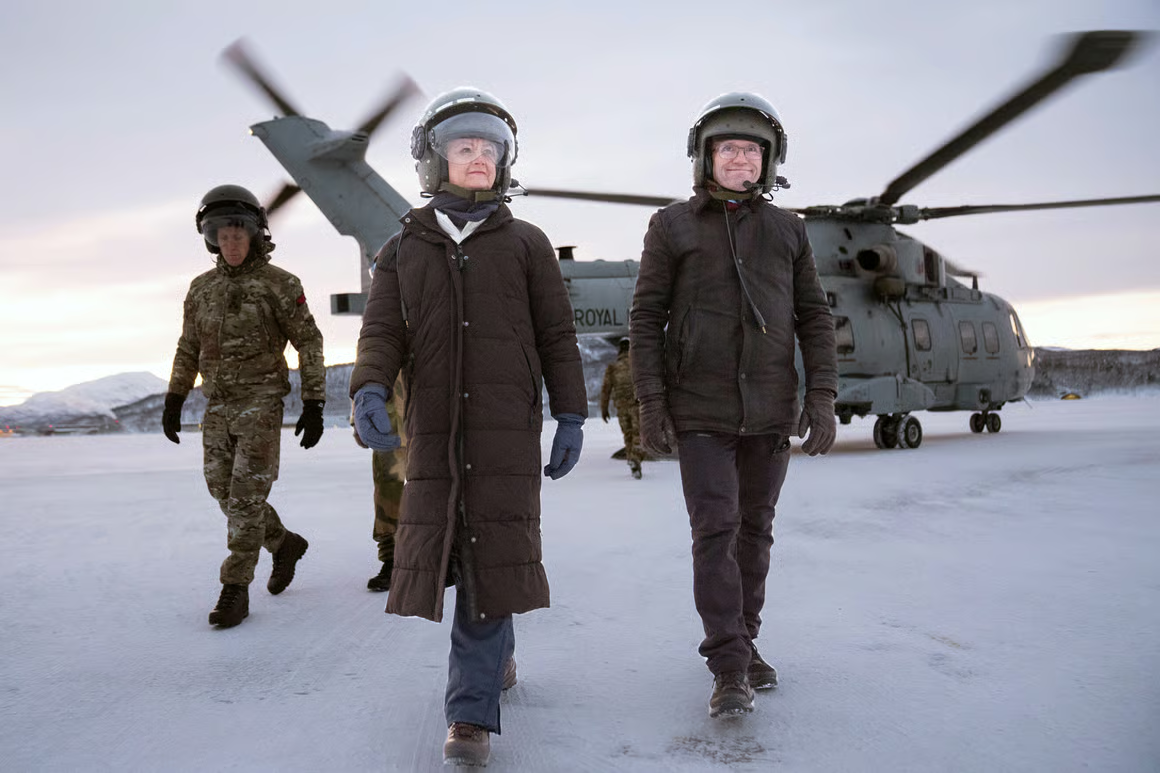
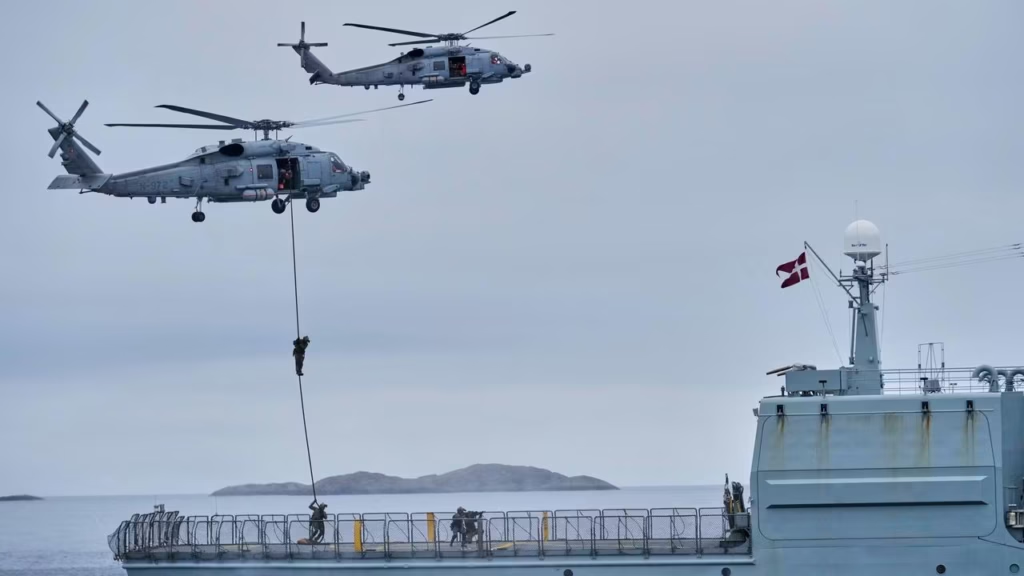
The U.S. operates Pituffik Space Base with around 150 personnel, focusing on space surveillance and missile warning—no combat troops. Denmark maintains a frigate presence and occasional air patrols. In 2026, European NATO allies deployed symbolic forces to signal unity against U.S. pressure.
Military leadership views Greenland as vital: U.S. generals emphasize its role in Arctic surveillance against Russia; NATO’s Supreme Allied Commander Europe has called it a “strategic linchpin.” Danish officials stress joint defense under NATO, rejecting unilateral U.S. control.
NATO’s Combined Military Assets (2025 Estimates)
| Category | Total (Including USA) | Notes |
|---|---|---|
| Active Personnel | 3.44–3.5 million | Outnumbers Russia (1.32 million) |
| Aircraft (Total) | 22,000–22,377 | Dominant in air power |
| Main Battle Tanks | 11,495 | Strong ground forces |
| Naval Vessels | 1,143 | Includes carriers and subs |
| Nuclear Warheads | 5,500–5,692 | U.S., UK, France combined |
| Annual Defense Budget | $1.47–1.5 trillion | Over half global total |
NATO Assets Excluding USA
| Category | Total | Notes |
|---|---|---|
| Active Personnel | 2.1–2.3 million | Europe-focused |
| Main Battle Tanks | 4,300–7,000 | Land defense emphasis |
| Combat Aircraft | 8,000–10,000 | Led by UK, France, Türkiye |
| Aircraft Carriers | 2–6 | Limited projection |
| Nuclear Warheads | 450–500 | UK and France |
| Naval Vessels (Major) | 1,000+ | Regional strength |
Military Comparison: NATO vs. USA – Could NATO Defeat the USA?
The U.S. dominates NATO: 1.36 million active personnel, 800,000 reserves, 2,600 Abrams tanks, 1,400 combat aircraft, 11 carriers, and 6,000+ nuclear warheads. NATO excluding the U.S. has 2 million active, 10,000+ tanks (combined), 3,000+ aircraft, 6 carriers, and 500 nuclear warheads. Budget-wise, U.S. spends $886 billion vs. NATO’s $1.3 trillion total.
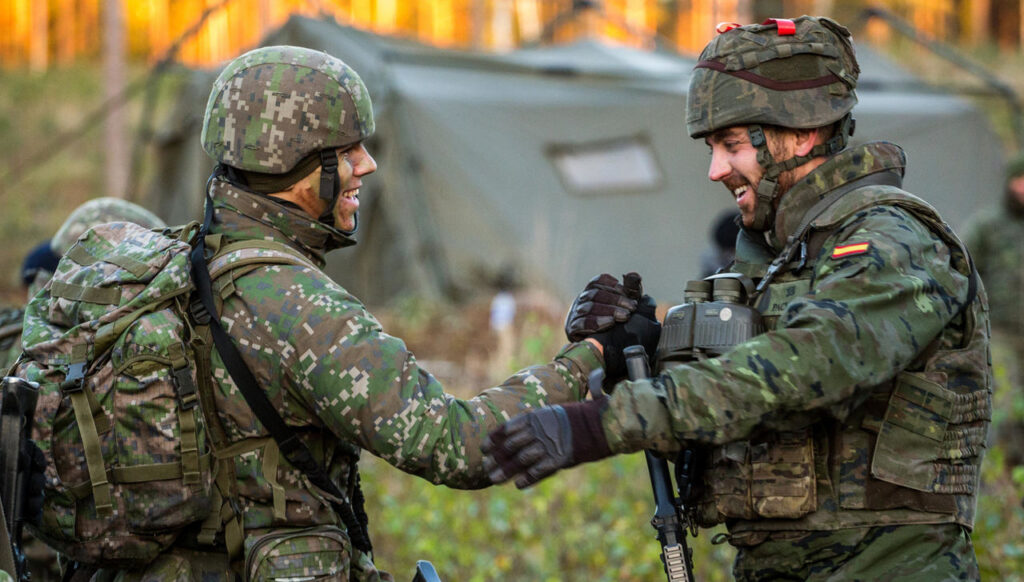
Hypothetically, a NATO-USA conflict over Greenland is improbable due to shared interests and Article 5. Without U.S. assets, NATO’s conventional forces are formidable in Europe but lack global projection. Defeating the U.S. would require overwhelming coordination, but U.S. nuclear and technological superiority makes it unlikely. Analysts note such a scenario could dissolve the alliance, as warned by Frederiksen.
Comprehensive Analysis of Greenland
Greenland, the world’s largest island (2.16 million sq km, 80% ice-covered), is autonomous within Denmark’s kingdom, handling internal affairs while Denmark manages defense and foreign policy. Population: ~56,000, mostly Inuit.
Climate change accelerates ice melt, revealing resources and routes like the Northwest Passage.Geopolitically, Russia’s Arctic buildup and China’s investments (e.g., mining stakes) heighten U.S. concerns. Economically, fishing dominates, but minerals promise growth. Challenges: Harsh weather (-40°F), no roads/railways, environmental risks. Tourism and research (e.g., climate studies) grow, but independence debates persist—polls show mixed support.U.S. options discussed include incentives or pressure, but force risks NATO collapse. Greenlanders prioritize sovereignty, with PM Nielsen stating, “We choose Denmark.”
Rare Earth and Mining Possibilities in Greenland
Greenland ranks eighth globally with 1.5 million tons proven rare earth reserves, potentially 38.5 million tons total. Key for tech (magnets, EVs), it could supply 25% of global dysprosium/neodymium. Challenges: Uranium bans (100 ppm limit), infrastructure gaps.
| Deposit | Reserves (Million Tons REO) | Ore Grade (%) | Key Elements | Status |
|---|---|---|---|---|
| Kvanefjeld | 11 | 1.43 | Heavy REEs | Permitting |
| Tanbreez | 28.2 | 0.38 | Heavy REEs | Development |
| Total Estimated | 36–42 | Varies | Neodymium, Dysprosium | Exploration |
Asset worth: $ trillions in untapped minerals (rare earths ~$500 billion+ at current prices), plus iron, gold, molybdenum.
Mining Prospects in Greenland (2026 Updates)
No active rare earth mines yet, but projects advance amid U.S. interest. Harsh conditions stall progress, but investments like U.S. EXIM loans signal momentum.
| Project | Company | Mineral | Status | Reserves/Notes |
|---|---|---|---|---|
| Tanbreez | Critical Metals Corp | Rare Earths | Pilot plant 2026 | 28.2M tons; $120M U.S. loan potential |
| Kvanefjeld | Energy Transition Minerals | Rare Earths | Permitting | 11M tons; 370K tons heavy REEs |
| Nalunaq | Amaroq Minerals | Gold | Resuming operations | 263K oz indicated; high-grade |
| Malmbjerg | Greenland Resources | Molybdenum | Feasibility | 245M tons; NPV $1.59B |
| Isua | Potential (various) | Iron Ore | Exploration | 1.5B tons potential |
Current Leadership and Their Statements on Trump
No recent X posts found from leaders’ verified accounts (many use Facebook or official channels). Table includes key 2026 statements from press conferences/news.
| Leader | Position | Key Statement on Trump/Greenland (2026) |
|---|---|---|
| Jens-Frederik Nielsen | PM of Greenland (since Apr 2025) | “If we have to choose between the U.S. and Denmark, we choose Denmark… U.S. pressure is unacceptable; Greenland is not for sale.” (Jan 13 press conference) |
| Mette Frederiksen | PM of Denmark (since 2019) | “Our message is clear: Greenland is not for sale… You can’t buy another people.” (Jan 13 press conference); “U.S. takeover would mark the end of NATO.” |

Comments