
YTC Ventures | Technocrat’ Magazine | www.ytcventures.com
January 3, 2026
In a historic military operation, U.S. special forces captured Venezuelan President Nicolás Maduro and his wife, Cilia Flores, during an overnight raid in Caracas. President Donald Trump announced the success of the “large-scale strike” early Saturday, marking the most significant U.S. intervention in Latin America since the 1989 Panama invasion.Speaking in a telephone interview with Fox & Friends, Trump described the capture site as a heavily fortified “fortress” rather than a standard residence.
The compound featured solid steel doors and a reinforced “safe room.” Maduro attempted to reach this secure area, but elite operators “bum-rushed” him before he could secure it. U.S. forces had prepared extensively, constructing a replica of the residence for training and equipping teams with blowtorches to breach steel barriers if needed.
Trump, watching the raid live from Florida, called it “like a television show” due to its rapid execution and intensity. He reported no U.S. fatalities, only minor injuries to a few soldiers and damage to one helicopter.The operation, led by the U.S. Army’s elite Delta Force with CIA intelligence support, targeted a residence within the Fuerte Tiuna military complex.
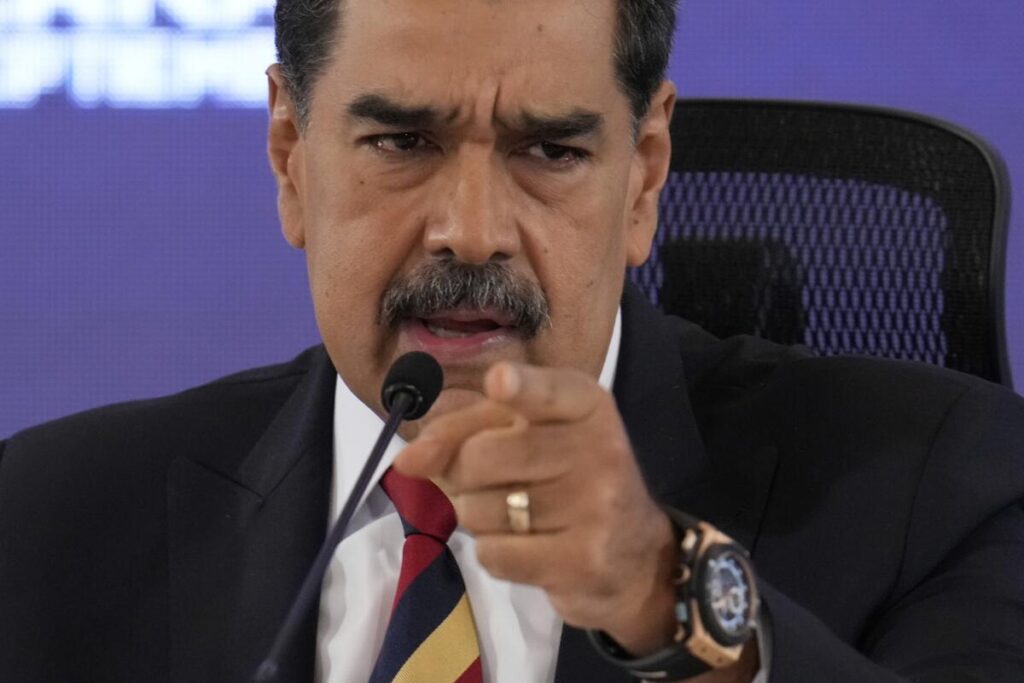
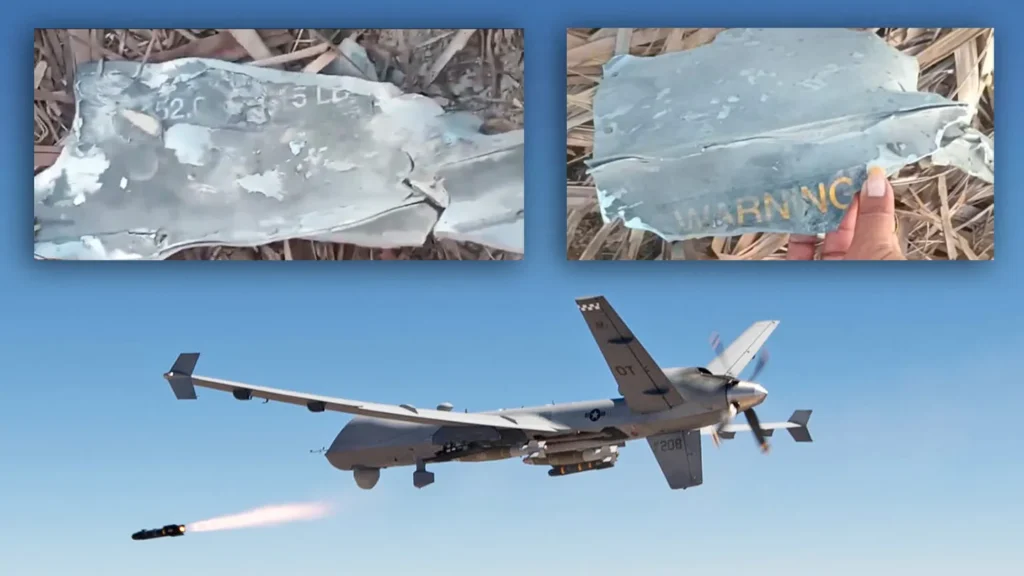
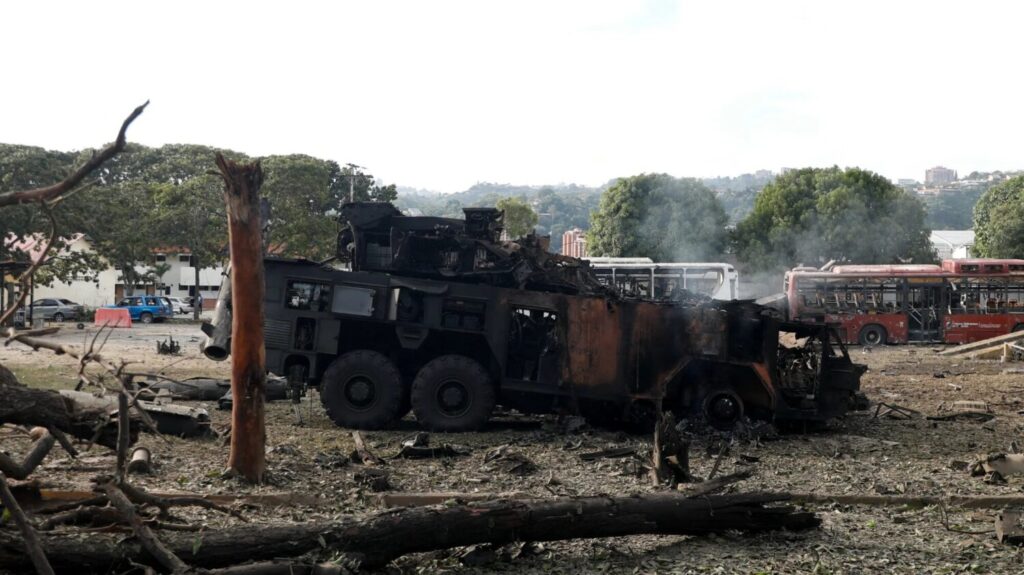
Simultaneous airstrikes hit Venezuelan military sites, including anti-aircraft systems at La Carlota airbase and other assets in Caracas.Following the capture, Maduro and Flores were extracted by helicopter to the USS Iwo Jima, a U.S. Navy amphibious assault ship in the Caribbean. They are en route to New York City to face federal charges in the Southern District of New York, including narco-terrorism conspiracy, cocaine importation, and possession of destructive devices, based on a 2020 indictment unsealed with additional counts.This action follows months of U.S. pressure, including a $50 million bounty on Maduro and strikes on alleged drug-trafficking vessels.
Trump indicated strong future U.S. involvement in Venezuela, particularly its oil sector.
Forces Involved in Operation Southern Spear
| Side | Unit/Branch | Role | Notes |
|---|---|---|---|
| United States | Delta Force (1st SFOD-D) | Ground assault and capture of Maduro and Flores | Elite operators conducted the direct raid |
| United States | CIA (Special Activities Center) | Intelligence gathering and operational planning | Provided real-time targeting and support |
| United States | U.S. Air Force (fighter/bomber squadrons) | Airstrikes on Venezuelan military targets and air defenses | Suppressed anti-aircraft systems |
| United States | U.S. Navy (USS Iwo Jima amphibious group) | Extraction platform, command and control, maritime support | Helicopter extraction to ship |
| United States | Joint Special Operations Command (JSOC) | Overall command and coordination of special forces elements | Oversaw multi-branch integration |
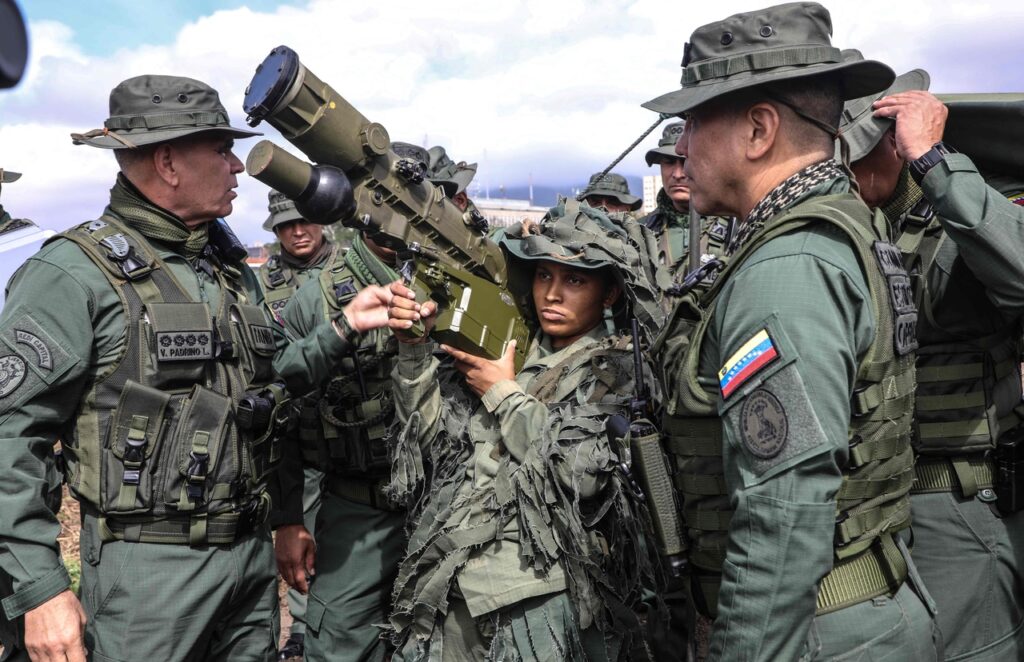
| Venezuela | Bolivarian National Guard (Guardia Nacional) | Primary security at Fuerte Tiuna compound | Overwhelmed during raid |
| Venezuela | Venezuelan Armed Forces (general) | Air defense and rapid response units | Targets of simultaneous U.S. airstrikes |
| Venezuela | SEBIN (intelligence service) | Potential inner-circle protection | Limited response reported |
Roots of the U.S.-Venezuelan Conflict and Reasons for the Operation
The raid represents the culmination of years of escalating tensions between the United States and Venezuela, rooted in allegations of drug trafficking, electoral fraud, and regional instability.U.S. officials have long accused Maduro and his regime of operating a “narco-state,” with Maduro personally leading the Cartel de los Soles—a network of military and political elites involved in cocaine trafficking. A 2020 federal indictment charged Maduro with narco-terrorism conspiracy, alleging he partnered with Colombian rebels to flood the U.S. with cocaine.
The bounty on his head, initially $15 million during Trump’s first term, rose to $50 million in 2025 after designating the cartel a foreign terrorist organization.Additional grievances include Maduro’s disputed 2024 re-election, widely viewed as fraudulent by the U.S. and opposition, and links to Venezuelan gangs like Tren de Aragua contributing to migration and crime in the Americas.
Trump has tied these issues to U.S. border security, drugs, and immigration.The operation escalated from a 2025 counter-narcotics campaign involving maritime strikes on suspected drug boats and a naval blockade of Venezuelan oil tankers. Critics, including Maduro and allies like Russia and Iran, argue the true motives involve seizing Venezuela’s vast oil reserves and enforcing regime change under a revived “Trump Corollary” to the Monroe Doctrine.Global reactions remain divided: celebrations among Venezuelan opposition and expatriates contrast with condemnations from Russia, Iran, and some Latin American leaders as “imperialist aggression.”
In Caracas, reports describe mixed protests—jubilant in opposition areas and pro-government mobilizations elsewhere.
Estimated Cost of Operation Southern Spear and the Maduro Capture Raid
As of January 3, 2026, no official figures from the Pentagon, White House, or U.S. government disclose the exact cost of the specific raid that captured Nicolás Maduro or the broader Operation Southern Spear. Military operations of this nature are rarely itemized publicly in real-time due to classification and ongoing sensitivities.However, based on available reporting and historical comparisons:
Broader Operation Southern Spear (Ongoing Campaign Since September 2025)
This includes the naval buildup, airstrikes on vessels, seizures of oil tankers, and the January 3 raid as its culmination.
- Deployment costs: Significant, involving ~15,000 U.S. personnel, the USS Gerald R. Ford Carrier Strike Group (purchase cost ~$13 billion, with R&D adding billions), amphibious ships like the USS Iwo Jima, destroyers, submarines, and air assets.
- Operational expenses: A December 2025 analysis noted the USS Gerald R. Ford alone costs approximately $333,000 per hour to operate, with escorts adding ~$9,200 per hour each. Daily operating costs for the carrier group can exceed $8-10 million.
- Overall asymmetry: Critics highlight the campaign’s high expense compared to targets (e.g., low-cost drug boats), with fleet acquisition costs alone surpassing $40 billion (amortized over years).
- Cumulative estimate: No total released, but months of deployment and dozens of strikes suggest costs in the hundreds of millions to low billions so far, excluding the raid.
Specific Cost of the January 3 Raid in Caracas
- Direct expenses: Likely in the tens of millions of dollars, primarily from:
- Fuel, munitions, and maintenance for airstrikes (suppressing air defenses).
- Helicopter operations (e.g., MH-47s from the 160th SOAR for extraction).
- Delta Force deployment, training (including replica compound builds), and support.
- Comparisons:
- The 2011 Osama bin Laden raid (Neptune Spear) was estimated at $50-100 million (adjusted for inflation today: higher).
- The 1989 Panama invasion (capturing Noriega, often compared) cost $163 million in 1989 dollars ($400 million today).
- This raid appears more limited (no full invasion, minimal U.S. casualties), so potentially lower, but enhanced by modern assets and preparatory strikes.
- Bounty note: The $50 million reward for Maduro’s capture/arrest information remains unclaimed publicly; it is separate from operational costs.
Costs could rise with any follow-on actions, legal proceedings in New York, or international repercussions. Future congressional hearings or budget reports may provide more details.
Sources: CNN, Fox News, Reuters, CBS News, The Guardian, ABC News, Bloomberg, NPR.This story is dominating global headlines under hashtags #MaduroCaptured and #VenezuelaLibre.

Comments