
YTC Ventures | Technocrat’ Magazine | December 10, 2025
TOKYO — In the shadow of a rare “megaquake” advisory, Japan is piecing together the damage from a powerful 7.5-magnitude earthquake that struck the nation’s northeast late Monday night, injuring at least 33 people and triggering small tsunamis along the Pacific coast. As rescue teams survey the aftermath and aftershocks continue, the country remains on high alert for what could become its most destructive seismic event in over a decade, reviving memories of the catastrophic 2011 Tohoku disaster.
The quake hit at 11:15 p.m. local time, approximately 70 km off the coast of Aomori Prefecture near Hokkaido, at a depth of about 53 km. It registered “Upper 6” on Japan’s seven-level seismic intensity scale, sending violent shaking through cities and towns, toppling furniture, and swaying skyscrapers.Small tsunami waves of up to 70 cm struck ports in Hokkaido, Aomori, and Iwate prefectures, prompting the evacuation of more than 114,000 residents overnight.
By Tuesday morning, all tsunami warnings were lifted, but the Japan Meteorological Agency issued its first-ever Nankai Trough “megaquake advisory,” warning of an elevated risk of a magnitude-8 or greater earthquake, and possible 30-meter tsunamis along an 800-mile coastal stretch in the coming days or weeks.
Injuries, Disruption, and a Nation Holding Its Breath
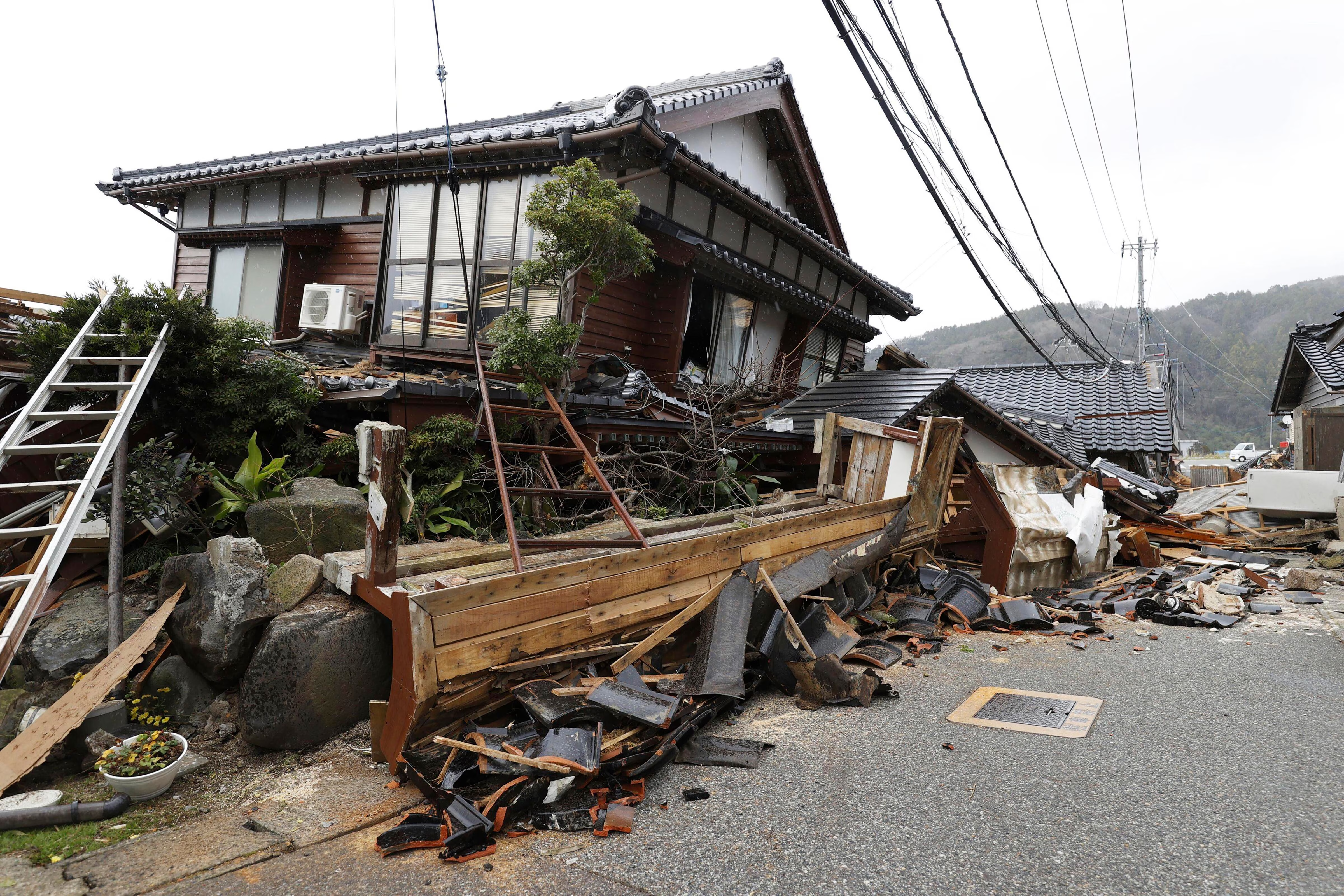
At least 33 people were injured, mostly from falling objects, with one person reported in serious condition. No fatalities have been confirmed so far, a reflection of Japan’s stringent building codes and decades of disaster preparedness.Widespread but relatively minor damage has been reported:
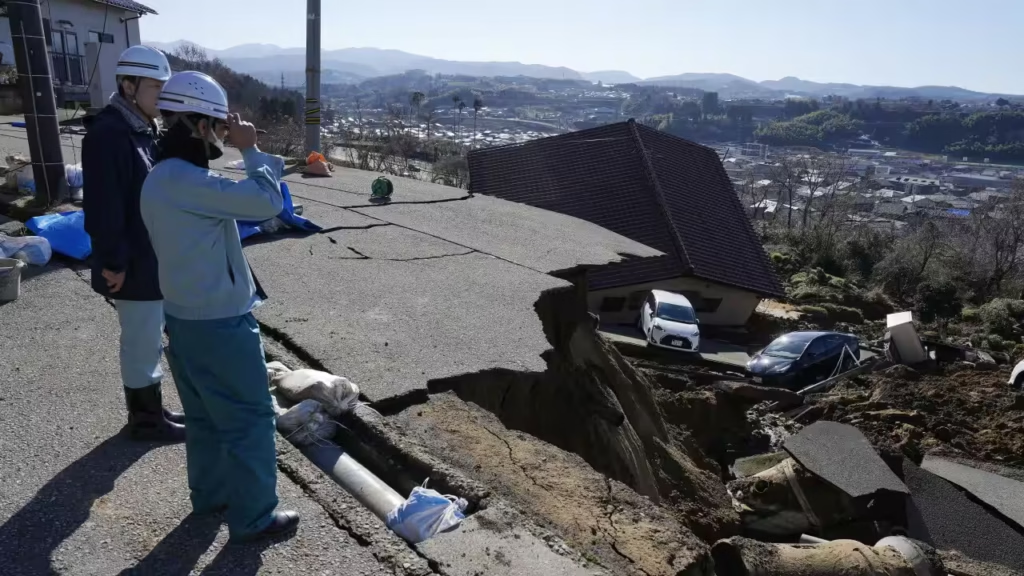
- Cracked roads in several towns in Aomori Prefecture
- A contained fire in Aomori City
- A collapsed torii gate at Yasaka Shrine in Hachinohe
- Temporary power outages affecting around 800 households
- Water supply disruptions for approximately 480 homes
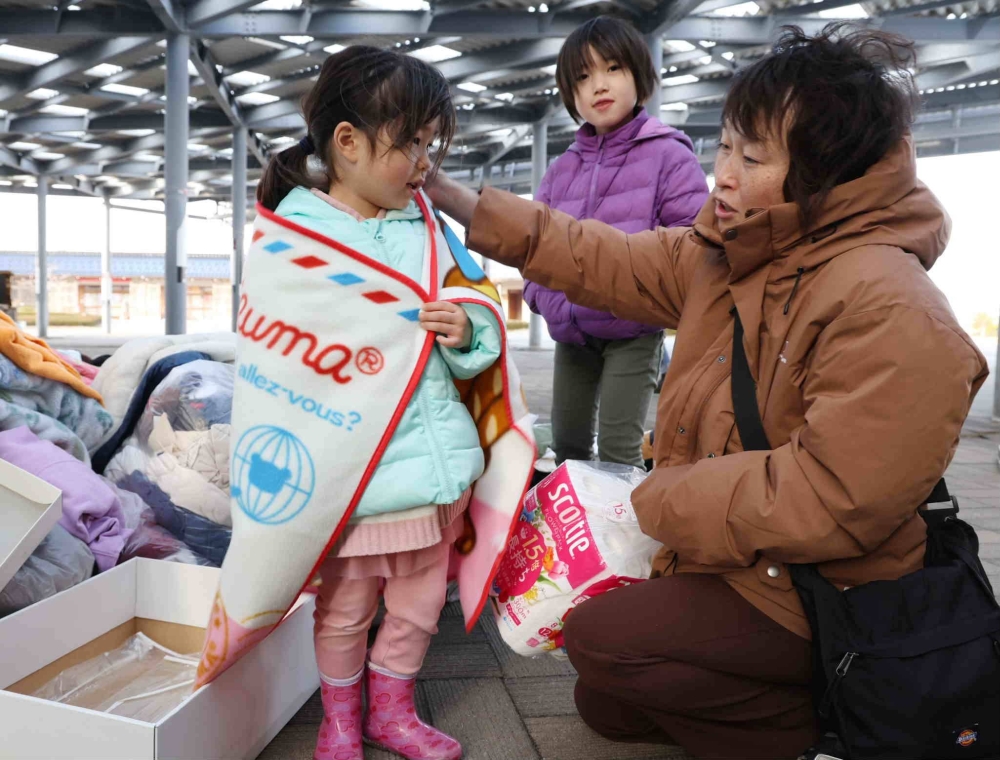
- Hundreds of residents spending the night in evacuation shelters, including Hachinohe Air Base
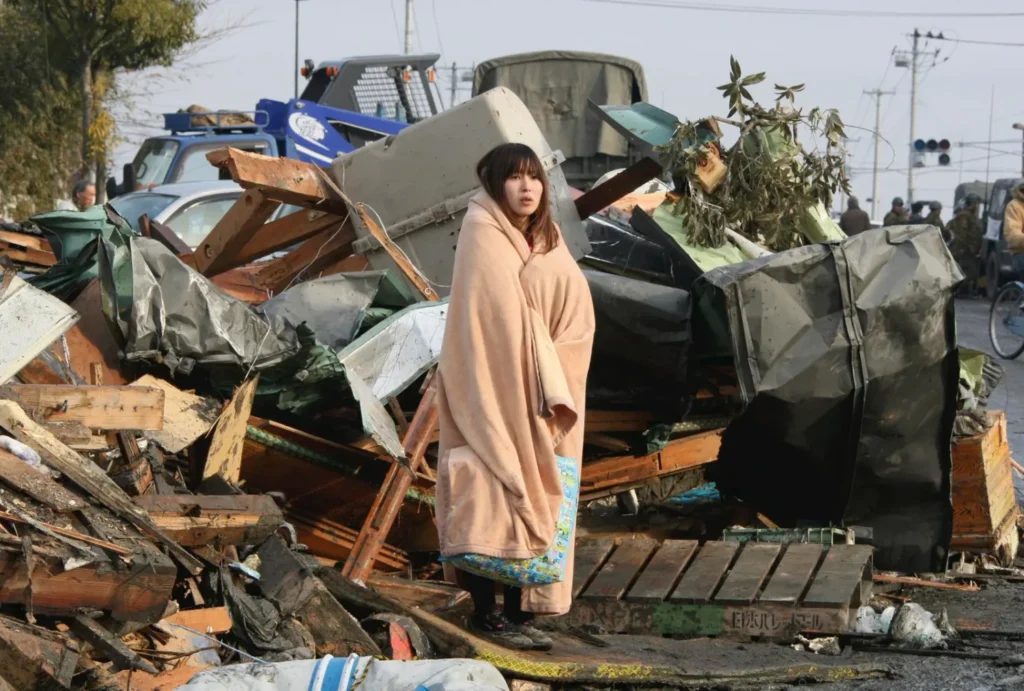
As Japan assesses the full scope of Monday’s quake, the looming megaquake advisory has put millions on edge, with supermarkets seeing runs on emergency supplies and many coastal communities reviewing evacuation plans.
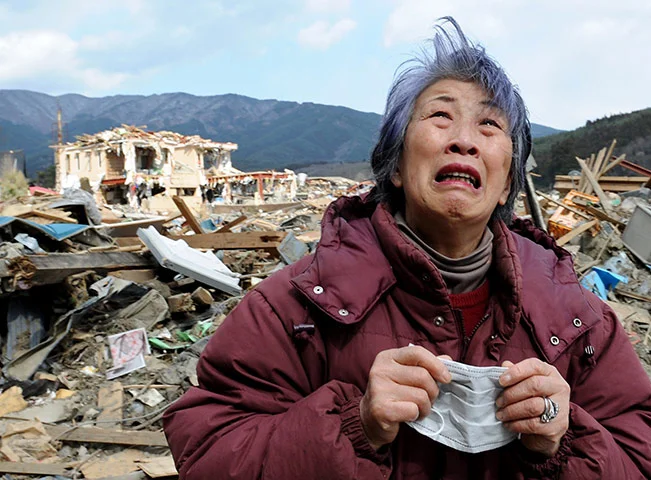
Authorities continue to urge calm but repeated preparedness: “Even if the big one doesn’t come this week, it will come someday. Be ready today.”
Japan on Edge: Assessing the Fallout from Devastating 7.5 Quake as Megaquake Fears Grip the Nation
TOKYO — In the shadow of a rare “megaquake” advisory, Japan is piecing together the damage from a powerful 7.5-magnitude earthquake that struck the nation’s northeast late Monday night, injuring at least 33 people and triggering small tsunamis along the Pacific coast. As rescue teams survey the aftermath and aftershocks continue, the country remains on high alert for what could become its most destructive seismic event in over a decade, reviving memories of the catastrophic 2011 Tohoku disaster.
The quake hit at 11:15 p.m. local time, approximately 70 km off the coast of Aomori Prefecture near Hokkaido, at a depth of about 53 km. It registered “Upper 6” on Japan’s seven-level seismic intensity scale, sending violent shaking through cities and towns, toppling furniture, and swaying skyscrapers.Small tsunami waves of up to 70 cm struck ports in Hokkaido, Aomori, and Iwate prefectures, prompting the evacuation of more than 114,000 residents overnight. By Tuesday morning, all tsunami warnings were lifted, but the Japan Meteorological Agency issued its first-ever Nankai Trough “megaquake advisory,” warning of an elevated risk of a magnitude-8 or greater earthquake, and possible 30-meter tsunamis along an 800-mile coastal stretch in the coming days or weeks.
Injuries, Disruption, and a Nation Holding Its Breath
At least 33 people were injured, mostly from falling objects, with one person reported in serious condition. No fatalities have been confirmed so far, a reflection of Japan’s stringent building codes and decades of disaster preparedness.Widespread but relatively minor damage has been reported:
- Cracked roads in several towns in Aomori Prefecture
- A contained fire in Aomori City
- A collapsed torii gate at Yasaka Shrine in Hachinohe
- Temporary power outages affecting around 800 households
- Water supply disruptions for approximately 480 homes
- Hundreds of residents spending the night in evacuation shelters, including Hachinohe Air Base
As Japan assesses the full scope of Monday’s quake, the looming megaquake advisory has put millions on edge, with supermarkets seeing runs on emergency supplies and many coastal communities reviewing evacuation plans.Authorities continue to urge calm but repeated preparedness: “Even if the big one doesn’t come this week, it will come someday. Be ready today.”
Japan Earthquake Emergency Helplines and Contacts
Following the recent 7.5-magnitude earthquake off Aomori Prefecture on December 9, 2025, and the ongoing “megaquake advisory” for the Nankai Trough and Hokkaido-Sanriku regions, Japan has activated key emergency services. Below is a compiled list of official helplines, phone numbers, emails, and websites for disaster response, reporting, and support.
These are primarily government-operated and available nationwide unless noted.
For non-Japanese speakers, many offer multilingual support (English, Chinese, Korean, etc.). Always dial emergency numbers first in life-threatening situations.Immediate Emergency Services (Nationwide, 24/7)
| Service | Phone Number | Description | Website/Email |
|---|---|---|---|
| Police | 110 | For crimes, accidents, or immediate threats. Multilingual support available in major cities. | Tokyo Metropolitan Police English Helpline 03-3501-0110 (English, 24/7) |
| Fire/Ambulance | 119 | Medical emergencies, fires, or rescues. Dispatchers can connect to English interpreters. | N/A (dial directly) |
| Coast Guard | 118 | Maritime emergencies or tsunamis. | Japan Coast Guard |
Disaster-Specific Helplines (Earthquake/Tsunami Response)
| Service | Phone Number | Description | Website/Email |
|---|---|---|---|
| Disaster Emergency Message Dial (171) | 171 | Voice message board for checking family/friends’ safety during network overloads (e.g., after quakes). Record or retrieve messages; activated post-disaster. | Fire and Disaster Management Agency (FDMA) Guide No email; voice-only. |
| Japan Visitor Hotline (JNTO) | 050-3816-2787 (24/7, multilingual) | For tourists: Emergency assistance, disaster support, lost items, or evacuation info. | JNTO Safety Tips Email: N/A; app-based alerts available. |
| Earthquake Disaster Information Center (YOKE – Yokohama Example) | 045-222-1171 (Japanese) 045-222-1209 (Foreign languages) | Local support for foreigners in Yokohama; expandable to other regions via local FDMA offices. | YOKE Website Email: info@yokesaigai.com |
Government Agencies for Reporting/Advisories
| Agency | Phone Number | Description | Website/Email |
|---|---|---|---|
| Japan Meteorological Agency (JMA) | +81-3-3212-8341 (General inquiries) | Earthquake/tsunami advisories, early warnings, and updates (e.g., current Nankai Trough alert). No direct helpline; use for media/official queries. | JMA Earthquake Info JMA Contact Form Email: N/A for emergencies; use form. |
| Cabinet Office Disaster Management | +81-3-5253-8111 | National coordination for large-scale disasters; policy and recovery info. | Bousai Portal Email: N/A; online inquiries via site. |
| Fire and Disaster Management Agency (FDMA) | +81-3-3581-4921 (HQ) | Fire, rescue, and disaster response oversight; local branches for regional quakes. | FDMA English Site Email: N/A for urgent; use regional contacts. |
| Tokyo Disaster Prevention Info | 03-5320-4592 (English) | Tokyo-specific evacuation and alerts; useful for central Japan events. | Tokyo Bousai Email: N/A. |
Additional Resources
- Apps for Real-Time Alerts: Download “Safety Tips” (JNTO) for multilingual push notifications on quakes, tsunamis, and evacuations. Also, “NHK World-Japan” app for English news. japan.travel
- U.S. Citizens/Embassy Support: If applicable, contact U.S. Embassy Tokyo at +81-3-3224-5000 or emergency page. Similar for other embassies.
- Red Cross Japan: For relief/volunteer info, +81-3-3264-1411; website. jrc.or.jp
Tips: During overloads, use Wi-Fi for apps/websites. Prepare by registering for J-Alert (national warning system).
For the latest on the December 2025 quake, check JMA for aftershock updates.
If you’re abroad and need to reach someone in Japan, use 171 via international callback services. Stay safe—Japan’s systems are robust, but personal preparedness saves lives.
Japan’s Seismic History: A Nation Forged by Tremors
Japan sits atop four major tectonic plates on the Pacific Ring of Fire and experiences roughly 20% of the world’s strongest earthquakes each year. Its history is a long chronicle of devastation and resilience.The Great Kantō Earthquake of 1923 (magnitude 7.9) obliterated Tokyo and Yokohama, killing more than 140,000 people and sparking massive fires that raged for days. It remains the deadliest disaster in Japan’s recorded history and forced the nation to pioneer modern earthquake-resistant construction.
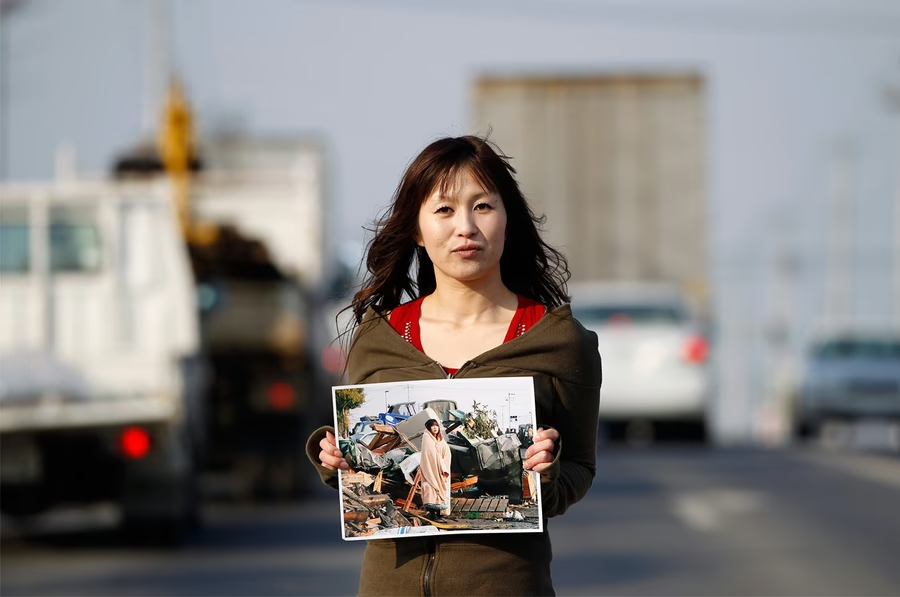
The 1995 Great Hanshin (Kobe) Earthquake (magnitude 7.3) claimed over 6,400 lives in minutes, exposing weaknesses in urban infrastructure and prompting sweeping reforms in building standards and emergency response.The 2011 Great East Japan Earthquake (magnitude 9.1), the most powerful ever recorded in the country, unleashed a monstrous tsunami that swept away entire towns and triggered the Fukushima nuclear crisis, leaving nearly 20,000 dead or missing.Other landmark events include the 1703 Genroku Earthquake, the recurring Nankai Trough megaquakes (1498, 1707, 1854, 1944, 1946), and the 2024 New Year’s Day magnitude-7.6 quake in Ishikawa Prefecture that killed more than 200 people.From ancient times to the present, these disasters have shaped Japan’s culture of preparedness: monthly earthquake drills in schools, furniture-anchoring laws, the world’s fastest early-warning system, and buildings designed to dance rather than break when the ground moves.As authorities repeat the familiar mantra — “The big one will come someday.
Be ready today” — Monday’s tremor and the ongoing megaquake advisory serve as the latest reminder that, for Japan, living with earthquakes is not a possibility; it is a certainty.

Comments