
YTC Ventures | TECHNOCRAT MAGAZINE | www.ytcventures.com
18 Feb 2026
In the early hours of February 16, 2026, a routine RegioExpress service on Switzerland’s renowned rail network became the latest victim of extreme winter weather in the Alps.
An avalanche struck the tracks near Goppenstein in the canton of Valais, derailing the train and injuring five of the 29 passengers on board. While no fatalities occurred, the event highlights ongoing challenges in alpine infrastructure resilience, avalanche forecasting, and emergency response systems amid intensifying climate variability.
Incident Overview
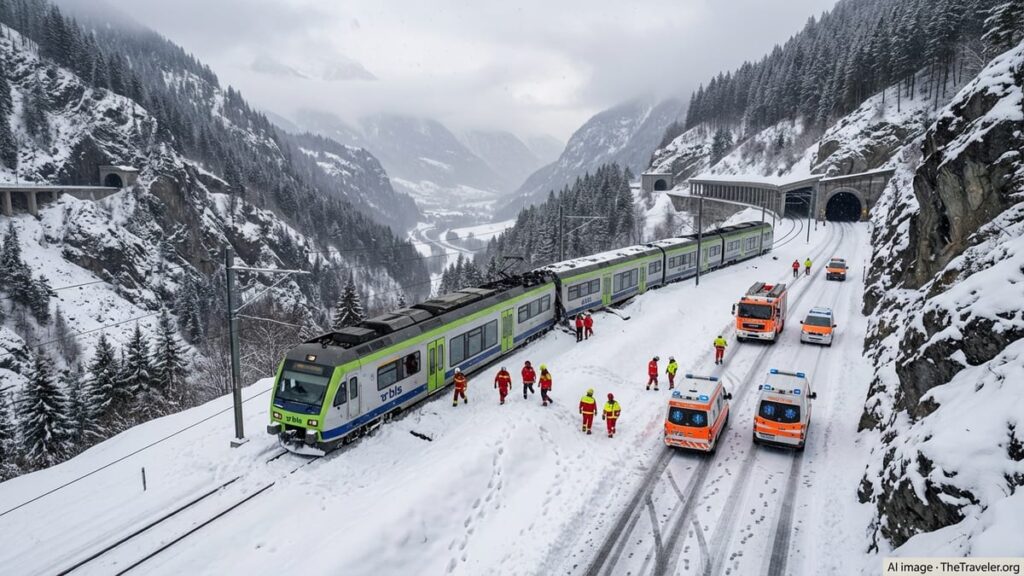
The BLS-operated train, departing Spiez at 6:12 AM local time en route to Brig, derailed shortly after 7:00 AM as it exited a tunnel in the Stockgraben area between Goppenstein and Hohtenn. Authorities, including Valais cantonal police, confirmed that an avalanche crossed the tracks moments before impact, forcing several carriages off the rails.
- Passengers and Injuries: 29 individuals were aboard. Rescue teams, including helicopters and ground ambulances, evacuated all passengers by midday. Five sustained injuries; one required hospital transport to Sion, while four received on-site treatment.
- No Fatalities: Unlike recent fatal avalanches elsewhere in the Alps over the weekend, this incident resulted in no loss of life, underscoring effective rapid-response protocols.
Photographs from the scene show the train tilted in deep snow, illustrating the force involved despite the relatively contained derailment.
Weather and Avalanche Context
The derailment unfolded against a backdrop of severe conditions. Switzerland’s Institute for Snow and Avalanche Research (SLF) had issued high-risk warnings:
- Level 4 (high) to Level 5 (very high) avalanche danger in many western Alpine zones.
- Heavy snowfall, strong winds, and unstable snow layers created widespread instability.
This regional pattern contributed to road closures, evacuations near Mont Blanc, and backcountry travel restrictions. The event serves as a real-world test of infrastructure in “very high” risk environments.
Rail Infrastructure and Response
Switzerland’s rail system—operated by entities like BLS and SBB (Swiss Federal Railways)—is engineered for alpine extremes, featuring extensive tunneling (including the nearby Lötschberg Base Tunnel) and avalanche mitigation structures such as galleries and barriers.
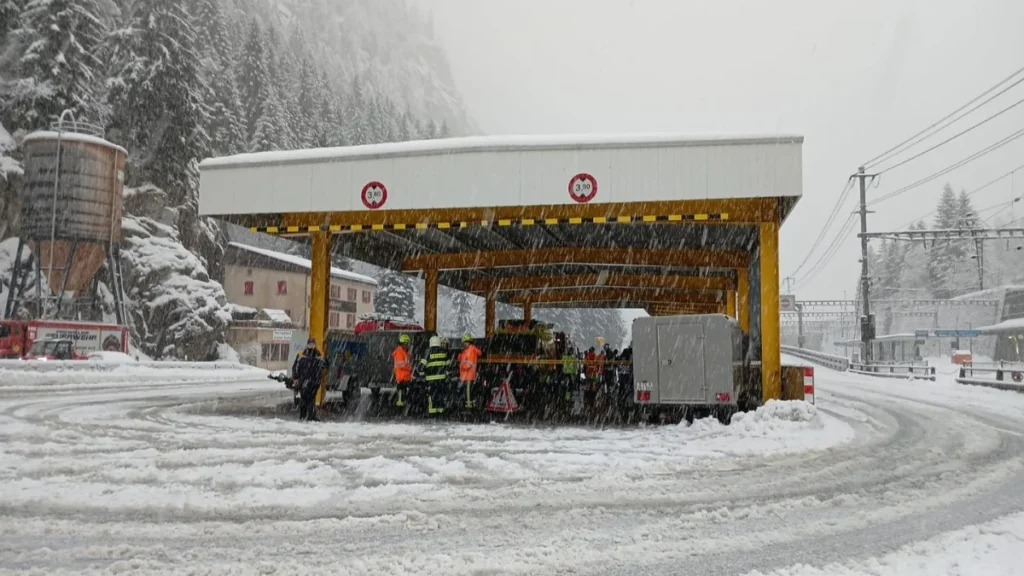
- The affected line (Frutigen-Brig, part of the Bern-Brig route) was suspended immediately, with disruptions expected to continue into February 17 or beyond.
- Emergency services deployed swiftly, with mountain rescue coordinating helicopter extractions and medical aid.
The incident occurred in a known high-risk zone, raising questions about real-time monitoring, predictive modeling, and whether additional protective measures (e.g., enhanced deflection dams or automated warning systems) could further reduce vulnerabilities.
Broader Implications for Technology and Safety
This derailment, while minor in scale, spotlights several areas of interest for engineers, meteorologists, and transport planners:
- Avalanche Detection and Prediction: Advances in radar, LiDAR, and AI-driven snowpack analysis could provide earlier alerts for rail operators.
- Resilient Design: Modern alpine tunnels and protective structures perform well under impact, but climate change-driven extreme events may require updated standards.
- Emergency Tech Integration: The successful evacuation demonstrates the value of coordinated drone/helicopter ops, real-time comms, and passenger tracking in remote areas.
As investigations proceed—led by the Public Prosecutor’s Office and rail authorities—focus will likely turn to whether the avalanche crossed despite safeguards or if emerging tech could have mitigated the risk.Switzerland’s rail network remains one of the world’s safest and most punctual, but events like this remind us that nature’s forces demand continuous innovation in engineering and forecasting.
Technocrat Magazine will monitor updates on recovery efforts, any preliminary findings, and potential technological upgrades to alpine rail safety.Stay informed on infrastructure resilience and extreme weather tech at Technocrat Magazine.

Comments