
YTC Ventures | TECHNOCRAT MAGAZINE | www.ytcventures.com
21 Jan 20207
In a poignant end to one of the most illustrious careers in space exploration, NASA astronaut Sunita “Suni” Williams has officially retired from the agency, effective December 27, 2025. The announcement marks the close of 27 years of groundbreaking service that saw Williams log an astonishing 608 days in space across three missions, complete nine spacewalks totaling 62 hours and 6 minutes, and set multiple records for women in space.
Her journey from naval aviator to space pioneer has inspired generations, blending technical prowess with unyielding determination. As Technocrat Magazine reflects on her legacy, we present an extensive look at this Indian-American icon—covering her education, career milestones, personal life, net worth, missions, and key contributions.
An Extensive Summary: From Earthbound Dreams to Cosmic Achievements
Sunita Lyn Williams (née Pandya) was born on September 19, 1965, in Euclid, Ohio, to Indian-American neuroanatomist Dr. Deepak Pandya and Slovenian-American Ursuline Bonnie Pandya. The youngest of three siblings—brother Jay Thomas and sister Dina Anna—she grew up in Needham, Massachusetts, after her family relocated there. Her multicultural heritage, with roots in Gujarat, India, and Slovenia, instilled a sense of global curiosity that would define her life. Inspired by her father’s work in medicine and her own fascination with science, Williams pursued a path that blended military discipline with scientific exploration.Her early life was marked by athleticism and adventure.
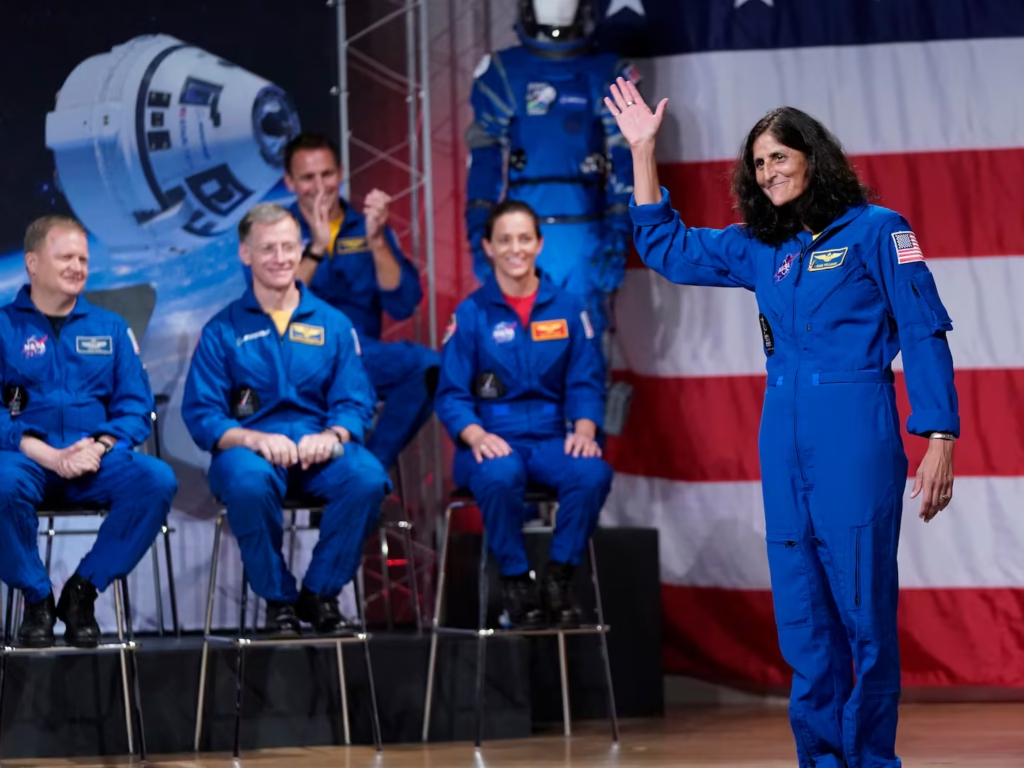
A competitive swimmer, runner, and triathlete, she channeled her energy into rigorous pursuits. This drive propelled her into the U.S. Navy, where she honed skills that later translated to spaceflight. Selected by NASA in 1998 as part of Astronaut Group 17, Williams became a symbol of diversity in STEM, being only the second astronaut of Indian descent after Kalpana Chawla.
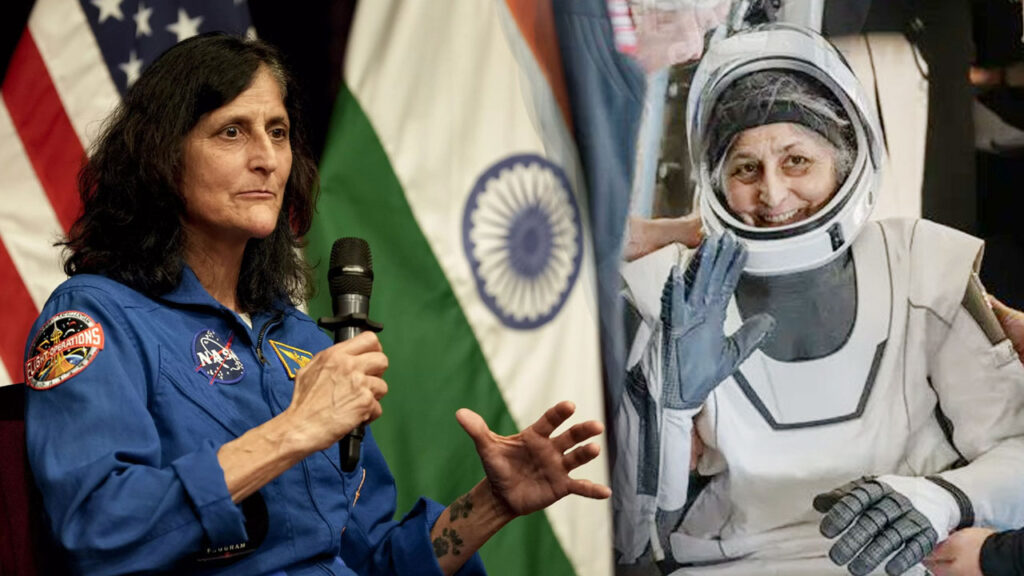
Over her career, she not only shattered records but also advanced human spaceflight through hands-on contributions to the International Space Station (ISS), commercial crew programs, and scientific research.Williams’ retirement comes months after her return from a dramatic extended mission aboard Boeing’s Starliner spacecraft, which turned a planned eight-day test flight into a 286-day ordeal due to technical issues. She returned to Earth in March 2025 via SpaceX’s Crew-9 mission, tying her for the sixth-longest single spaceflight by an American. NASA Administrator Jared Isaacman praised her as a “trailblazer,” noting her role in paving the way for Artemis missions to the Moon and future Mars explorations.
Education: Building the Foundation for the Stars
Williams’ academic journey began at Needham High School in Massachusetts, where she graduated in 1983. She then attended the United States Naval Academy in Annapolis, Maryland, earning a Bachelor of Science in Physical Science in 1987.
This degree equipped her with a strong grounding in physics and engineering, essential for her naval and astronaut careers.While serving in the Navy, she pursued further education, obtaining a Master of Science in Engineering Management from the Florida Institute of Technology in 1995. This advanced degree focused on leadership and project management, skills she later applied to commanding ISS expeditions and overseeing complex space operations. Her time at Florida Tech coincided with her role as a naval test pilot, blending practical experience with theoretical knowledge.
Career: From Naval Skies to Orbital Heights
Williams’ professional path started in the U.S. Navy, where she was commissioned as an ensign in 1987. She underwent aviator training and became a helicopter pilot, flying in support squadrons during preparations for the Persian Gulf War, no-fly zone operations over Iraq, and relief efforts for Hurricane Andrew in 1992. By 1993, she graduated from the U.S. Naval Test Pilot School, serving as a project officer and chase pilot for various aircraft.In 1998, NASA selected her as an astronaut candidate.
She trained at Johnson Space Center and in Moscow with Roscosmos, focusing on ISS robotics and operations. Rising to the rank of Captain in the Navy, Williams balanced military duties with space preparation, eventually retiring from active naval service to focus on NASA.Her NASA tenure included roles as a flight engineer, ISS commander, and test pilot for commercial spacecraft. She was instrumental in NASA’s Commercial Crew Program, becoming the first woman to fly on an orbital spacecraft test flight with Boeing’s Starliner in 2024.
Love Life and Family: A Grounded Support System Amid the Stars
Behind Williams’ cosmic achievements is a personal life rooted in partnership and family. She met her husband, Michael J. Williams, in 1987 at the U.S. Naval Academy, where both were budding aviators. Their friendship, built on shared military experiences, evolved into romance. Michael, a former helicopter pilot and current U.S. Federal Marshal, has been her steadfast supporter for over 20 years. A devoted follower of Hinduism, he has accompanied her on cultural trips, including visits to India and Slovenia.
The couple, married in a private ceremony, resides in Houston, Texas. They have no biological children but have expressed interest in adopting a girl from Ahmedabad, India. Their family includes beloved pets: a Jack Russell terrier named Gorby, and others like Gunner, Bailey, and Rotor. Michael’s role has been crucial, providing emotional stability during Williams’ long missions. He once described space as her “happy place,” reflecting their deep bond.
Net Worth: Financial Legacy of a Space Pioneer
As of early 2026, Sunita Williams’ estimated net worth stands at approximately $5 million (around ₹42 crore). This fortune stems from her NASA salary—peaking at about $152,258 annually under the GS-15 pay scale—military pension, investments, and shared assets with her husband. While astronauts don’t receive overtime for extended missions, incidental allowances and health benefits add to her financial security.
Her wealth reflects a disciplined career rather than commercial endorsements, though her fame could open post-retirement opportunities in speaking and consulting.
The Missions: Chronicles of Endurance and Discovery
Williams’ three space missions encapsulate her career’s highs:
- Expedition 14/15 (STS-116/117)
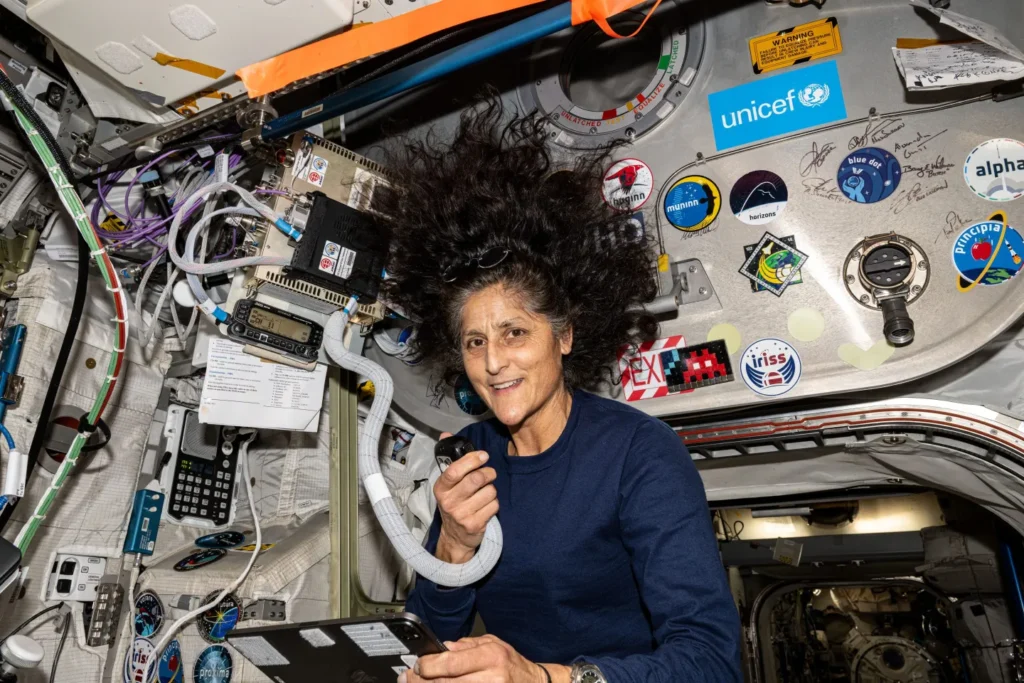
Launched December 9, 2006, aboard Space Shuttle Discovery. She spent 195 days on the ISS as a flight engineer, performing four spacewalks (29 hours, 17 minutes)—a then-record for women. She also ran the first marathon in space on the station’s treadmill. Returned June 22, 2007. - Expedition 32/33 (Soyuz TMA-05M)
Launched July 14, 2012, from Kazakhstan. As flight engineer and later commander of Expedition 33 (the second woman to do so), she logged 127 days, completed three more spacewalks (over 21 hours), and performed the first triathlon in orbit using station equipment. Returned November 18, 2012. - Boeing Crew Flight Test / Expedition 71/72 (Starliner / SpaceX Crew-9)
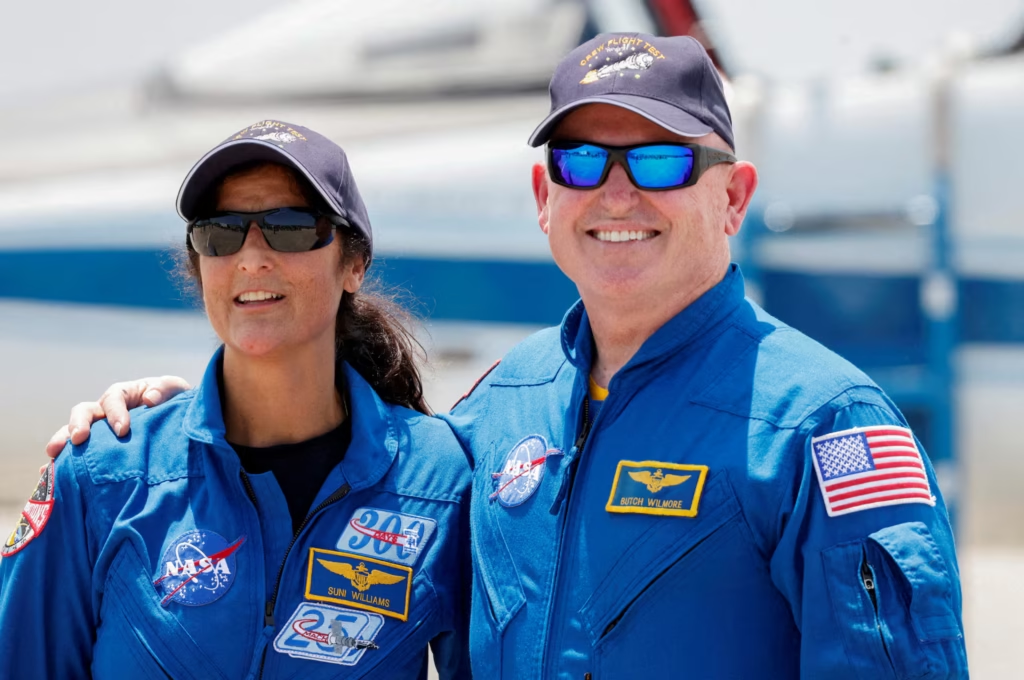
Launched June 5, 2024, for what was meant to be an eight-day test. Thruster issues extended it to 286 days, during which she conducted two additional spacewalks and over 150 experiments. Returned March 2025 via SpaceX.
Total: 608 days in space, second-most for a NASA astronaut.
Key Works and Contributions: Pushing the Boundaries of Human Spaceflight
Williams’ achievements extend beyond records:
- Record-Breaking Spacewalks — Nine EVAs totaling 62 hours, 6 minutes—the most by a woman and fourth overall. Her work maintained ISS infrastructure and advanced extravehicular technology.
- Scientific Advancements — Contributed to microgravity research on human physiology, essential for long-duration missions to Mars. During her extended 2024–25 stay, she led experiments on fluid dynamics, plant growth, and health in space.
- Commercial Space Pioneer — As part of NASA’s Commercial Crew, she tested Boeing’s Starliner, helping certify it for future missions and fostering private-sector involvement in space.
- Inspirational Milestones — First marathon (2007) and triathlon (2012) in space, promoting fitness in orbit. Her leadership as ISS commander in 2012 advanced international collaboration.
- Awards — Defense Superior Service Medal, Navy Commendation Medal (multiple), and global honors like Slovenia’s Order of Merit.
A Lasting Legacy in the Cosmos
Sunita Williams’ retirement closes a chapter but opens new horizons for space exploration. Her blend of technical expertise, cultural pride, and personal resilience has made her a role model for aspiring technocrats worldwide.
As humanity eyes the Moon and Mars, Williams’ contributions—forged in the vacuum of space—will endure. Technocrat Magazine salutes this star among stars.

Comments