
YTC Ventures | TECHNOCRAT MAGAZINE | www.ytcventures.com
Hyderabad, 10 January 2026
As India marks the 17th anniversary of one of its most infamous corporate scandals, the Satyam Computer Services fraud remains a cautionary tale of unchecked ambition, falsified accounts, and systemic failures. On January 7, 2009, Byrraju Ramalinga Raju, the charismatic founder and chairman of what was then India’s fourth-largest IT services firm, stunned the world with a confession letter admitting to inflating the company’s books by over ₹7,000 crore (approximately $1.4 billion at the time). What followed was a cascade of events that nearly toppled the Indian IT sector, eroded investor trust, and prompted sweeping regulatory reforms.
Today, with the ghosts of Satyam lingering in the form of merged entity Tech Mahindra, we dive deep into the scandal’s origins, the company’s rise and fall, its workforce dynamics, and the shadowy real estate empire tied to the fraud.In an era where corporate transparency is under the microscope amid global economic uncertainties, the Satyam story is trending again on social media and business forums. Hashtags like #SatyamScandal17Years and #IndiaCorporateFraud are gaining traction as analysts reflect on lessons learned – or not – in the age of AI-driven audits and blockchain ledgers. With India’s IT exports hitting record highs in 2025, the scandal serves as a stark reminder: growth without governance is a recipe for disaster.
The Rise of Satyam: From Humble Beginnings to IT Powerhouse
Satyam Computer Services was founded in 1987 by brothers Byrraju Ramalinga Raju and B. Rama Raju in Hyderabad, then part of undivided Andhra Pradesh.
Starting with just 20 employees, the company began as a small IT services provider, focusing on software development, system maintenance, and engineering design.
By 1991, Satyam went public on the Bombay Stock Exchange (BSE), marking the start of its meteoric ascent.The 1990s and early 2000s saw Satyam ride the wave of India’s IT boom.
It expanded globally, opening offices in over 55 countries and serving clients in sectors like banking, healthcare, and manufacturing.
Key milestones included:
- 1990s: Early growth through offshore development centers, attracting Fortune 500 clients.
- 2000: Employee strength crossed 10,000, with revenues surpassing $100 million.
- 2001: Listed on the New York Stock Exchange (NYSE) as American Depositary Shares (ADS).
- 2006: Revenues topped $1 billion, with over 30,000 employees worldwide.
- 2008: Peak revenues exceeded $2 billion, positioning Satyam as a rival to giants like TCS, Infosys, and Wipro. It won accolades for corporate governance and was among the first Indian firms to adopt International Financial Reporting Standards (IFRS).
Satyam’s business model revolved around outsourcing IT services, including application development, enterprise solutions, and business process management. It prided itself on innovation, securing deals like IT services for the 2010 and 2014 FIFA World Cups. However, beneath the facade of success lay a web of deceit.
The Fraud Unravels: Raju’s Confession and the ₹7,000 Crore Deception
The scandal erupted on January 7, 2009, when Raju penned a now-infamous letter to the board and regulators, confessing that Satyam’s accounts had been manipulated for years. He admitted to inflating cash and bank balances by ₹5,040 crore, overstating revenues, and creating fictitious assets. The total fraud amounted to ₹7,136 crore, including non-existent interest income and understated liabilities.
Raju described the fraud as “riding a tiger, not knowing how to get off without being eaten.” It began small – minor adjustments to meet quarterly expectations – but snowballed into a massive scheme involving fake invoices, forged bank statements, and phantom clients.
Proceeds were siphoned off through 327 front companies, often diverted to personal real estate ventures.The trigger? A desperate bid in December 2008 to acquire Maytas Infrastructure and Maytas Properties (Maytas is “Satyam” spelled backward), both owned by Raju’s family, for $1.6 billion. The plan was to use Satyam’s “cash reserves” (which were largely fictitious) to buy real assets and plug the holes. But investor backlash forced the board to abort the deal, exposing the inconsistencies. Raju’s confession followed days later, crashing Satyam’s stock by 78% in a single day and wiping out billions in market value.The fallout was swift:
- January 10, 2009: Government intervenes, appoints a new board including Deepak Parekh and Kiran Karnik.
- January 22, 2009: Investigations reveal 13,000 of the reported 53,000 employees were fictitious, with ₹200 million monthly “salaries” pocketed by insiders.
- April 2009: Tech Mahindra acquires a controlling stake for ₹2,890 crore.
- 2013: Full merger into Tech Mahindra.
- 2015: Raju and nine others convicted, sentenced to seven years (though appeals and bail followed).
The IT sector reeled: Clients like Merrill Lynch and State Farm fled, stock markets tumbled, and India’s reputation as a reliable outsourcing hub took a hit. Regulators responded with the Companies Act 2013, mandating stricter audits, whistleblower protections, and female board representation.Seventeen years later, the scandal’s legacy endures. While Tech Mahindra thrives with $6.5 billion in revenues (2025 figures), experts argue fraud detection has improved but vulnerabilities persist in family-run firms.
Satyam’s Workforce: Growth, Deception, and Downsizing
Satyam’s manpower was central to its operations – and the fraud. As an IT services giant, the company relied on a skilled workforce for coding, project delivery, and client support. However, the scandal exposed inflated employee numbers as a key manipulation tactic.
Here’s a year-wise table of employee counts, compiled from annual reports, investigations, and historical data:
| Year | Employee Count | Notes |
|---|---|---|
| 1987 | 20 | Founding year; small team focused on core IT services. |
| 2000 | ~10,000 | Rapid expansion into global markets; primarily technical roles. |
| 2006 | ~30,000 | Crossed $1 billion revenue; workforce spread across 55 countries. |
| 2008 (March 31) | 45,969 (reported ~53,000) | Peak pre-scandal; included fictitious employees for salary siphoning. Actual ~40,000 post-investigation. |
| 2009 (March 31) | 41,267 | Post-confession restructuring; Technical: 38,072; Non-technical: 3,195. Virtual Pool Program (VPP) placed ~7,500 on reduced pay. |
| 2010 (March 31) | 23,596 | Sharp decline due to layoffs, mergers, and efficiency drives; Average technical: 28,654; Onsite: 5,683. |
Post-2010, under Mahindra Satyam, the workforce stabilized but focused on “right-sizing.” By the 2013 merger, combined Tech Mahindra-Satyam had over 84,000 employees.
Key Roles of Manpower in Satyam
Satyam’s structure was typical of IT firms: 90% technical, 10% support. Employees were the backbone, executing client projects while management handled strategy. Key roles included:
- Technical Associates (Engineers/Developers): Core workforce (~92% in 2009); responsible for software coding, system integration, testing, and maintenance. Many certified in tools like Six Sigma (168 Black Belts) or Function Point analysis.
- Program and Project Managers: Oversaw deliveries; 84% certified internally. Handled client engagements, timelines, and quality control.
- Consultants (Senior/Junior/Managing): Client-facing roles; mentored teams, designed solutions for Fortune 500 firms in areas like ERP and BPO.
- Non-Technical Associates (Admin/HR/Finance): Supported operations; included welfare, training, and compliance staff. Post-scandal, focus shifted to leadership programs like “Game Changers Club” for mid-senior levels.
- Quality and Innovation Specialists: Roles like Mahindra Satyam Function Point Champions (168 in 2010) ensured process efficiency; 168 projects used Six Sigma.
- Leadership/Executive Roles: Pre-scandal: Chairman (Raju), MD (Rama Raju), President (Ram Mynampati). Post-acquisition: CEO (C.P. Gurnani), CFO (S. Durgashankar).
The fraud exploited manpower data: Fictitious employees masked fund diversions, while real staff suffered job insecurity during the 2009-10 downsizing.
Satyam’s Real Estate Assets in Andhra Pradesh: The Hidden Empire
While Satyam’s core was IT, the scandal revealed deep ties to real estate, particularly in Andhra Pradesh (pre-Telangana split). Funds were diverted to buy properties through front companies, fueling Raju’s personal empire. Company assets included:
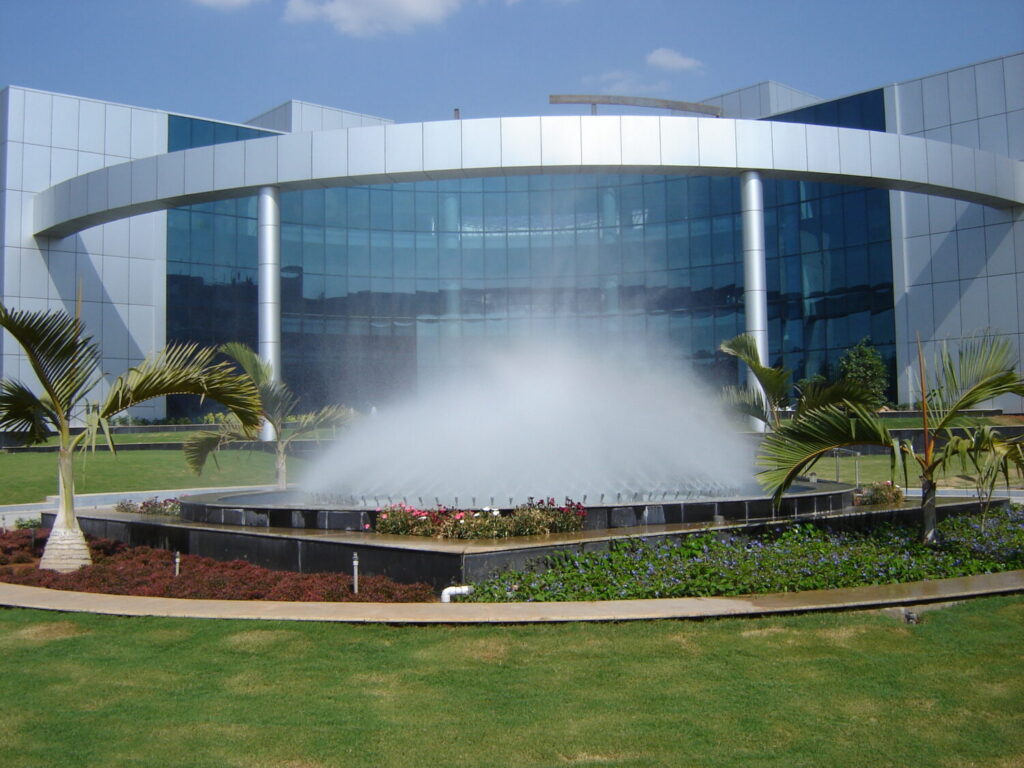
- Hyderabad (Now Telangana, but Andhra in 2009): Registered office at Mahindra Satyam Infocity (Hi-Tech City SEZ); acquired under ICT Policy 2002-2005 for mega projects. Land valued at ₹96 million (with bank guarantees). Additional buildings and campuses like Satyam Technology Centre.
- Visakhapatnam (Andhra Pradesh): 50 acres in Kapulupadda Village from Andhra Pradesh Industrial Infrastructure Corporation (APIIC) for ₹50 million. Disputed due to Navy claims; alternate 50 acres proposed (25 from Police, 25 from VUDA). Included in capital advances.
- Other Andhra Assets: Part of broader infrastructure; SEZs in Chennai and Visakhapatnam for ~5,000 seats. Leased spaces across Andhra, with operating lease obligations totaling ₹3,912 million (2009).
- Scandal-Linked Properties: Enforcement Directorate (ED) attached 425 properties spanning 1,224 acres, worth ₹822 crore, mostly in Andhra/Telangana. Included villas in Ranga Reddy, East/West Godavari districts (₹2.48 crore). Two villas in Medchal (₹4-5 crore each) sealed in 2018. Much stemmed from diverted loans invested in collapsing Hyderabad realty.
These assets highlighted the fraud’s scale: Satyam’s “cash” was funneled into land, exacerbating the 2008 property crash’s impact.
Lessons from the Ashes: Why Satyam Still Matters in 2026
Seventeen years after Raju’s confession, India’s corporate landscape has evolved – SEBI’s insider trading bans, mandatory audits, and digital forensics have fortified defenses. Yet, with recent scams echoing Satyam’s playbook, the question remains: Are we truly fraud-proof? As Tech Mahindra innovates in AI and cloud, the Satyam saga urges vigilance. For investors, employees, and regulators, it’s a timeless warning: In business, truth is the ultimate code.

Comments