
YTC Ventures | Technocrat’ Magazine | www.ytcventures.com
27 Dec 2025
As artificial intelligence (AI) permeates every aspect of modern life—from chatbots to autonomous systems—its environmental footprint is coming under increasing scrutiny.
While much attention has focused on energy consumption and carbon emissions, a lesser-discussed but critical resource is water. AI’s reliance on massive data centers for training, inference, and storage drives significant water use, often in water-stressed regions.
This analysis explores where water is used in AI operations, quantifies consumption levels, and examines water’s role in the overall cost structure of AI. Drawing on recent studies and projections, we highlight the growing challenges and potential solutions for a more sustainable AI ecosystem.

Where Is Water Used in AI Operations?
Water plays a pivotal role in sustaining the infrastructure that powers AI, primarily through direct and indirect channels. Here’s a breakdown:
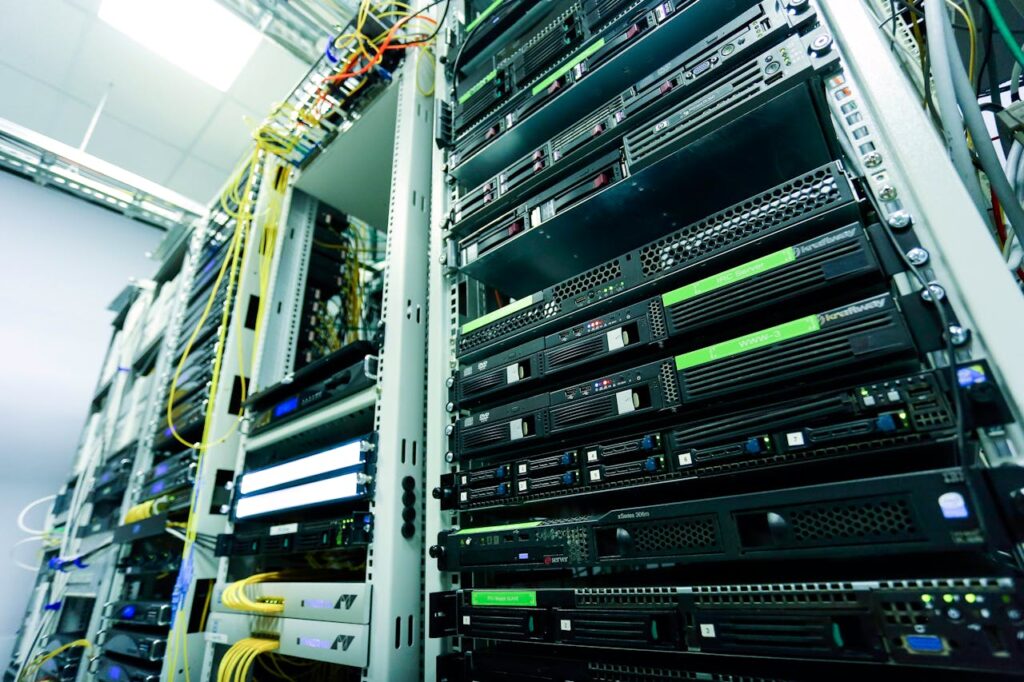
- Direct Onsite Cooling in Data Centers: The bulk of water consumption occurs in data centers, where servers generate immense heat during AI computations. Evaporative cooling systems, such as cooling towers, use water to dissipate this heat by evaporating it into the atmosphere. This is essential for maintaining optimal temperatures and preventing hardware failures. For instance, on-chip liquid cooling or air-assisted evaporation further relies on water. AI-specific workloads, like training large language models (LLMs), amplify this demand due to their computational intensity.
- Indirect Offsite Consumption via Electricity Generation: AI data centers are power-hungry, and producing that electricity often requires water. Thermal and nuclear power plants use water for cooling, while hydropower involves evaporation from reservoirs. This indirect “scope-2” usage can account for 80% or more of AI’s total water footprint. For example, generating electricity for a single AI query can consume up to 14.7 ml of water indirectly, compared to 2.2 ml directly.
- Other Indirect Uses: Water is also embedded in the AI supply chain, such as manufacturing semiconductors and hardware components. While less quantified, this adds to the overall tally. Additionally, in regions with high water usage effectiveness (WUE), like Ireland, AI operations can consume 1.8–12 liters per kWh of energy.
Factors influencing usage include location (e.g., hotter climates require more cooling), data center size, and efficiency metrics like Power Usage Effectiveness (PUE) and Water Usage Effectiveness (WUE).
Quantifying AI’s Water Consumption
AI’s water demands are escalating rapidly with the boom in generative models and cloud computing. Key statistics illustrate the scale:
- Daily Data Center Usage: A typical data center consumes about 300,000 gallons of water per day, equivalent to the needs of 1,000 households. Larger facilities, especially those handling AI workloads, can use up to 5 million gallons daily—comparable to a town of 50,000 people.
- Annual and Global Projections: In 2023, U.S. data centers (hosting 40% of global capacity) consumed 17.5 billion gallons directly, projected to double or triple by 2028. Globally, AI-driven data centers could withdraw 4.2–6.6 billion cubic meters of water by 2027, equivalent to half the UK’s annual withdrawal. Consumption (evaporated water) might reach 0.38–0.60 billion cubic meters.
- Per-Operation Metrics: Training a model like GPT-3 requires millions of liters. Everyday use is also thirsty: 10–50 queries on GPT-3 consume about 500 ml, while a 100-word AI prompt uses roughly one bottle (16 oz). For GPT-4, figures are higher due to its scale.
- Regional Impacts: In water-stressed areas like the U.S. Southwest, AI expansions strain local supplies. For example, a Meta data center in Georgia uses 10% of the county’s water. Globally, AI could consume 1.7 trillion gallons by 2027.

Of withdrawn water, 45–60% is typically consumed (evaporated and not returned). If the U.S. hosts half of global AI, this could represent 0.5–0.7% of national annual water withdrawal.
What Percentage of AI Costs Is Attributed to Water?
While water consumption volumes are well-documented, its share in AI’s cost structure is less straightforward, often bundled into operational expenses (opex). Water costs are typically a minor fraction compared to electricity, hardware, and maintenance, but they are rising due to scarcity and regulatory pressures.
- Operational Cost Breakdown: In data center economics, opex is dominated by maintenance (around 40%), electricity (15–25%), labor, and other costs including water. Water likely falls under “other,” estimating 1–5% of opex, depending on location and scale. For context, capital expenditures (capex) for data centers average $10 million per MW, but opex highlights ongoing resource costs.
- Hidden and True Costs: Direct water bills are low, but “true” costs—including environmental and infrastructure impacts—can be significantly higher. A Microsoft study found the true cost of water at one data center was 11 times the paid amount, factoring in externalities like ecosystem strain. Infrastructure expansions, such as new water lines, add to costs, with U.S. water systems needing $744 billion in upgrades over two decades.
- As a Percentage of Total AI Expenses: Water does not constitute a large direct percentage—likely under 5% of operational costs for most AI firms—but indirect costs via electricity (where water is embedded) inflate this. For instance, Google’s water use rose 20–34% annually, but as a share of their multibillion-dollar AI budgets, it’s fractional. Projections suggest water could become a more prominent cost as regulations tighten in arid regions, potentially adding 10–20% to cooling-related expenses through efficiency mandates.
- Broader Economic Implications: Beyond percentages, water scarcity could impose opportunity costs, delaying AI projects or increasing relocation expenses. Innovations like closed-loop systems can reduce freshwater use by 70%, potentially lowering costs by optimizing WUE.
Challenges and Pathways Forward
AI’s water demands exacerbate global water stress, with 870% potential growth in cooling needs. Challenges include location biases (e.g., clustering in water-rich areas like Wisconsin) and lack of transparency in reporting.Solutions:
- Efficiency Improvements: Adopt air or immersion cooling to minimize evaporation.
- Site Selection and Policy: Prioritize low-water-stress regions and enforce WUE standards.
- Innovation: AI itself can optimize water management, but must balance its own consumption.
A Game-Changing Solution on the Horizon: NATURE AI of Earth™ by YTC Ventures
While the AI industry grapples with its growing water footprint, an exciting breakthrough is emerging that could dramatically shift the balance toward sustainability.
YTC Ventures is developing NATURE AI of Earth™, a groundbreaking, trademarked AI platform positioned as the ultimate solution for global water challenges.
This innovative technology promises to revolutionize how the world manages, conserves, and experiences water—potentially offsetting much of the strain caused by data-intensive technologies like AI itself.
Due to ongoing Non-Disclosure Agreements (NDAs) and the proprietary nature of the project, specific details about its workings remain confidential at this stage.
What we can reveal is that it represents a bold, forward-thinking approach to one of humanity’s most pressing resource issues, with the potential for massive positive impact worldwide.
YTC Ventures is actively seeking strategic investors and partners to accelerate development and deployment. If you are a Courageous Investor send e-mail to YTC Ventures investments@ytcventures.com expressing your interest in this Global Venture.
If you are an investor interested in transformative, planet-positive technology with significant growth potential, we invite you to reach out directly to YTC Ventures for exclusive insights and investment opportunities.
As AI evolves, integrating water sustainability into cost models is essential. Without action, water could shift from a minor expense to a major bottleneck, underscoring the need for holistic environmental accounting in tech.

Technocrat Magazine calls for greater transparency from AI giants on resource use—and celebrates visionary projects like NATURE AI of Earth™ that point toward a more sustainable future.
Share your thoughts: How can we make AI greener?
#AIWaterUsage #SustainableAI #DataCenterImpact #TechEnvironment #WaterInnovation

Comments