
YTC Ventures | Technocrat’ Magazine | www.ytcventures.com
New Delhi, December 27, 2025
As India gears up for New Year’s Eve celebrations, a massive disruption looms over the country’s bustling delivery and e-commerce sectors. Gig workers from major platforms like Swiggy, Zomato, Zepto, Blinkit, Amazon, and Flipkart have announced a nationwide strike on December 31, following a similar action on Christmas Day that already caused delays in several cities.
This protest, organized by unions such as the Telangana Gig and Platform Workers Union (TGPWU) and the Indian Federation of App-based Transport Workers (IFAT), highlights deep-seated frustrations over low wages, unsafe working conditions, and a lack of social security.The strike comes at a peak time for deliveries, with New Year’s Eve traditionally seeing a surge in orders for food, groceries, and essentials.
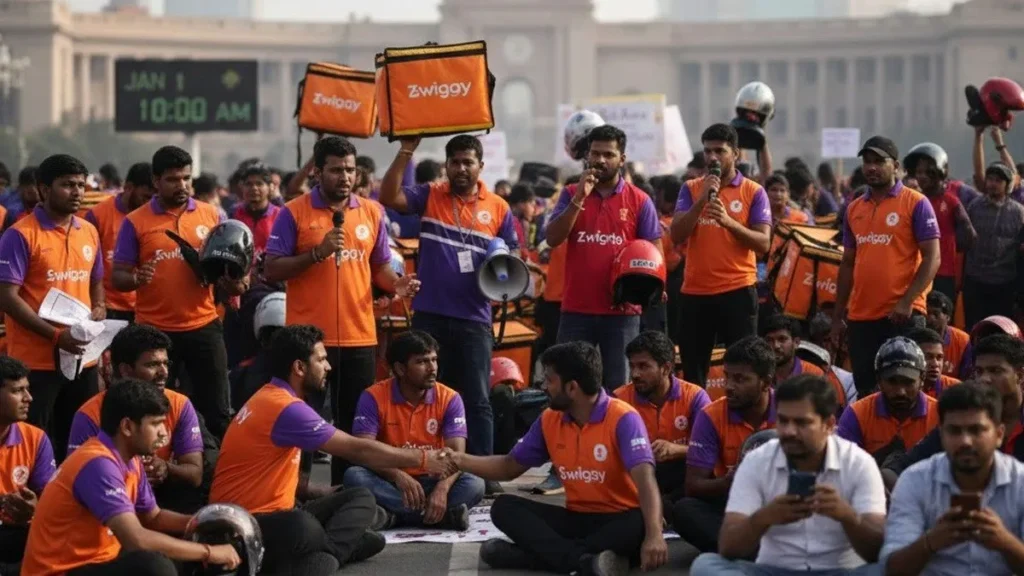
The Christmas Day action affected operations in at least seven states, with around 40,000 workers participating in flash strikes across urban centers. If the December 31 walkout gains similar traction, consumers in metros like Delhi, Mumbai, Pune, and Bengaluru could face significant delays, potentially spoiling festive plans.
The Scale of India’s Gig Economy: A Workforce in the Millions
India’s gig economy has exploded in recent years, fueled by digital platforms and urbanization. As of FY 2024-25, the sector employs approximately 12 million workers, up from 7.7 million in 2020-21. Projections suggest this number could surge to 23.5 million by 2029-30, representing about 4.1% of the total non-agricultural workforce.
Longer-term estimates point to nearly 62 million gig workers by 2047, underscoring the sector’s growing role in the economy.
The market itself is valued at around USD 556.7 billion in 2024, expected to grow to USD 646.77 billion in 2025 and reach over USD 2 trillion by 2033. Gig work currently contributes about 1.25% to India’s GDP, with potential to hit 4% by 2030 if growth continues.

This workforce powers everything from ride-hailing and food delivery to quick commerce and home services, making it a cornerstone of modern urban life.
| Aspect | Current (2024-25) | Projected (2029-30) | Projected (2047) |
|---|---|---|---|
| Workforce Size | 10-12 million | 23.5 million | 62 million |
| GDP Contribution | 1.25% | Up to 4% (by 2030) | N/A |
| Market Value (USD) | 556.7 billion | N/A | Over 2 trillion (by 2033) |
Why Are Gig Workers Striking? Demands for Dignity and Security
At the heart of the protest are grievances that have simmered for years. Workers report falling earnings, with some earning as little as ₹763 for 15 hours and 28 deliveries after accounting for fuel and exhaustion.
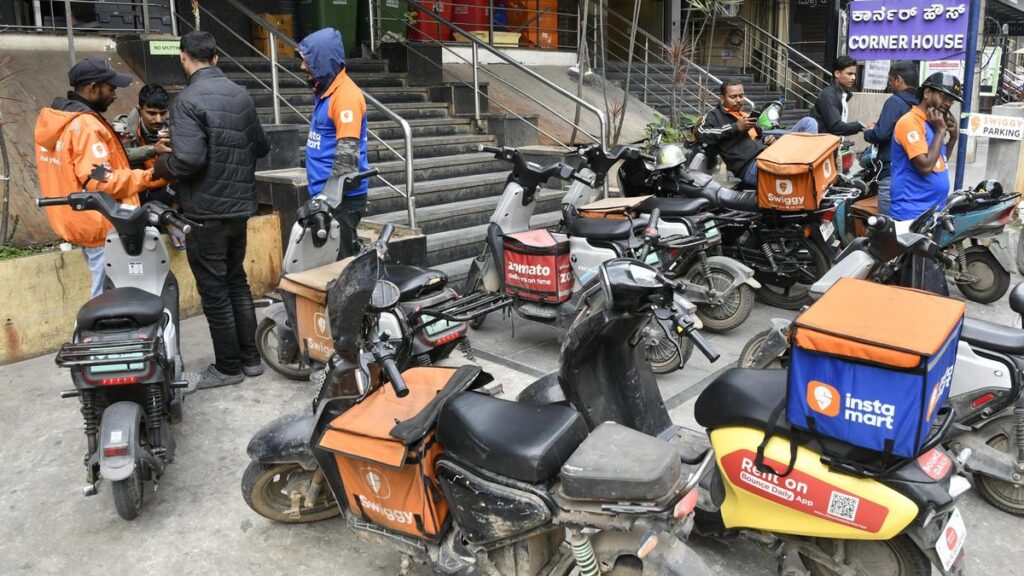
Ultra-fast delivery models, like 10-minute promises, force riders into dangerous driving through traffic and pollution, leading to health risks, anxiety, and accidents.
Key demands include:
- Fair and transparent wages that cover time, effort, and costs.
- An end to unsafe targets and late-night shifts in foggy or hazardous conditions.
- Regulated 8-hour workdays with rest breaks.
- Comprehensive accident insurance, safety gear, and social security benefits.
- Protection against arbitrary account blocking and better grievance mechanisms.
Politicians like AAP MP Raghav Chadha have amplified these issues in Parliament, calling out the “systemic exploitation” behind billion-dollar apps. On X (formerly Twitter), the conversation is buzzing, with users sharing stories of low pay and urging support for workers who “keep India’s platform economy running.”
The Ripple Effects: Economic Impact and Broader Implications
The strike’s immediate impact is clear: delivery disruptions during peak festive demand could hit platforms’ revenues hard, especially in quick commerce where speed is key.
For consumers, it means potential delays in food and groceries, forcing alternatives like local stores or self-pickup.Economically, the gig sector’s growth is at stake. With workers forming unions and demanding reforms, companies may face higher costs for better pay and insurance, potentially slowing expansion into Tier-2 and Tier-3 cities.
However, addressing these issues could lead to a more sustainable model, reducing turnover and improving service quality.On a societal level, the protest exposes cracks in India’s labor laws for the unorganized sector. Over 31 crore unorganized workers, including 5 lakh gig workers, are registered on the e-Shram portal for welfare schemes, but implementation gaps persist.
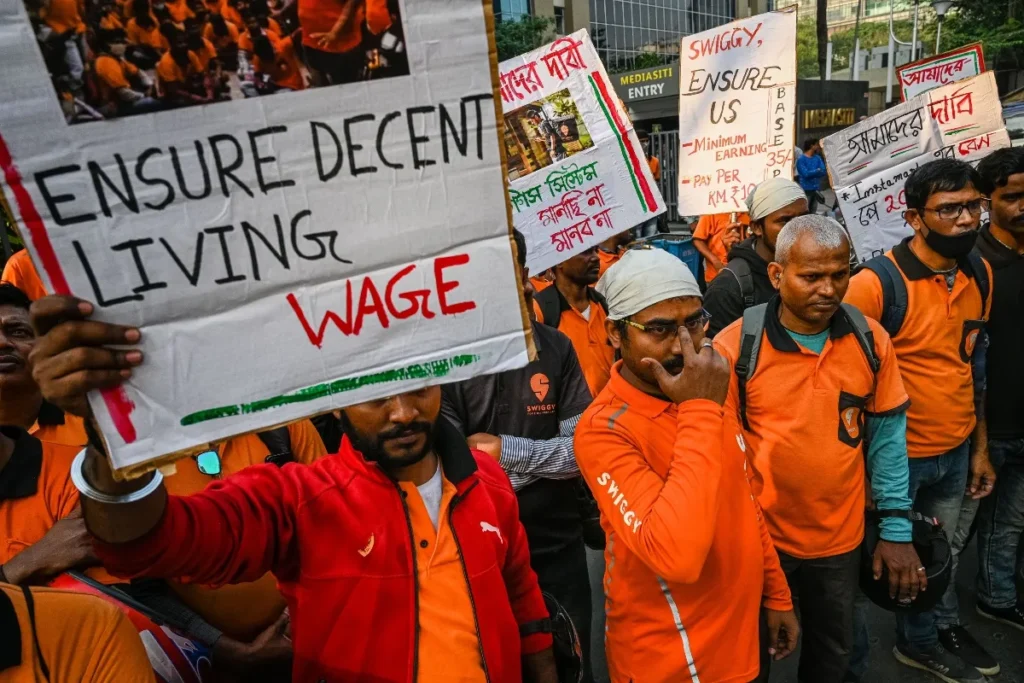
Experts warn that without policy changes—like minimum wages, maximum hours, and social security—the gig economy’s promise of flexible jobs could turn into widespread exploitation.As one X user put it, “Any job is better than being unemployed, but not at the cost of health and dignity.” With the strike set to unfold, all eyes are on how platforms respond—will they negotiate, or will the new year begin with more unrest?
State-Wise Estimated Number of Gig Workers in India (2024-25)
Official, precise state-wise figures for gig workers in India are not publicly available from government sources like NITI Aayog, the Ministry of Labour & Employment, or the e-Shram portal as of December 2025. National estimates place the total gig workforce at approximately 10-12 million (with projections to 23.5 million by 2029-30).
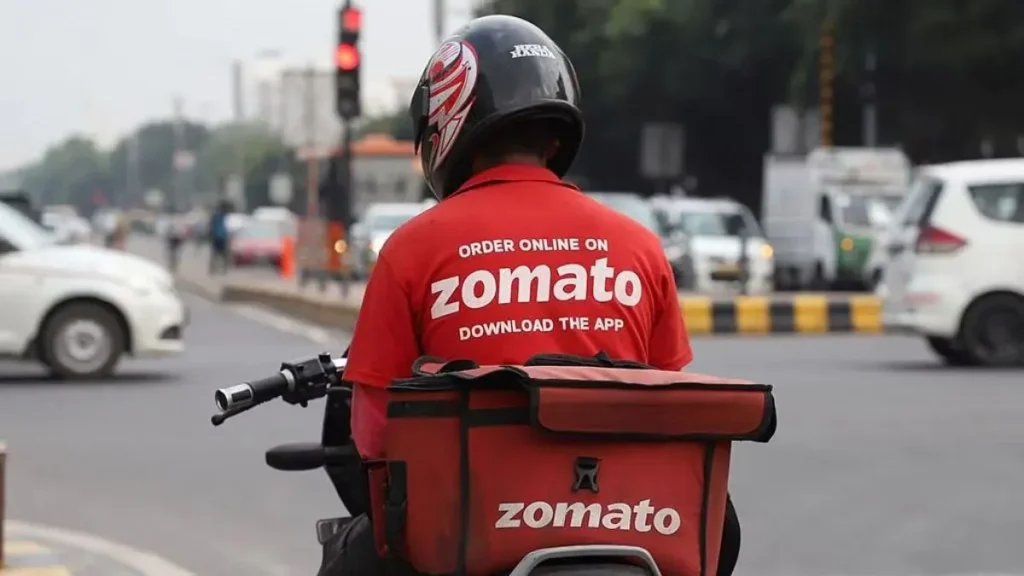
Gig work is heavily concentrated in urban and metro areas due to platform dependency on digital infrastructure, population density, and demand for services like food delivery, ride-hailing, and quick commerce.
Below is a table with estimated numbers based on urban population proportions, platform activity reports, migration patterns, and concentration in major cities (derived from various studies and indirect indicators).These are approximate and qualitative extrapolations, as exact breakdowns are not enumerated officially.
| State/Union Territory | Key Contributing Cities | Estimated Gig Workers (approx.) | Percentage of National Total (approx.) | Notes |
|---|---|---|---|---|
| Maharashtra | Mumbai, Pune, Nagpur | 1.8 – 2.2 million | 18-20% | Highest due to Mumbai’s massive urban economy and platform hubs. |
| Karnataka | Bengaluru | 1.2 – 1.5 million | 12-14% | Tech and startup capital; high ride-hailing and delivery density. |
| Delhi (NCT) + NCR areas | Delhi, Gurugram, Noida | 1.1 – 1.4 million | 11-13% | Major migrant worker hub for delivery and transport gigs. |
| Tamil Nadu | Chennai, Coimbatore | 0.8 – 1.0 million | 8-10% | Strong food delivery and services growth. |
| Telangana | Hyderabad | 0.7 – 0.9 million | 7-8% | Quick commerce and IT-driven platforms. |
| Uttar Pradesh | Lucknow, Noida/Greater Noida, Kanpur | 0.6 – 0.8 million | 6-7% | Large population; growing in NCR spillover. |
| West Bengal | Kolkata | 0.5 – 0.7 million | 5-6% | Urban delivery focus in eastern India. |
| Gujarat | Ahmedabad, Surat | 0.4 – 0.6 million | 4-5% | Emerging e-commerce and logistics. |
| Rajasthan | Jaipur | 0.3 – 0.5 million | 3-4% | Welfare laws boosting registration; medium growth. |
| Other States (e.g., Kerala, Punjab, Bihar, Madhya Pradesh, etc.) | Various Tier-2/3 cities | 1.5 – 2.5 million (combined) | 15-20% | Lower density but expanding via quick commerce. |
Total Estimated: ~10-12 million (aligns with national figures).
Key Insights:
- Over 70-80% of gig workers are concentrated in the top 8-10 urban states/metropolitan areas.
- Sources for estimates include platform expansion patterns (e.g., Zomato, Swiggy, Ola, Uber presence), urban workforce data, and reports highlighting metro dominance.
- The e-Shram portal has registered only about 5 lakh (0.5 million) gig/platform workers nationally as of late 2025, with no public state-wise breakdown available.
For accurate policy-making, experts recommend dedicated surveys to capture state-level data, as current national statistics do not disaggregate by state.

Comments